





Posted:

Diwali Meaning & Significance
Deepavali is a festival where people from all age groups participate. They give expression to their happiness by
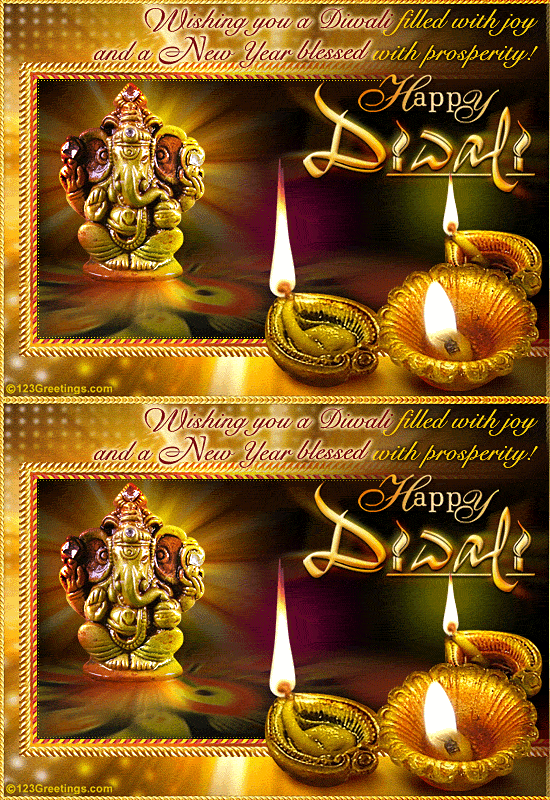
lighting earthen 'diyas' (lamps), decorating the houses, bursting firecrackers and inviting near and dear ones to their households for partaking in a sumptuous feast. The lighting of lamps is a way of paying obeisance to god for
attainment of health, wealth, knowledge, peace, valor and fame.
It is one time in the whole year that children volunteer to leave their beds long before the day begins. In fact, the traditional oil bath at 3 a.m, is the only chore that stands between them and the pre-dawn adventures. They emerge,scrubbed clean to get into their festive attire, and light up little oil lamps,candles and scented sticks(agarbathis), the wherewithal for setting alight
crackers and sparklers.
On Diwali night, little clay lamps are lit in Hindus homes, but now a days colored electric lamps are also used. What is the significance of lighting a lamp?
There is a logical answer to this question. It is through the light that the beauty of this world is revealed or experienced. Most civilizations of the world recognize the importance of light as a gift of God. It has always been a
symbol of whatever is positive in our world of experience.
To Hindus, darkness represents ignorance, and light is a metaphor for knowledge. Therefore, lighting a lamp symbolizes the destruction, through
knowledge, of all negative forces- wickedness, violence, lust, anger, envy,greed, bigotry, fear, injustice, oppression and suffering, etc. Competition is
stiff, and even the little girl in silk frocks and their finery are watchingout for the best sparklers and flowerpots, the rockets and Vishnuchakras, whichlight-up the night sky like a thousand stars. Grown-ups are the soul of
generosity. Festive bonhomie abounds.
Five Days of Diwali
Diwali, the festivity of lights, is celebrated with full enthusiasm by the Indian people. The festival teaches people to spread love by foregoing the path of enmity. The celebration of the Diwali festivity continues for 5 days and each day has a different message and philosophy associated with it.
Day 1: Dhanteras
It usually falls on the dark fortnight in the month of Kartik. It is on this day that Lord Dhanwantari had come out of the ocean with Ayurvedic for treating the ailments. The day of Dhanteras observes the beginning of Diwali celebrations. At the time of sunset, the Hindus take a bath and offer lighted diya lamp along with Prasad to Yama Raj, the Lord of Death. They pray to the Lord to protect them from the clutches of untimely death. The offerings are made around some sacred tree like Tulsi.
Day 1: Dhanteras
It usually falls on the dark fortnight in the month of Kartik. It is on this day that Lord Dhanwantari had come out of the ocean with Ayurvedic for treating the ailments. The day of Dhanteras observes the beginning of Diwali celebrations. At the time of sunset, the Hindus take a bath and offer lighted diya lamp along with Prasad to Yama Raj, the Lord of Death. They pray to the Lord to protect them from the clutches of untimely death. The offerings are made around some sacred tree like Tulsi.

Day 2: Choti Diwali
The second day marks the celebration of Choti Diwali. This day has a lot of religious significance for people, as it is on this day that Lord Krishna defeated the devil Narakasur, thus giving a sigh of relief to the people. As a part of its celebration, people massage their bodies with oil to bid bye to tiredness. It is said that on the night of choti Diwali, you should not light the Yama Diya.
Day 3: Lakshmi Puja
On the third day, people worship Goddess Lakshmi, who is believed to be associated with good luck, wealth and prosperity. The house is thoroughly cleaned and the family members get together to offer prayers.
Day 4: Govardhan Puja
The tradition of worshipping Govardhan was initiated by Lord Krishna, who made the people of Vraja perform a puja in the dedication of Govardhan. Since then, every year, people have been performing the Govardhan puja.
Day 5: Bhaiya Duj
Bhaiya duj is a day for brothers and sisters. On this day, the sister applies vermillion on the forehead of her brother and prays for his long life. The brother presents a gift to his sister and blesses her that she may get the best of things in her life.



























 Personal Finance
 Cryptocurrency
 Real Estate
 Seher Hone Ko Hai
 Financial markets and global economy
 Bengali Shows
 Naagin 7

