





Posted:
| | |
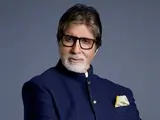
| The Big Bust: Amitabh Bachchan Amitabh Bachchan as an angry young man captured the social tensions of the Sixties. Bachchan as a brand today is superficial and empty Brand name Bachchan sounds weak even as cash registers keep ringing. Moving from myth to brand has hollowed Amitabh. A MITABH BACHCHAN has been voted urban icon of the year. His longevity and power as an image is awesome. Yet a symbolic delight appears socially empty today and I want to explain why brand Bachchan will be an increasingly hollow one. The history of Amitabh Bachchan is a tripartite one. There is first the angry young man, then the middling hero struggling for legitimacy and finally Bachchan as the perennial icon of the Hindi Screen. The Amitabh of the Sixties was an angry man that a whole generation identified with. He was not ideological, although there was poetry to his fight with injustice. He was a potent brew of pain and abandonment and out of it came the alchemy of the first great urban hero as an incarnation of violence. There was nothing masculine about Amitabh. He didn't have to flex his muscles, create a museum of biceps a la Sanjay Dutt or Salman Khan. Instead what he had was the will to fight, and an anger that made him potent. There was also his voice, a running polysemy of meanings. He was the background voice of Satyajit Ray's Shatranj ke Khiladi, the man who recited Harivansh Rai Bachchan's poems, the vibrant singer of nonsense songs from Amar, Akbar and Anthony. Whether it was Dewaar, Coolie or Lawaris, a generation responded to his pain, his angst, his desire. I remember years later I was watching a movie called Jaane Bhi Do Yaro. The person next to me, a burly sardar, was fast asleep through the early part of the film, snoring in happy oblivion. Suddenly Amitabh swung in like Zorro through a balcony and my neighbour roared, "Abhi asli mal aya hai." That was the Amitabh all of us knew and loved. Then followed the years of vulnerability, temptation and doubt. But the image still held and the foibles added a touch of humanity to the aura, testifying to the vulnerability of the man. Amitabh returns phoenix-like to the new information world as a quiz master. The metaphors have changed as labour power and gangs as organisation make way for information and networks. It is a gentler world not of capitalism but of information. Where else in the world of obsolescence and depreciation do you have a social security net composed of 'helpline', 'phone a friend' and '50:50'? The idiom is still patriarchal but Amitji is a gentle headmaster telling the middle-class that information is one exam that they need not fear or fail. No one invited you to the global world of information more gently. In the third phase, Amitabh appears in films like Baghban, where he portrays the poignancy and impotence of retirement and old age. He acts in Black and Khakhi, where he plays a cop in a world where loyalty to politics and politicians threatens loyalty to the Constitution. What adds chutzpah to all this is that Amitabh is now a brand name. He is a perennial advertisement of Indian Business playing host to Borosil dryness, Parker Pens, Asian Paints and upmarket clothing. One notices the wry humour of a man bewitching two cultures and hybridising them. Yet there is nothing comic about him. He is funny in a dry witty way but not comic. To be comic you have to dig deeper into your emotions and culture. Comedy evokes a deeper presence, being funny is only episodic. There is something avunculate about his relation to consumers. He is the uncle, settled, easy, playful, in a 'joking relationship' with his cus tomers. Joking relations have ritual sanction. There is a key difference. He is no longer the angry young man as a myth, he is the smiling uncle as a brand. The former was full of contradictions. His role captured the tension of society, the dualism of violence and justice, emotion and rationality. Amitabh as angry young man mediated social tensions. Amitabh the brand name carries no such poignancy in the social message, though it is about choices. As Amitabh, he is the flawed hero, as Bachchan the brand there is nothing a commodity or a cosmetic can't erase or cure. As an angry young man, he fought for slums, was aware of what Marx called 'the housing question'. As brand advertisement he only helps you choose a house. As youth, he was a problem, as brand name he is a problem solver. As angry youth, he probes the question of livelihood, as brand wisdom he is an editorial on surplus and lifestyle. In Coolie he wears his kerchief with dignity, as brand Amitabh only a Reid and Taylor suiting is permissible. The angry Amitabh had a social message. It stuck. Brand Amitabh appears as perennial wisdom but is eventually superficial and empty. Young Amitabh is a search for a value frame, Bachchan as a brand name is not quite a search for values, only preferences. The first thought of justice, the second of upward mobility. Even as the chorus is clapping, we realise that the brand message is weak. Brands still lack the transformational power of myths. Moving from myth to brand has hollowed Amitabh. As a wag once put it, "Zinadine, the Algerian, is a myth, Beckham the player is a brand. You can buy all the jerseys and Brylcreams you like." Amitabh the younger man is a memorial, a monument of a time. Bachchan is a mere mnemonic to an advertisement. A footnote to Borosil. The semiotic tragedy is awesome. Brand name Bachchan sounds weak even as cash registers keep ringing. Visualise a situation. The angry young man meets the perennial brand uncle of Asian Paints or Borosil. The tragedy is apt. It is a diminishing of message and impact. The Chawanprash in Brand Amitabh lacks the authenticity of bile in Dewaar. Should we ask, "lock kiya jay"? Shiv Viswanathan is Senior Fellow at the Centre for the Study of Developing Societies, Delhi FREEZE FRAME Birth of a myth The Amitabh of the Sixties was the first great urban hero as an incarnation of violence. He didn't have to flex his muscles. He wasn't ideological. But an entire generation identified with his anger Quizzical re-entry The second phase was of vulnerability, temptation and doubt, when he returned phoenix-like as a quiz master. But this only added a touch of humanity to his aura Cosmetic change Now, in his third phase, Amitabh Bachchan is the perennial advertisement of Indian business. He is the smiling uncle as a brand, settled, easy, in a 'joking relationship' with his customers |



 Kyunki Saas Bhi Kabhi Bahu Thi 2
 Arjun
Arjun
 Anupamaa


6