






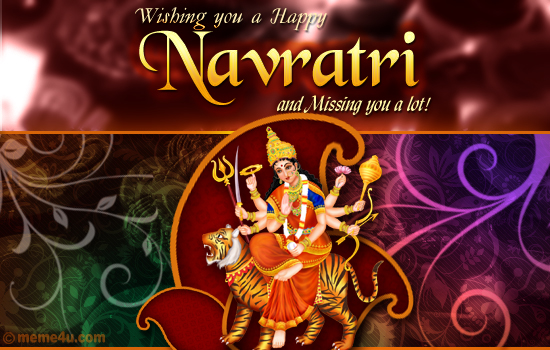
There are five Navaratris devoted to the worship of Shakti (Parvati or Durga). Out of these only three are being celebrated now.
1. Sharada Navaratri - This is the Navaratri, which is celebrated during Sharad Ritu (beginning of winter) (Sept-Oct). This is also called Maha Navaratri. Sharada became Sharad in some places. This celebrates the slaying of Mahishasura by Durga. The festival is observed in most parts of India - especially in the East.
2. Vasant Navaratri - This is celebrated during Vasant Ritu (beginning of summer) (March- April). This Navaratri is celebrated in North India. Vaishno Devi temple in Jammu observes Navaratri during this period.
3. Ashada Navaratri - This Navaratri is particularly important for all Upasakas of Varahi- Celebrated in July-August. This is called Guhya Navaratri in Himachal Pradesh. Varahi is one of the seven Matrikas of Devi Mahatmya!.
Navaratri is celebrated in different ways throughout India. In North India, all three Navratris are celebrated with much fervor by fasting on all nine days and worshipping the Goddess Parvati in her different forms. The Chaitra Navratri culmintes in Ram Navami and the Sharad Navratri culminates in Durga Puja and Dussehra. The Dussehra of Kulu in Himachal Pradesh is particularly famous in the North.
In the South Indian states of Tamil Nadu & Karnataka, Sharad Navratri is celebrated by setting up of Golu (pronounced as Golu or Kolu) or Bombegalu. It is believed[who?] that this was a means to invite people home to celebrate the festivities with them. In Karanataka, particularly Mysore on the 10th day the enacting of destruction of evil (Ravana destroyed by Rama) is displayed with the lighting of dolls representing Ravana and forces of evil (2.5 millennia earlier version of the British Guy Faukes Day - Nov 5th).
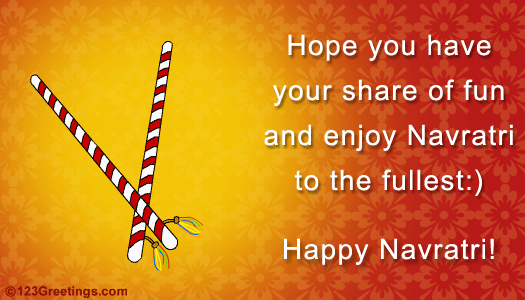
In West India, Sharad Navratri is celebrated with the famous Garba.
























 Anupamaa
 Dr Aarambhi
 Yeh Rishta Kya Kehlata Hai

