

Amidst Covid 19 Arrives Next Global Emergency: Monkey Pox

Sutapasima thumbnail
Posted: 3 years ago
#1

Monkeypos

Human beings are not yet out of the various outbreaks/waves of Covid 19, here comes another attack on the fragile humans.

  • The WHO declared monkeypox a global health emergency.
  • The rare designation means the WHO now views the outbreak as a significant enough threat to global health that a coordinated international response is needed.
  • The WHO last issued a global health emergency in January 2020 in response to the Covid-19 outbreak.
  • Europe is the epicenter of the outbreak. Right now, men who have sex with men are the community at highest risk.
  • The WHO chief said the global risk is moderate, but the threat is high in Europe.
  • Monkeypox is unlikely to disrupt international trade or travel right now, the WHO chief said.
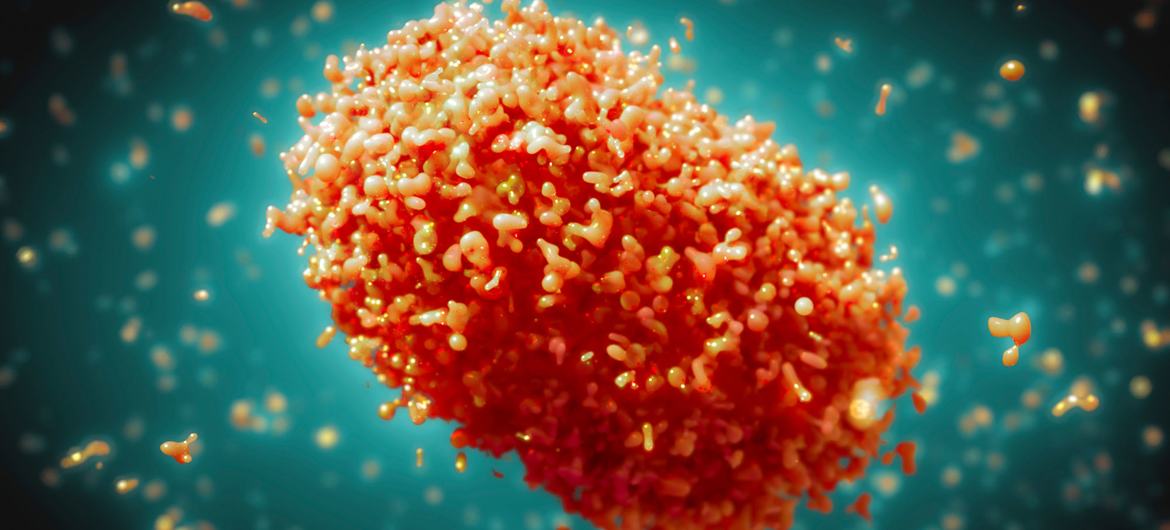
Monkeypox is a rare but dangerous infection similar to the now eradicated smallpox virus.Artist’s recreation of electron microscopic view of the Monkey pox virus. .


Two months ago WHO had warned UN about the impending global out break of Monkey Pox. UN experts opined differently. This month WHO has released warning of Out break of Monkey Pox on more than 70 countries and Europe was the epicentre of the outbreak. It’s not likely to turn of turning into a pandemic right now.

Before a global health emergency is declared, the WHO’s emergency committee meets to weigh the evidence and make a recommendation to the director general. The committee was unable to reach a consensus on whether monkeypox constitutes an emergency. Tedros, as the WHO’s chief, made the decision to issue the highest alert based on the rapid spread of the outbreak around the world.

“We have an outbreak that has spread around the world rapidly, through new modes of transmission, about which we understand too little,” Tedros said. “For all of these reasons, I have decided that the global monkeypox outbreak represents a public health emergency of international concern.”

More than 16,000 cases of monkeypox have been reported across more than 70 countries so far this year, and the number of confirmed infections rose 77% from late June through early July, according to WHO data. Men who have sex with men are currently at highest risk of infection.

Five deaths from the virus have been reported in Africa this year. No deaths have been reported outside Africa so far.

Most people are recovering from monkeypox in two to four weeks, according to the U.S. Centers for Disease Control and Prevention. The virus causes a rash that can spread over the body. People who have caught the virus said the rash, which looks like pimples or blisters, can be very painful.

The current monkeypox outbreak is highly unusual because it is spreading widely in North American and European nations where the virus is not usually found. Historically, monkeypox has spread at low levels in remote parts of West and Central Africa where rodents and other animals carried the virus.

Europe is currently the global epicenter of the outbreak, reporting more than 80% of confirmed infections worldwide in 2022. The U.S. has reported more than 2,500 monkeypox cases so far across 44 states, Washington, D.C., and Puerto Rico.

Tedros said the risk posed by monkeypox is moderate globally, but the threat is high in Europe. There’s clearly a risk that the virus will continue to spread around the world, he said, though it’s unlikely to disrupt global trade or travel right now.

It’s unclear where the outbreak actually began.

The WHO last issued a global health emergency in January 2020 in response to the Covid-19 outbreak and two months later declared it a pandemic. The WHO has no official process to declare a pandemic under its organizational laws, which means the term is loosely defined. In 2020, the agency declared Covid a pandemic in an effort to warn complacent governments about the “alarming levels of spread and severity” of the virus.

The WHO’s lead expert on monkeypox, Dr. Rosamund Lewis, told reporters in May that the U.N. health agency was not concerned about monkeypox causing a global pandemic. She said public health authorities had a window of opportunity to contain the outbreak.

But infectious disease experts are concerned that health authorities have failed to contain the outbreak, and monkeypox will permanently take root in countries where the virus wasn’t previously found with the exception of isolated cases linked to travel.


Monkeypox is not a new virus

In contrast to Covid-19, monkeypox is not a new virus. Scientists first discovered monkeypox in 1958 in captive monkeys used for research in Denmark, and confirmed the first case of a human infected with the virus in 1970 in the nation of Zaire, now called the Democratic Republic of the Congo.

Monkeypox is in the same virus family as smallpox, though it causes milder disease. The WHO and national health agencies have decades of experience fighting smallpox, which was declared eradicated in 1980. The successful fight against smallpox, and the tools developed against it, will provide health officials with important knowledge to combat monkeypox.


Signs , symptoms and Risk Factors

In the past, monkeypox normally began with symptoms similar to the flu, including fever, headache, muscle aches, chills, exhaustion and swollen lymph nodes. The disease then progressed into a rash that can spread over the body. Patients are considered most infectious when the rash develops.

But in the current outbreak the symptoms have been atypical. Some people are developing a rash first, while others are showing a rash without any flu-like symptoms at all. Many patients have developed a localized rash on their genitals and anus.


Gay& Bisexual Men are at Risk

Monkeypox is primarily spreading through skin-to-skin contact during sex. Men who have sex with men are at the highest risk right now, as the majority of transmission has occurred in the gay community. However, the WHO and the CDC have emphasized that anyone can catch monkeypox regardless of sexual orientation.

Scientists in Spain and Italy detected monkeypox virus DNA in semen from positive patients, though it’s still unclear whether whether the virus can spread through semen during sex. The Spanish scientists also detected monkeypox DNA in saliva samples.

It’s also unclear whether the virus can spread when people are infected but don’t have symptoms, known as asymptomatic transmission.

Vaccines

Since monkeypox is not a new virus, there are already vaccines and antivirals to prevent and treat the disease it causes, though they are in short supply.


There is no data yet on the effectiveness of the vaccines against monkeypox in the current outbreak


Edited by Sutapasima - 3 years ago

Created

Last reply

Replies

5

Views

1.3k

Users

2

Likes

26

Frequent Posters

Sutapasima thumbnail
Posted: 3 years ago
#2

Global COVID-19 Vaccination Strategy in a Changing World: July 2022 update


The strategy aims to use primary and booster doses to reduce deaths and severe disease, in order to protect health systems, societies and economies. On the way to reaching the 70% vaccination target, countries should prioritize achieving the underpinning targets of vaccinating 100% of health care workers and 100% of the most vulnerable groups, including older populations (over 60s) and those who are immunocompromised or have underlying conditions.

“Even where 70% vaccination coverage is achieved, if significant numbers of health workers, older people and other at-risk groups remain unvaccinated, deaths will continue, health systems will remain under pressure and the global recovery will be at risk,” said WHO Director-General Dr Tedros Adhanom Ghebreyesus. “Vaccinating all those most at risk is the single best way to save lives, protect health systems and keep societies and economies open.”

To ensure vaccines reach the highest priority groups, the strategy emphasizes the need for measuring progress in vaccinating these groups and developing targeted approaches to reach them. Approaches include using local data and engaging communities to sustain demand for vaccines, building systems for vaccinating adults, and reaching more displaced people through humanitarian response.

The strategy also has the goal of accelerating development and ensuring equitable access to improved vaccines to substantially reduce transmission as the top priority but also to achieve durable, broadly protective immunity.


  • The global COVID-19 vaccination rollout is the biggest and fastest in history but many of those at greatest risk remain unprotected – only 28% of older people and 37% of health care workers in low-income countries have received their primary course of vaccines and most have not received booster doses.
  • Health care workers, over 60s and other at-risk groups must be reached as priorities on the way to reaching the 70% coverage target.
  • WHO’s strategy update elevates the targets of vaccinating 100% of health care workers and 100% of the highest risk populations with both primary and booster doses, with the aim of reducing deaths, keeping societies open and ensuring economies function as transmission continues.
  • While vaccines have saved countless lives, they have not substantially reduced the spread of COVID-19. Innovation is needed to develop new vaccines that substantially reduce transmission, are easier to administer and give broader and longer-lasting protection.
Edited by Sutapasima - 3 years ago
Sutapasima thumbnail
Posted: 3 years ago
#3

“So, is it COVID-19 over? No, it’s most certainly not over. I know that’s not the message you want to hear, and it’s definitely not the message I want to deliver”, he highlighted.

He added that although in many countries all restrictions have been lifted and life looks much like it did before the pandemic, reported cases are increasing in almost 70 countries in all regions.

"And this in a world in which testing rates have plummeted”, he added.

Tedros warned that reported deaths are also rising in Africa, the continent with the lowest vaccination coverage.

“This virus has surprised us at every turn – a storm that has torn through communities again and again, and we still can’t predict its path, or its intensity”, he emphasised

It is possible to end the pandemic

Tedros said that WHO’s primary focus now is to support countries to turn vaccines into vaccinations as fast as possible, but they are still seeing supply-side problems for tests and therapeutics with insufficient funds and access.

The pandemic will not magically disappear. But we can end it. We have the knowledge. We have the tools. Science has given us the upper hand”, he said, calling on countries to work together to reach 70% of vaccination coverage.

Viswasruti thumbnail
Posted: 3 years ago
#4

Good post with much-needed information, Sutapa. 👏

The plummeting of new variants everywhere in the world including India, the 4th wave is here, and Monkeypox is spreading it's deadly wings fast.

In addition to the recent surge in the number of Covid cases across several regions, India reported its first case of monkeypox virus last week in Kerala. The infected person is said to have reached the state capital recently from UAE and started feeling symptoms soon after landing. In the wake of the first confirmed case in the country, GoI on Friday released fresh guidelines for international travellers to control the spread of the virus.

Health agencies across the globe are still figuring out how severe and lethal the virus can be. Several countries have been failing to control the spread, despite being aware of the origin and integrities of the monkeypox virus in humans since the 1970s. While the Covid pandemic is not over, only timely and strategized measures can prevent another major outbreak.

For that, one has to follow all the required precautions. Be safe by wearing a mask, please vaccinate yourself as soon as possible.

Sutapasima thumbnail
Posted: 3 years ago
#5

A window closing

Researchers have been warning that the window of opportunity for containing the global monkeypox outbreak is rapidly closing. The virus is already established in an animal reservoir in some parts of Africa, making its eradication a difficult task. One fear is that the virus could spread from humans to animals elsewhere in the world, establishing further reservoirs from which humans could be infected repeatedly.


Containment concerns

Wealthy countries have raced to deploy smallpox vaccines, thought to be highly effective against monkeypox because the viruses that cause these diseases are related. Although some children and women have been infected with monkeypox, almost all the infections in the global outbreak have occurred so far in men who have sex with men (MSM), especially those with multiple sexual partners. This has led public-health officials to focus their messaging and vaccine stockpiles on this population. At first, some countries, such as Canada and the United Kingdom, used a ‘ring vaccination’ approach, which inoculates the close contacts of people infected with monkeypox to cut off routes of transmission. They then moved quickly to offer the vaccine more widely to high-risk communities, including MSM and health-care workers.

Edited by Sutapasima - 3 years ago

Related Topics

Debate Mansion thumbnail

Posted by: Viswasruti · 2 months ago

Killer Brain-Eating Amoeba in Kerala: Killed 18; Health Crisis like Covid? The recent reports from Kerala about the brain-eating amoeba claiming...

Expand ▼
Top

Stay Connected with IndiaForums!

Be the first to know about the latest news, updates, and exclusive content.

Add to Home Screen!

Install this web app on your iPhone for the best experience. It's easy, just tap and then "Add to Home Screen".