





FOR ALL THOSE WATCHING THE RE-RUN OF JODHA AKBAR AND MY OLD READERS
Folks,
Those of you who still visit the Jodha Akbar forum, and used to read my almost daily episode analyses for Jodha Akbar between June 2013 and April 2014, would be surprised, if not startled, to see me popping up again, like Rip van Winkle😉, well after the serial has been (clumsily) wound up. It is not a long story, so here goes.
My very good friend Mandy (ghalibmirza) had persuaded me, somewhat against my better judgement, to write episode analyses once again for those watching the rerun of Jodha Akbar. This began on her Jodha Akbar Discussion thread at
https://www.indiaforums.com/forum/zee-anmol/4447559/jodha-akbar-discussion-corner
and I have so far done Episodes 1-10. These were fresh ones for me, since I had posted first in this forum only 2 weeks after Jodha Akbar started, on June 30, 2015. I had thus done these new ones on a daily basis.
But from now on, I shall be doing biweekly posts for 3 episodes at a time, on Thursdays and Sundays.
As for reviving these posts in the main Jodha Akbar forum, this is in response to requests from some of my regular readers, who felt that there might be interest in reading them even among casual visitors to this forum. I am not very sure of this, but I am willing to make experiment, so here goes with the post for Episode No.1: Sound and Fury.
I send PMs about these posts to a certain number of regular readers who want that, and if you want to be included in that list, all you need to do is to send me a PM to that effect.
If you read this post or the follow up ones and happen to like them, do hit the Like button without fail. I want to keep track of my regular readers even if they are silent readers, and this is the only way I can do that. So please do not forget the Like button!
Shyamala B.Cowsik
____________________________________________________________________Jodha Akbar 4: Siyaasat ki chaal
Folks,
At the first viewing of this episode, I felt that my post about it would be a one pager, as there seemed to be nothing of substance in it bar the Jalal-Abdul exchange about the horse, which was a rare delight for eye and ear alike. But on the mandatory second viewing, when I patiently sat thru the darbar scene of the Ameradipati nyay priya (my foot!😡) Bharmal, and the Sujamal-Jodha scenes that followed and preceded it, it was clear that a bit more was called for. So here goes, and as they advise one while sitting down to a special meal, let us take the best first.
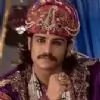
Tez dimaag aur shaatir wafadaari: This pretty much sums up Abdul, and the shaatir dimaag that never fails to light up his eyes at the oddest moments is such a delight that the fact of his subsequent and unexplained disappearance catches at my throat like a suppressed sob.
He is that rare companion who cares for Jalal for his own sake, and rates his Shahenshah's well-being and his march to a place in history far more than his own position, even in Jalal's eyes. Such courtiers are rare, and are worth their weight in gold, for they hold a pitiless mirror up to the face of their sovereign, and speak the kadwa sach to him where no one else would dare to. Much later, there is Atgah Khan, who also speaks the truth to Jalal, but far more gently and in a far more roundabout way than Abdul, even if equally effectively.
In fact, to look at Jalal and Abdul, one would have imagined that they had grown up together from boyhood. One presumes they have not, but there is a deep and genuine friendship between them regardless, a friendship that, on Jalal's side, can take the most blunt criticism without flying into a temper. Which other emperor would let a subordinate ask him : Aapne ghoda kyon de diya Shahenshah? Jahan aapko hi apni pasand ki cheeez yahan haasil nahi hoti, waisi sultanat ka kya hoga?
A void to be filled: But Jalal does, and Abdul can get away with such things because of the very strong bond of camaraderie, and trust, that they share. And this bond exists not only because Jalal understands and accepts plain speaking when he knows that it is honest and not due to some inner agenda. It exists as much because there is a void in Jalal's zehen, a void created by the absence of those who care, not for the Shahenshah, but for Jalal. And Abdul, who Jalal knows without any doubt is one such, fills this void to some extent.
So he can say bluntly: Jise ek bar Shahenshah ne chun liya, wo cheez phir kisi aur ki pasand nahin ban sakti.Kya Khan Baba to itni bhi samajh nahin jo apni hi pasand saamne rakh diya?
Dangerous arrogance: Now this is a bit unfair because there is no indication, at this point, that Bairam Khan would have insisted on having that horse in the face of Jalal's liking for it.
But the very fact that his khwaja sera has the unbelievable audacity to speak up in front of the Shahenshah, and in effect tell him that he cannot have this horse as the Wazir-e-Sultanat had already booked it, clearly demonstrates that the Shahenshah's wishes are considered, even by a lowly slave, as of little moment when they clash with those of Bairam Khan. Surely Bairam Khan must have indicated as such, at least indirectly, to his inner circle, even to this khwaja sera, otherwise the latter would never have dare to speak up in that fashion.
Later, in the cases of Zaheer and Raja Takhatmal, Bairam Khan carries this arrogance too far, and sets himself up for his eventual fall.
Do sakhaaon ka rishta: To revert, the little scene that follows Jalal's outburst against Abdul is a true gem. It is really more like play-acting between the Shahehshah and his sakhaa - that lovely term used for Lord Krishna in the Mahabharata, by, who else, his sakhi Draupadi - than like a real attempt to threaten him, not to speak of punishing him.
Even with Jalal's khanjar at his throat, Abdul's eyes are alight with an impish glee as he explains that Jalal cannot kill him: Meri to jaan hi jayegi, par aap ki shaan.. Log kya kahenge, ki Shahehshah ne ek nihatte, kamzor apahij jo maar diya?
And as he listens to him, the anger, very likely fake anger, in Jalal's eyes gives way to amusement, as a reflection of the glee in Abdul's eyes creeps into his. The way in which he puts his hand behind Abdul's head and says, every syllable drawn out in open indulgence and affection: Nihatta apahij,, haan?, is a delight to behold.
A minute later too, as Abdul, unwilling to leave without having the last word, says to the khwaja sera in open raillery: Laga do is ghode par Wazir-e- Sultanat ki mohar. There is a slight frown in Jalal's eyes. But as he goes on, Kyonki pehchan ghode se nahin, uske sawaar se hoti hai.. Jalal smiles.
NB: True enough, for Bairam Khan rides, not with Jalal's easy grace, but rather as though a sack of potatoes had been loaded on to the unfortunate horse!
Abdul continues: Aur jis ghode par mere Shahenshah sawaari karenge, wo sabse behatareen kehlayega! Baki sab.. and a throwaway gesture of contempt..
And here the warmth of Jalal's smile is a wonder to behold. For it is not that he rates his Khan Baba and his wishes any less, it is rather that he rates Abdul's unshakeable loyalty even more.
It is this that lends to Abdul's closing, sotto voce lament a special poignancy: Khwahish rakhta hoon ki kash Bairam Khan ke mansoobe aapke saamne benaqaab hon, aur aap samajh payein ki hukumat bhale hi aapki rahi hai, par iske peeche usool hamesha se hi Bairam Khan ke hi chale hain. Would that he could have been there to see, and rejoice in this manshaa of his coming true at last!😭
Siyaasat ki seekh ?: There was nothing much here, except for a mini-rehash of the earlier nosh farmayiye bit 2 days earlier. What passes my understanding is how Sharifuddin, having barely survived that encounter, was idiotic enough to openly contradict the Shahenshah and blurt out : Siyaasat yeh kehti hai ki dushman par humla tab kiya jai jab wo akela ho..
But perhaps it was as well that he did so, for it gave us a chance to watch Jalal as he turns, eyes clear but cold, oh so cold, and ask Sharifuddin, in level tones : To ab siyaasat ki samajh humein tum se leni hogi? The menace that this question hid literally radiated out from him like a wave of biting cold. So much so that Sharifuddin, paralysed by sudden fear of his life, fell to his knees in abject apology.
As for Jalal's master plan of beheading all the Rajput Rajas after defeating them, in one fell sweep - with so much samay ki bachat!- it should have normally elicited the warm approval of his Khan Baba, the arch-exponent of sar kalamofying. However, it is not so, and of that tomorrow.
But for now, we leave Jalal already savouring the triumph he is sure will come - Na rahega sar, na rahega uska guroor- as he suddenly flings his khanjar over his shoulder and into the heart of the map of Rajasthan.
A bond to remember: I had not paid that much attention to the Sujamal-Jodha passages the first time, but now, I was enchanted by the depth of the protective affection between them which, on Jodha's side, is far stronger than that she has with any of her other brothers and cousins.
Not knowing how devious and hypocritical her father is, she is confident, far more than Sujamal, that he will be anointed the next king of Amer. This is perhaps partly wishful thinking, but it is genuine for all that. Thus when Mynavati speaks of a grand announcement at the gathering of princes, Jodha's eyes light up with delight, as she assumes that this will be about Sujamal being the heir. As she exclaims Hum jaante hai, the correct word to describe her face would be praphullit.
And when Mynavati notes that it could be about her, Jodha, the beautiful eyes are clouded with sudden puzzlement. Both expressions are very convincing.
Later, at the sabha, Jodha and Sujamal exchange glad glances of anticipation, but when the actual announcement comes, Jodha's face is as if a diya has suddenly been extinguished in the recesses of her soul.
The appeal of their scenes together is also because Sujamal looks every inch a Rajput prince. It is a pity that his role was so suddenly truncated.
Anyaypriya Ameradipati: Of Bharmal, his lies about having brought Sujamal up as a son, his total lack of an even weak rationale for his ditching the real heir to the throne that was his only as a caretaker (Sandhya, your Dhritarashtra parallel is valid here too!) to direct the succession to his own blood, the less said the better. So I shall not even try, except to note that Bharmal's siyaasat ki chaal rivals that of Jalal, and even Bairam Khan.
Bye till tomorrow, folks!
Shyamala (B.Cowsik)/Aunty/Akka/Di













 Health and Fitness
 Fan Fictions


377