Sunita Gowariker, producer of Mohenjo Daro, discusses the upcoming film, director-husband Ashutosh Gowariker and how the movie will dispel any doubt about its content
When did the idea of Mohenjo Daro first arise?
Actually, he (Ashutosh Gowariker) thought of Mohenjo Daro even beforeJodhaa Akbar, so that's a very long time ago. He is always simultaneously thinking of two to three ideas while making a film. So Jodhaa Akbar happened first, then What's Your Rashee? and then Khelein Hum Jee Jaan Se. He decided to make Mohenjo Daro next. When he told me about it, my knee-jerk reaction was that the city does not exist any more, which means we would have to recreate it from scratch. The first question I asked him was - How would we do it? And he said, We put up the whole city'.
Was budget an issue?
Our first thought was not about the budget but creating the entire village. After that, we worked backwards towards the budget.
You mentioned that Ashutosh had nurtured the idea for a long time. Did he start scripting the film only after he decided to make the movie?
Typically, Ashutosh first writes it as an idea, then he starts expanding it. But, of course, the screenplay is written after one film is compete and he knows what he wants to make next. Basically, first, it was the story, which was about 40 pages long, and he wrote the screenplay after Khelein Hum Jee Jaan Sey, when he was sure he wanted to make Mohenjo Daro.
Was Hrithik Roshan always the first choice?
Ashu wrote Mohenjo Daro with Hrithik Roshan in mind. That's why, when Shuddhi happened for Hrithik, we were in a dilemma, and we wondered, now what? Ashu was still writing it and we were a little worried but, luckily, once Hrithik heard the story, he green-lighted it.
What was the idea behind launching a new girl opposite Hrithik?
When Ashutosh was writing the character of Chaani, the idea was that when people see her, they should accept her as the chosen one'. When you are the chosen one', you come without any baggage or preconceived impressions about that actor. He wanted the slate to be absolutely clean. When the audience watches the film, they will not see Pooja Hegde, they will see only Chaani. If you cast someone who is known, the actor's name always comes to mind, like for Sarman (Hrithik's name in the film), Hrithik Roshan' comes to mind first. That's why we decided to launch a new girl.
In an interview to Box Office India, you once mentioned that you had turned producer to support Ashutosh's vision of direction and that you didn't know anything about production. From your first film (Swades) as producer to Mohenjo Daro, how much have you learnt?
When Ashutosh wanted to make Swades, and we wanted to start our own production house, he came to me and we discussed it. Until then, I had not played an active part in the film industry. Whatever I knew had come from him. When he said let's do it', I thought I could manage. I casually said yes' even though I knew nothing about how the industry worked.
So I learnt from scratch. In fact, at all the meetings before we went on to shoot, they used to talk about smoke pe daal denge' and I was blank as Ashutosh did not attend all the meetings. Later, at home, I would ask him what each term meant. Slowly and steadily, I learnt the ropes. I am not saying I know it all because every film teaches you something new but, sure, I have come a long way.
Tell us about the journey with regard to finalising the location where you created the entire city because you said this was the first thought that crossed your mind.
Basically, we needed vast, open land. Also, the location could not be too remote because I had a crew to take care of. It had to be a blend of comfort and a place where we could build the entire set without anything obstructing its view. So we started with Baroda and Indore, where we kept doing the recce and then, one day, I suggested Bhuj. I know that Bhuj doesn't get any rainfall, so even if the shoot went on longer than expected - insurance doesn't cover rainfall - we wouldn't get into trouble.
So we decided on Bhuj and when we started looking around, we came upon the field that was used in Lagaan. And the village was also there. Then we began designing the set. Since Mohenjo Daro was a well-planned city, we had to have a grid. We started building the main city, the village square and the arena, and then there is the upper city, where the wealthy used to live. That's how we came to shoot in Bhuj and it took around six months.
Apart from what archaeologists say, there isn't a whole lot of material available on Mohenjo Daro. How did you focus your research to minimise criticism, if any, on this front?
Ashutosh does his research all by himself and it begins with a dot. He got his hands on what was already available onMohenjo Daro. He picked up all those elements and then started stitching a story around it. Then we invited 12 archaeologists and hosted them for three days, during which time he asked them whether the world he had imagined made any sense to them.
Since these were prehistoric times, each one had a different version. In the end, it's Ashu's vision and his version of it. We have always said that it's a make-believe world because there are no records available on this era.
How do you and Ashutosh divide up the work?
He handles the director's domain and mine is production, so we don't encroach into each other's space. Of course, we interact a lot, so when he brings in his script, we discuss it, we budget it and put a number to it and see if the film is economically viable. Ultimately, it has to make business sense, not only to you but also to your co-producers or anybody else who comes on board, including the actors.
After we arrive at a number that makes sense to everyone, we let him know what will be available when he presents his wishlist. We always try to make sure he gets everything but that is sometimes not possible. In which case, we give him a choice. So there are arguments and creative differences but everything happens for the film's good.
Our industry is changing in every sense and we now see a lot of women taking charge. You are one of the few women producers...
(Cuts in) You know, women are maternal by nature and have an instinct for taking care of everyone and everything. Since that kicks in very nicely, as a producer, things become a little easier. Women are good at multitasking. Of course, I have a team to help me and one is only as good as one's team is but it's easy for a woman to delegate and oversee everything.
If anyone were to ask me what it takes to be a producer, I would say one has to respect every single person in your crew. You have to make sure everybody is comfortable, that the director gets what he wants, and that everybody is working in synergy and shares the same vision. India is a wonderful place for women because of the support system you get at home.
Ashutosh's films are usually three hours long. What made you limit Mohenjo Daro's run time to 2 hours and 30 minutes?
Economically viable hona chahiye, and, over time, the audience and their lifestyle has changed. People are doing so much now, we have to watch a film, shopping bhi jaana hai, friend ke yahaan function bhi jaana hai aur mujhe bache koschool se uthake homework bhi karaana hai. That's why Ashutosh and I decided to limit the film's run time.
Post the trailer launch, what has the response been like?
We received some amazing responses and, of course, there are people who question certain things. There were no horses during that era but we have shown our characters seeing horses for the first time. Similarly, coming to costumes, we have no idea what they used to wear in those days. So obviously this is Ashutosh's imagination, obviously it's not a true story.Ab kahaani mein toh imagination hi hota hai.
What are your final comments on Mohenjo Daro?
I hope people watch the film with an open mind because it is somebody else's vision, not yours. Whether you like it or not is a different matter but please comment only after you watch the film. Most of the issues people have raised have been addressed in the film.
Also, a lot of people are talking about the title Mohenjo Daro', which means mound of the dead' but that was a name assigned by archaeologists. We really don't know what the city was really called. Ashutosh chose Mohenjo Daro as the title because it has great recall value not only in India but all over the world. People will immediately know that one is referring to the Indus Valley civilisation.

















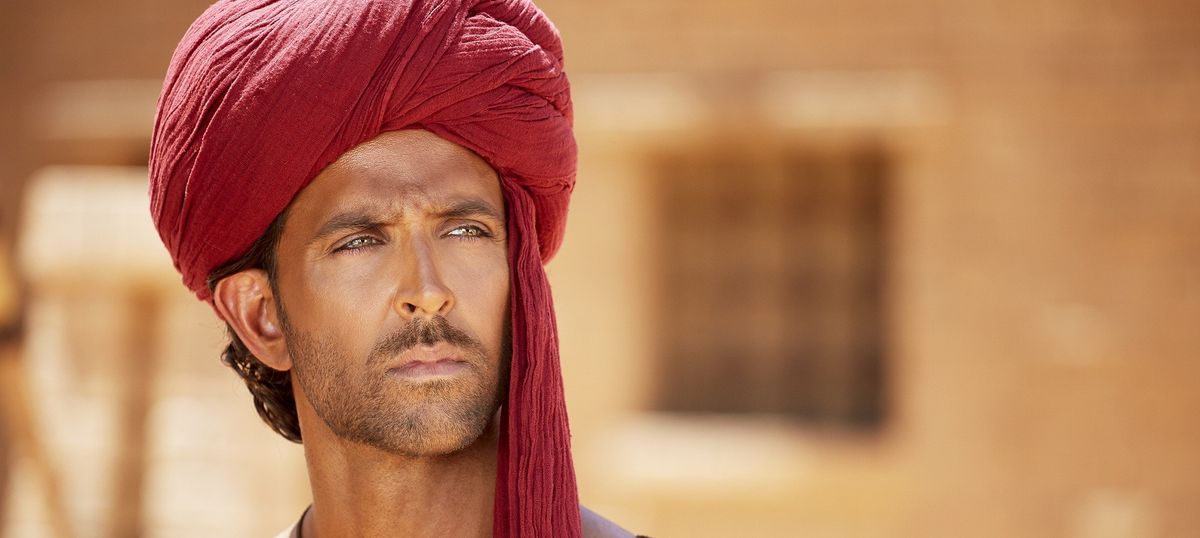 Image credit: UTV
 Pooja Hegde in Mohenjo Daro'.



 Kyunki Saas Bhi Kabhi Bahu Thi 2
 Indian Premier League


20