





Posted:
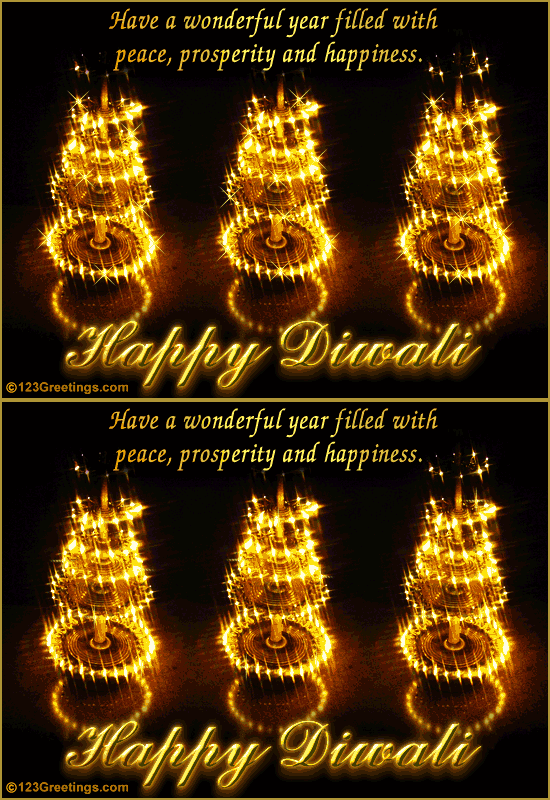
Diwali celebrates the universal themes of good defeating evil, love over prejudice, and knowledge over ignorance.
The true message of Diwali is: "Lead us from Falsehood to Truth; from Darkness to light; from Death to Immortality and from Lethargy to Activity."
Deepavali (also spelled Devali in certain regions) or Diwali, popularly known as the festival of lights, is an important five-day festival in Hinduism, Jainism, and Sikhism, occurring between mid-October and mid-November. For Hindus, Diwali is the most important festival of the year and is celebrated in families by performing traditional activities together in their homes.
The name Diwali is itself a contraction of the word "Deepavali" (Sanskrit: Dipavali), which translates into row of lamps. Diwali involves the lighting of small clay lamps (diyas, or dipa) filled with oil to signify the triumph of good over evil. During Diwali, all the celebrants wear new clothes and share sweets and snacks with family members and friends. Most Indian business communities begin the financial year on the first day of Diwali.
During Deepavali people pray to Lakshmi, Goddess of wealth, light, prosperity and wisdom, but also to Ganesha, the 'Remover of Obstacles' and the 'Lord of Beginnings'.
Diwali commemorates the return of Lord Rama along with Sita and Lakshman from his fourteen-year-long exile and vanquishing the demon-king Ravana. In joyous celebration of the return of their king, the people of Ayodhya, the Capital of Rama, illuminated the kingdom with earthen diyas (oil lamps) and burst crackers.
The day one of Dhan Theras is considered to be an auspicious day for buying of gold or silver. The Lakshmi Puja is performed on this day, and diya's are lit to drive away evil spirits. Bhajans, in the praise of Goddess Lakshmi are also sung.Day two of Narak Chaturdasi which also known as Chhoti Diwali, this day is allotted for the worship of Maha-Kali or Shakti, as it believed that on this day, Maa Kali killed the evil Narakasura. This is a day to abolish laziness and evil.On day three of Lakshmi Pooja, the most important day of the 5-day festival. Hindu homes worship Lakshmi, the Goddess of wealth, and Ganesh, the God of auspicious beginnings. They then light lamps to welcome prosperity and new beginnings.The day four Goverdhan Puja day is believed that on this day, Lord Krishna defeated Lord Indra. He saved the people from floods and storm, by lifting the famous Govardhan Pahad. Men gift their wives on this day. It is supposed to be the first day of a New Year according to the Gujrati calendar. On Day five, Bhai Dhooj day, brothers and sisters meet to express their love and affection for each other. It is believed that Yami welcomed her brother Yama, the Lord of Death. They had a feast together on this day.
In Jainism, Diwali marks the attainment of moksha or nirvana by Mahavira in 527 BC. In Sikhism, Deepavali commemorates the return of Guru Har Gobind Ji to Amritsar after freeing 52 Hindu kings imprisoned in Fort Gwalior by defeating Emperor Jahangir; the people lit candles and diyas to celebrate his return. This is the reason Sikhs also refer to Deepavali as Bandi Chhorh Divas,"the day of release of detainees".





















 Kyunki Saas Bhi Kabhi Bahu Thi 2
 Members Lounge
 Mr And Mrs Parshuram
 Dr Aarambhi

