Holi : The Festival of Colours!!

coolhi1988 thumbnail
13th Anniversary Thumbnail Achiever Thumbnail + 3
Posted: 8 years ago
#1
https://happyholifestival.in/wp-content/uploads/2017/02/happy-holi-images.jpg


The colorful festival of Holi is celebrated on Phalgun Purnima which comes in February end or early March. Holi festival has an ancient origin and celebrates the triumph of 'good' over 'bad'. The colorful festival bridges the social gap and renew sweet relationships. On this day, people hug and wish each other 'Happy Holi'.


Holi celebration begins with lighting up of bonfire on the Holi eve. Numerous legends & stories associated with Holi celebration makes the festival more exuberant and vivid. People rub 'gulal' and 'abeer' on each others' faces and cheer up saying, "bura na maano Holi hai". Holi also gives a wonderful chance to send blessings and love to dear ones wrapped in a special Holi gifts.


https://www.graphics99.com/wp-content/uploads/2011/11/Happy-Holi.jpg

Created

Last reply

Replies

50

Views

3.7k

Users

14

Likes

216

Frequent Posters

coolhi1988 thumbnail
13th Anniversary Thumbnail Achiever Thumbnail + 3
Posted: 8 years ago
#2


http://www.graphics99.com/wp-content/uploads/2011/11/Happy-Holi.jpg

History of Holi


Holi is an ancient festival of India and was originally known as 'Holika'. The festivals finds a detailed description in early religious works such as Jaimini's Purvamimamsa-Sutras and Kathaka-Grhya-Sutras. Historians also believe that Holi was celebrated by all Aryans but more so in the Eastern part of India.


It is said that Holi existed several centuries before Christ. However, the meaning of the festival is believed to have changed over the years. Earlier it was a special rite performed by married women for the happiness and well-being of their families and the full moon (Raka) was worshiped.


http://www.graphics99.com/wp-content/uploads/2011/11/Happy-Holi.jpg


coolhi1988 thumbnail
13th Anniversary Thumbnail Achiever Thumbnail + 3
Posted: 8 years ago
#3


http://www.graphics99.com/wp-content/uploads/2011/11/Happy-Holi.jpg


Calculating the Day of Holi


There are two ways of reckoning a lunar month- 'purnimanta' and 'amanta'. In the former, the first day starts after the full moon; and in the latter, after the new moon. Though the amanta reckoning is more common now, the purnimanta was very much in vogue in the earlier days.


According to this purnimanta reckoning, Phalguna purnima was the last day of the year and the new year heralding the Vasanta-ritu (with spring starting from next day). Thus the full moon festival of Holika gradually became a festival of merrymaking, announcing the commencement of the spring season. This perhaps explains the other names of this festival - Vasanta-Mahotsava and Kama-Mahotsava.


http://www.graphics99.com/wp-content/uploads/2011/11/Happy-Holi.jpg


coolhi1988 thumbnail
13th Anniversary Thumbnail Achiever Thumbnail + 3
Posted: 8 years ago
#4


http://www.graphics99.com/wp-content/uploads/2011/11/Happy-Holi.jpg


Reference in Ancient Texts and Inscriptions


http://www.ithappensinindia.com/wp-content/uploads/2012/02/History-of-Holi-500x318.jpg


Besides having a detailed description in the Vedas and Puranas such as Narad Purana and Bhavishya Purana, the festival of Holi finds a mention in Jaimini Mimansa. A stone incription belonging to 300 BC found at Ramgarh in the province of Vindhya has mention of Holikotsav on it. King Harsha, too has mentioned about holikotsav in his work Ratnavali that was written during the 7th century.


The famous Muslim tourist - Ulbaruni too has mentioned about holikotsav in his historical memories. Other Muslim writers of that period have mentioned, that holikotsav were not only celebrated by the Hindus but also by the Muslims.


http://www.graphics99.com/wp-content/uploads/2011/11/Happy-Holi.jpg

coolhi1988 thumbnail
13th Anniversary Thumbnail Achiever Thumbnail + 3
Posted: 8 years ago
#5


http://www.graphics99.com/wp-content/uploads/2011/11/Happy-Holi.jpg


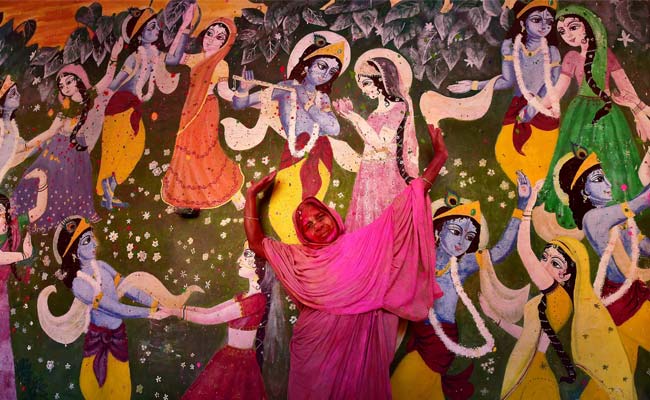
Reference in Ancient Paintings and Murals

https://i.ndtvimg.com/i/2017-03/holi-vrindavan-pti_650x400_71489276724.jpg


The festival of Holi also finds a reference in the sculptures on walls of old temples. A 16th century panel sculpted in a temple at Hampi, capital of Vijayanagar, shows a joyous scene of Holi. The painting depicts a Prince and his Princess standing amidst maids waiting with syringes or pichkaris to drench the Royal couple in coloured water.


A 16th century Ahmednagar painting is on the theme of Vasanta Ragini - spring song or music. It shows a royal couple sitting on a grand swing, while maidens are playing music and spraying colors with pichkaris.


There are a lot of other paintings and murals in the temples of medieval India which provide a pictoral description of Holi. For instance, a Mewar painting (circa 1755) shows the Maharana with his courtiers. While the ruler is bestowing gifts on some people, a merry dance is on, and in the center is a tank filled with colored water. Also, a Bundi miniature shows a king seated on a tusker and from a balcony above some damsels are showering gulal (colored powders) on him.


http://www.graphics99.com/wp-content/uploads/2011/11/Happy-Holi.jpg


coolhi1988 thumbnail
13th Anniversary Thumbnail Achiever Thumbnail + 3
Posted: 8 years ago
#6


http://www.graphics99.com/wp-content/uploads/2011/11/Happy-Holi.jpg


Legends and Mythology

https://i.ytimg.com/vi/xgY3EZpnjd4/hqdefault.jpg


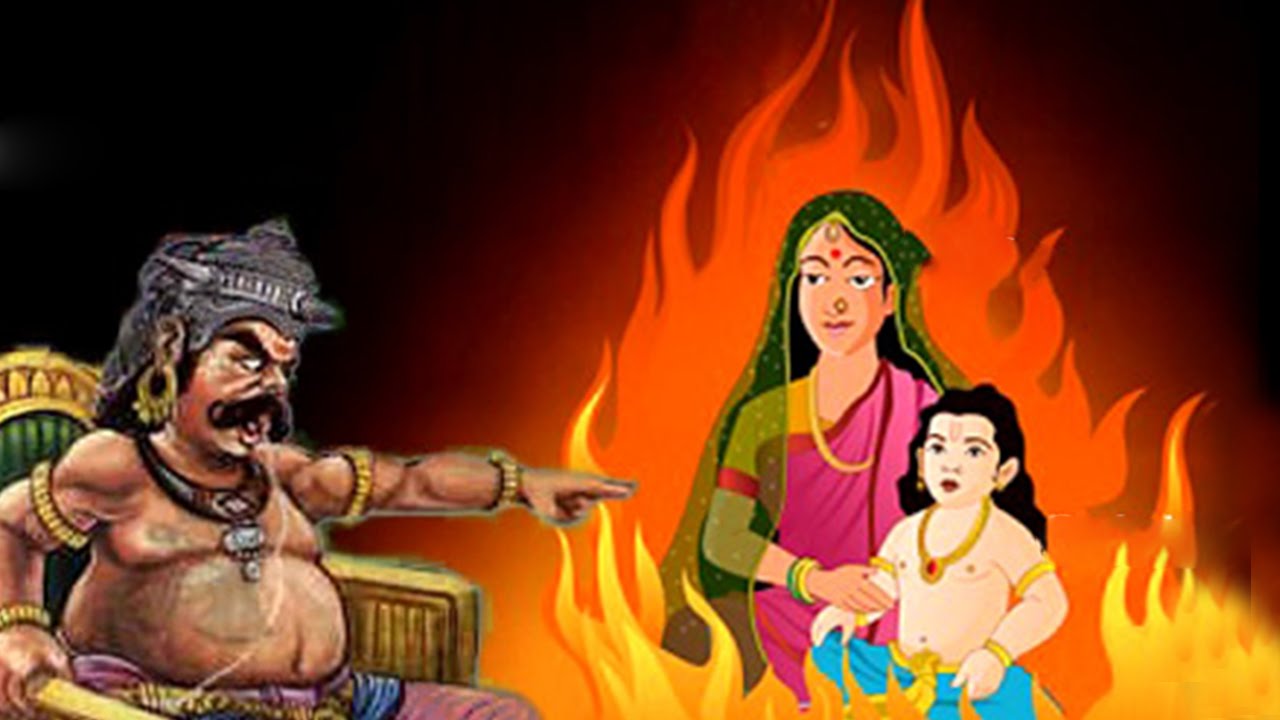
In some parts of India, specially in Bengal and Orissa, Holi Purnima is also celebrated as the birthday of Shri Chaitanya Mahaprabhu (A.D. 1486-1533). However, the literal meaning of the word 'Holi' is 'burning'. There are various legends to explain the meaning of this word, most prominent of all is the legend associated with demon king Hiranyakashyap.


https://i.ytimg.com/vi/KtGKTgBoLKQ/maxresdefault.jpg


Hiranyakashyap wanted everybody in his kingdom to worship only him but to his great disappointment, his son, Prahlad became an ardent devotee of Lord Naarayana. Hiaranyakashyap commanded his sister, Holika to enter a blazing fire with Prahlad in her lap. Holika had a boon whereby she could enter fire without any damage on herself. However, she was not aware that the boon worked only when she enters the fire alone. As a result she paid a price for her sinister desires, while Prahlad was saved by the grace of the god for his extreme devotion. The festival, therefore, celebrates the victory of good over evil and also the triumph of devotion.


Legend of Lord Krishna is also associated with play with colors as the Lord started the tradition of play with colours by applying colour on his beloved Radha and other gopis. Gradually, the play gained popularity with the people and became a tradition.


There are also a few other legends associated with the festival - like the legend of Shiva and Kaamadeva and those of Ogress Dhundhi and Pootana. All depict triumph of good over evil - lending a philosophy to the festival.

http://www.graphics99.com/wp-content/uploads/2011/11/Happy-Holi.jpg


coolhi1988 thumbnail
13th Anniversary Thumbnail Achiever Thumbnail + 3
Posted: 8 years ago
#7

http://www.graphics99.com/wp-content/uploads/2011/11/Happy-Holi.jpg


Significance of Holi


https://www.pictures88.com/p/holi/holi_005.jpg


In spite of being such a colourful and gay festival, there are various aspects of Holi which makes it so significant for our lives. Though they might not be so apparent but a closer look and a little thought will reveal the significance of Holi in more ways than meets the eyes. Ranging from socio-cultural, religious to biological there is every reason why we must heartily enjoy the festival and cherish the reasons for its celebrations.


So when, its time for Holi, please don't hold yourself back and enjoy the festival to the hilt by participating with full enthusiasm in every small tradition related to the festival.


http://www.graphics99.com/wp-content/uploads/2011/11/Happy-Holi.jpg

coolhi1988 thumbnail
13th Anniversary Thumbnail Achiever Thumbnail + 3
Posted: 8 years ago
#8


http://www.graphics99.com/wp-content/uploads/2011/11/Happy-Holi.jpg


Mythological Significance


Holi gets us close to our religion and our mythology as it is essentially the celebration of various legends associated with the festival.


Foremost is the legend of Prahlad and Hiranyakshyap. The legend says there once lived a devil and powerful king, Hiranyakshyap who considered himself a god and wanted everybody to worship him. To his great ire, his son, Prahlad began to worship, Lord Vishnu. To get rid of his son, Hiranyakshyap asked his sister, Holika to enter a blazing fire with Prahlad in her lap, as she had a boon to enter fire unscathed. Legend has it that Prahlad was saved for his extreme devotion for the lord while Holika paid a price for her sinister desire. The tradition of burning Holika or the 'Holika dahan' comes mainly from this legend.


Holi also celebrates the legend of Radha and Krishna which describes the extreme delight, Krishna took in applying colour on Radha and other gopis. This prank of Krishna later, became a trend and a part of the Holi festivities.


Mythology also states that Holi is the celebration of death of Ogress Pootana who tried to kill infant, Krishna by feeding poisonous milk to it.


Another legend of Holi which is extremely popular in Southern India is that of Lord Shiva and Kaamadeva. According to the legend, people in south celebrate the sacrifice of Lord of Passion Kaamadeva who risked his life to revoke Lord Shiva from meditation and save the world.


Also, popular is the legend of Ogress Dhundhi who used to trouble children in the kingdom of Raghu and was ultimately chased away by the pranks of the children on the day of Holi. Showing their belief in the legend, children till date play pranks and hurl abuses at the time of Holika Dahan.



http://www.graphics99.com/wp-content/uploads/2011/11/Happy-Holi.jpg


coolhi1988 thumbnail
13th Anniversary Thumbnail Achiever Thumbnail + 3
Posted: 8 years ago
#9


http://www.graphics99.com/wp-content/uploads/2011/11/Happy-Holi.jpg


Cultural Significance


Celebration of the various legends associated with Holi reassure the people of the power of the truth as the moral of all these legends is the ultimate victory of good over evil. The legend of Hiranyakashyap and Prahlad also points to the fact that extreme devotion to god pays as god always takes his true devotee in his shelter.


All these legends help the people to follow a good conduct in their lives and believe in the virtue of being truthful. This is extremely important in the modern day society when so many people resort to evil practices for small gains and torture one who is honest. Holi helps the people to believe in the virtue of being truthful and honest and also to fight away the evil.


Besides, holi is celebrated at a time of the year when the fields are in full bloom and people are expecting a good harvest. This gives a people a good reason to rejoice, make merry and submerge themselves in the spirit of Holi.


http://www.graphics99.com/wp-content/uploads/2011/11/Happy-Holi.jpg


coolhi1988 thumbnail
13th Anniversary Thumbnail Achiever Thumbnail + 3
Posted: 8 years ago
#10


http://www.graphics99.com/wp-content/uploads/2011/11/Happy-Holi.jpg


Social Significance


Holi helps to bring the society together and strengthen the secular fabric of our country. For, the festival is celebrated by non-Hindus also as everybody like to be a part of such a colouful and joyous festival.

Also, the tradition of the Holi is that even the enemies turn friends on Holi and forget any feeling of hardship that may be present. Besides, on this day people do not differentiate between the rich and poor and everybody celebrate the festival together with a spirit of bonhomie and brotherhood.

In the evening people visit friends and relatives and exchange gifts, sweets and greetings. This helps in revatalising relationships and strengthening emotional bonds between people.


http://www.graphics99.com/wp-content/uploads/2011/11/Happy-Holi.jpg


Related Topics

Top

Stay Connected with IndiaForums!

Be the first to know about the latest news, updates, and exclusive content.

Add to Home Screen!

Install this web app on your iPhone for the best experience. It's easy, just tap and then "Add to Home Screen".