Rooted in Tradition
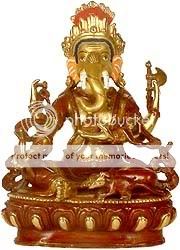
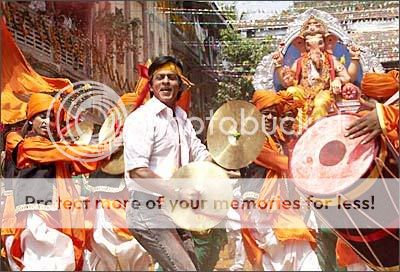
From then onwards, this festive occasion has grown in acceptance and today, commands the respect of millions of citizens all over Maharashtra. Lokmanya Bal Gangadhar Tilakbrought Ganesha as a deity out on the streets. It was a unique move by this freedom fighter, which he achieved with the Ganpati visarjana or immersion procession, wherein the mass output of several Ganesh mandals is taken out on a parade on the final day of the Ganesh festival and taken to be immersed.
This process was started in 1893 and is now prevalent virtually all over Maharashtra, with special emphasis on Mumbai and Pune. Lokmanya Tilak attached this mass celebration to increase national awareness about the Freedom movement. Herein, neighbourhood Ganeshas are worshipped and brought to immersion sites, where huge crowds gather to bid him an emotional and frenzied farewell.
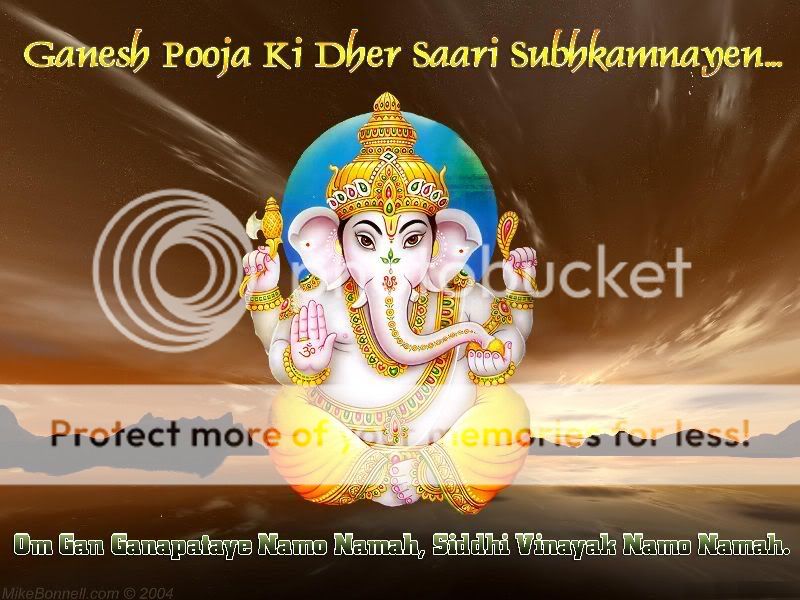
In Pune, as the sun sets over darkening rivers, the images are taken out in boats and as each one is immersed, a cry is raised asking him to return the next year. It is an emotional and public farewell to their beloved god as parthiva (of the earth), who like the Phoenix, will rise once again the following year.
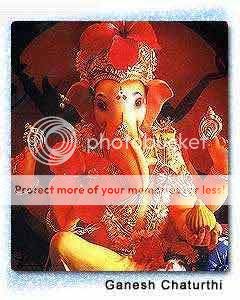
The first day commemorates certain events connected with Ganesha. It is the day on which he materialised as Mayureshwara, to kill the demon Sindhu, who had acquired extraordinary powers through the worship of Surya. Mayureshwara is also one of the ashtavinayakas (the eight forms of Ganesha). This is also the birth that Shiva has chosen to celebrate in Kailasa.

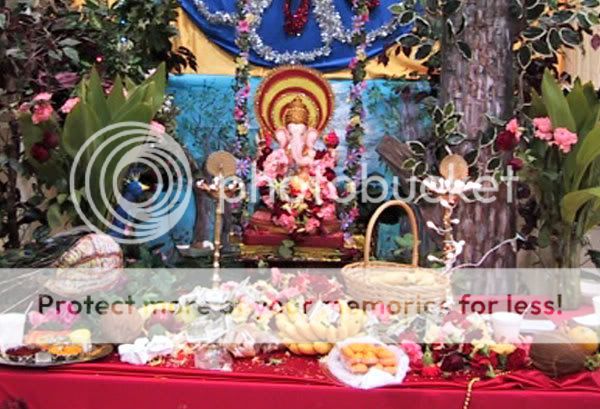
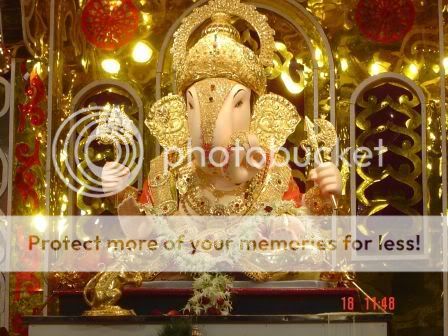
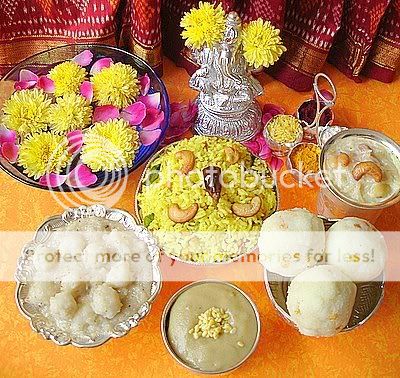
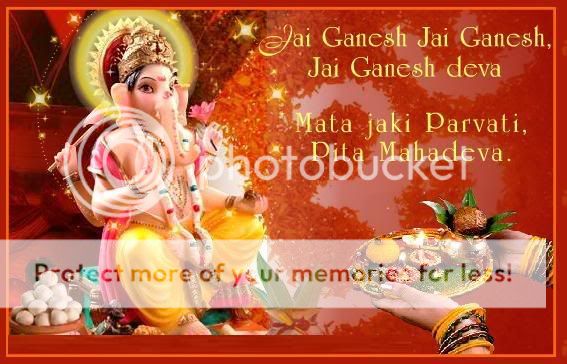
A special puja is performed for Ganesha. The worship of the deity involves getting a corner ready to receive the god. Ganesha is invited with a special phrase and with material and verbal offerings, the puja begins. It involves the panchamrut(five nectars), which includes milk, curd, ghee, honey and jaggery with which the god's icon is bathed, cleansing in between with water.
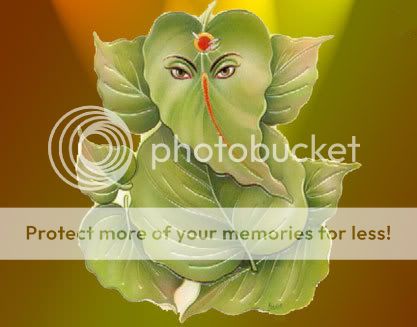
Ganesha is then given a red garment and the sacred thread - saying it is silver. He is then smeared with red sandal paste and offered red or yellow flowers. A lamp is lit, bells chime and food is offered in six symbolic mouthfuls - not to the god's body, but to his five panchapranas or 'vital breaths' and the one beyond - the absolute.
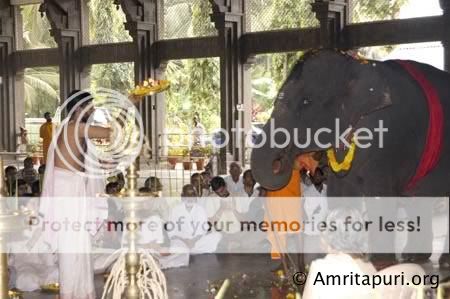
During the festival, puja is performed twice every day - once in the morning and again in the evening. Ganesha is offered special leaves and flowers, 21 of each and white durva grass. The murti is formally installed on the first day and given life in the presence of Brahma, Vishnu and Shiva, and the Vedas. Touching the murti with blades of durva grass, he is brought to life step by step and made to go through 15 of the 16 rites of passage that each Hindu goes through in his lifetime. (The sixteenth one, which is for death, is omitted.)
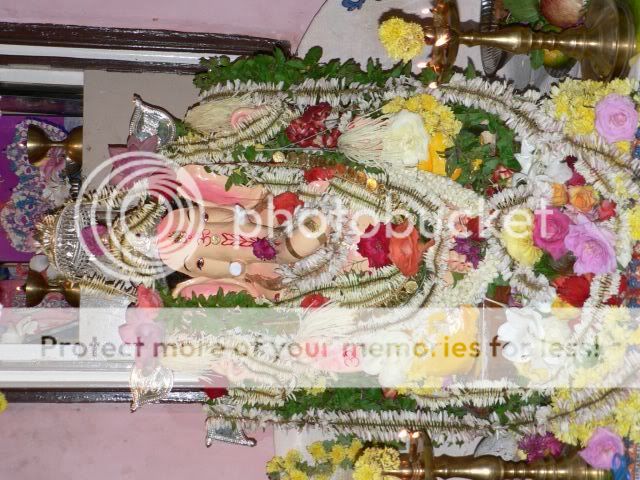
The Ganesha mantra is chanted, followed by a Ganesha prayer. Ganesha is called by his 108 good names. The last puja done, the family or congregation gathers around and rice grains are placed on the head of the murti, which is moved, symbolically unseating him.
Edited by maha_prakrti - 18 years ago


















 Indian Premier League

