




100 Years of Bollywood,.. - Page 2

Created

Last reply

Replies

29

Views

1.7k

Users

5

Likes

13

Frequent Posters

876370 thumbnail
Posted: 12 years ago
#11
100 Years of Hindi Cinema

100 Years of Hindi Cinema

Today is 15th April, 2013. Less than a week is left.

On 21st April , 1913,First movie ' Made in India" , Raja Harishchandra
..." was screened at Olympia Theatre at Grant Road , Mumbai ,
then Bombay and after that as they say , rest is history.

Film was screened on 21st April in front of journalists, and famous personalities of Mumbai. Public release was done on 3rd May 1913 at Coronation Cinema , Girgaum.

It was Directed by Dadasaheb Phalke


Films Poster declared " Coronation Cinematograph and Variety Hall" Sandhurst Road Girgaum Beau ideal programme. Show time was one and half hours and apart from movie there were other programs.

Posters described

" A powerful instructive subject from Indian Mythology, first film of Indian Manufacture. Specially prepared at enormous cost. Original scenes from the sacred city of Benaras. Sure to appeal to all Hindu patrons."

Apart from Raja Harishchandra , it also had a dance programme of Miss Irene to offer along with some comic interludes.

Film was also reviewed by New York Times. It enjoys a five star rating and review summary says

"Following on his groundbreaking short Pundalik, D.G. Phalke launched the soon-to-be massive Indian film industry with this first Indian feature film. Adapted from the Indian saga the {-Mahabharata}, the film concerns the virtuous King Harishchandra who almost sacrifices his kingdom for his sense of duty and for his love of the truth. In spite of the director's progressive-minded wishes, the film featured an all-male cast. Raja Harishchandra also featured a completely non-professional cast and crew. This film premiered at the Coronation Cinematograph on May 3, 1913. ~

Pundlaik was released on 12th May 2012 and was a full length film. But it was a full length play which was shot and not a film story hence honour is accorded to Raja Harischandra as first Indian film.

I have not been able to catch hold of exact location of these two theatres. If any Mumabi fan can locate or has any knowledge please do share.

What i have learnt, Novelty and Empire Theaters came in 1907 on Hornby road estate. Royal Opera house was opened in 1908.

I went through Bombay Gazetteer of 1910, which is otherwise very helpful. But it also does not mention about Olympia and Coronation theater.

Bombay Gazetteer of 1910- does mention , " there are six theaters for native performance at the junction of Falkland Road and Grant Road, in addition to the rebuilt Gaity theater opposite Victoria Terminus.

First films were also screened in Mumbai nay Bombay at Watson hotel way back in 1896.

This thread is meant for all Indian Cinema lovers. I will try to capture 100 things in this thread, which may include 25 Indian films, 25 Film Personalities, 25 Songs and tivia and what ever we all contribute.

and the first post will be about first movies Raja Harishchandra, of Dada Saheb.

Raja Harishchandra

Directed by Dadasaheb Phalke

Produced by Dadasaheb Phalke
for Phalke Films
Written by Dadasaheb Phalke
Story by Ranchhodbai Udayram

Starring D. D. Dabke
P. G. Sane
Cinematography Trymbak B. Telang

Release date(s) 3 May 1913

Running time 40 minutes
Country India
Language Silent film

This is a very brief description.

Film opened on 21st April for select audience and on 3rd May for general public.

Only 11 Minute of film has survived, out of 40 minutes, i.e first reel and very small part of fourth reel. But the best part is all of us can watch it as it is available on net.

Film has English and Hindi inter titles.

It begins in Raja Harischandra's palace grounds. Harischandra (Dattatraya Damodar 'DD' Dabke) and his queen Taramati (Anna Salunke) are proudly looking on as their only son, Rohitas (Phalke's son, Bhalchandra) shoots an arrow from his bow. A maid fetches whatever little Rohitas has shot down.

Villagers request King to go for hunting and he goes and listens to wail of a women.

and an inter title comes ..which says ...

" In the mere strength of his penance the sage Vishvamitra achieves help of three powers against there will.

The three young women that emerge from the fire in front of Vishwamitra (PG Sane) start waving their arms and a shouting.

Into this tableau comes Harischandra, who—shoots an arrow at the fire from which the trigunashakti has arisen. It goes out, the three shaktis vanish, and Vishwamitra stands up, in a towering rage. He's furious at Harischandra for thwarting him thus. Harischandra tries to make amends, and offers to give Vishwamitra his kingdom in return.

Vishwamitra accepts. We next see him at Harischandra's palace, having accepted the crown at the hands of the king. The king, Taramati and Rohitas, are leaving the palace.

Their attendants stand around and sob, while Vishwamitra, adding insult to injury, tells the royal couple and their son that they can't even go out into the world dressed in all this finery and they change into some coarse cloths.

At this point first reel ends, but it is worth watching ...as a tribute to Indian Cinema.

The last, tiny bit of the extant film consists of the scene where a grieving Taramati arrives with her son's dead body and asks the assistant to cremate the corpse.
There is a sad scene when Raja asks her for a gold coin and she does not have it.

there is more misery ...but i will suggest readers to watch it.

two pictures are there on net one is Raja Harishchandra (1913) - The India Public Domain Movie Project...which contains only 11.19 minute movie

and another is almost hour long which includes snippets of some other works of Dadasaheb and Dadasaheb at work.
876370 thumbnail
Posted: 12 years ago
#12
Making of Raja Harischandra (1913)

The story of Dada Saheb Phalke and Raja Harischandra is fascinating, too It's said that Phalke, having watched an imported film—Life of Christ—in 1910, was fired with zeal to make a film .

Phalke travelled to London and made arrangements to import the equipment for filming and production.

Dhundiraj Govind Phalke, popularly known as Dadasaheb Phalke (30 April 1870 – 16 February 1944) was an Indian producer-director-screenwriter, known as the father of Indian cinema.Starting with his debut film, Raja Harishchandra in 1913, now known as India's first full-length feature, he made 95 movies and 26 short films in his career spanning 19 years, till 1937, including his most noted works: Mohini Bhasmasur (1913), Satyavan Savitri (1914), Lanka Dahan (1917), Shri Krishna Janma (1918) and Kaliya Mardan (1919)

He joined Sir J. J. School of Art, Mumbai in 1885. After passing from J.J. School in 1890, Phalke went to the Kala Bhavan in Baroda, where he studied sculpture, engineering, drawing, painting and photography.

He began his career as a small town photographer in Godhra but had to leave business after the death of his first wife and child in an outbreak of the bubonic plague. He soon met the German magician Carl Hertz, one of the 40 magicians employed by the Lumiere Brothers. Soon after, he had the opportunity to work with the Archeological Survey of India as a draftsman. However, restless with his job and its constraints, he turned to the business of printing. He specialized in lithography and oleograph, and worked for painter Raja Ravi Varma. Phalke later started his own printing press, made his first trip abroad to Germany, to learn about the latest technology and machinery.

Following a dispute with his partners about the running of the press, he gave up printing and turned his attention to moving pictures, after watching a silent film, The Life of Christ and envisioning Indian gods on the screen. Phalke made his first film, Raja Harishchandra.

Phalke travelled to London and made arrangements to import the equipment for filming and production.

Back in Bombay, while waiting for the shipment to arrive, he set about getting things ready. He created a dark room and a studio. He also trained his wife Saraswatibai to perforate film, develop it, and even load a camera.

He started a studio in Dadar Main Road. He wrote the screen play, and created the sets for the film and started shooting the film himself. The film was Dada's first feature film venture of full film length of 3700 ft (in four reels) about 50 minutes of running time, and it took seven months 21 days to complete the film.

The film had an all-male cast as no woman was available for playing female leads.[7] Phalke struggled to get woman, including nautch girls, to agree to act in film. He hence had to cast a delicate-looking man to play the role of Queen Taramati, Harishchandra's wife. Phalke discovered Salunke, who used to work in a restaurant as a cook, for this role. Salunke would later play the role of both Rama and Sita in Phalke's 1917 film Lanka Dahan and become the most popular actor and actress of his time.
Krishna Hari, alias Anna Salunke, agreed to take on the part of Taramati. It took a lot of persuasion from Phalke to get Salunke to shave off his moustache [, but at least it meant one less thing to worry about for Dadasaheb Phalke.

Financiers were wary of investing in something that had never been done before, so Phalke chose the best way to convince them: in 1911, he created a short instructional film, a time-lapse one that showed a pea plant growing from seed to a full-fledged vine. The brief film, Birth of a Pea Plant, achieved what it had set out to do: it impressed the financiers sufficiently for them to fund Phalke's film.

=========
876370 thumbnail
Posted: 12 years ago
#13
First screenings of Films in India

7th July 1896

Watson Hotel


In early July 1896, The Times of India ran an advertisement proclaiming the arrival of "the marvel of the century" and "wonder of the world" at the elite Watson's Hotel in Bombay,

while the nearby Madras Photographic Stores carried a more modest advertisement for 'animated photographs'.

On the evening of the 7th, Marius Sestier, an agent for the Lumieres, held four screenings at the hotel, each of them with an admission charge of one rupee. The audience, which largely comprised of British officials marvelled at such films as

Arrivee d'un Train en Gare, The Sea Bath, A Demolition, and La Sortie des Usines Lumiere.


Further screenings took place for the 'natives' at the Novelty Theatre – the former home of the Victoria Theatre Company – in Bombay on the 14th July.


Watson Hotel where Indian cinema started its journey

A photograph of Raja Deendayal snapped sometimes in 1880s from Rajabhai tower shows Watson Hotel under construction.

It was one of the earliest hotels of Bombay (now Mumbai). There were many eateries, but John Watosn who was a wealthy Merchant with successful drapery and hosiery shop on the south side of Church Gate Street ( which itself was one of three gates of Fort, other two being Bazaar Gate , area close to CSTM station and Apollo gate, Chuch Gate named after St. Thomas Cathedral).

Watson realized the potential offered by the prominent sites offered on the west side of esplanade, after the Fort ramparts were demolished. During an auction in 1864, Watson bid successfully for the plot at a step rate of Rs 110 per square yard.

Jmaes Douglas a traveler described it in 1867,

" on a morning walk observed that opposite Forbes Street, something like a huge Bird Cage had been risen like an exhalation from earth."

This was a cost iron structure, five story with 130 rooms. Everything was imported from England. The red stone plinth and bases of the columns came from the town of Penrith in Cumberland, from where Watson hailed. Since it was the only building of such imposing size, it served as a landmark for ships entering Bombay Harbour.

Watosn built an annexe , in 1880s on 8,000 square yards ( where Dhanraj mahal is located now) close to Royal Alfred Sailors Home ( which now houses Maharashtra Police Headquarter) one can still look at Watson Hotel near Kala Ghoda.
==========
876370 thumbnail
Posted: 12 years ago
#14
Milestone of Indian Cinema in early days ...1896-1910


1896 -The first public screenings are held at the elite Watson's Hotel in Bombay.

1898- Hiralal Sen and his brothers establish the Royal Bioscope Company


1899- Nov -Harischandra Sakharan Bhatavdekar, popularly known as Save Dada, films The Wrestlers, the first film made by a native Indian.

1901 ... Harischandra Sakharam Bhatavdekar films Sr. Wrangler Mr. R. P. Paranjpe India's first significant newsreel footage.
... – Amarendra Nath Dutta makes use of film for a stage play in Calcutta.

1903

1/1 - Bhatavadekar and American Biograph film Lor Curzon's Delhi Durbar.


8/2 - Gaumont, Pathe, Georges Mendel and Warwick all release films simultaneously about Edward VII's coronation durbar in Delhi


1904

– Manek Sethna founds the Touring Cinema Co. in Bombay.


=========
876370 thumbnail
Posted: 12 years ago
#15
Summing up Video for 100 Years of Bollywood in just 4 minutes is here:::

Kudos to you ...

a very nice selection and some rare pictures...yours selection shows a discerning taste and knowledge of different genre, and i was esp. thrilled to see Nadia. Without mentioning you have covered important studios, New Theater ( Devdas),Bombay Talkies ( Achut Kanya ) and many more.
and what beautiful pictures ..covering the best decades of Hindi cinema ...and you have also got the essence of every decade like 50s was the first decade after Independence and was charged with Nehruvian idealism, thrust for planning, breaking of feudal structures, charged with the hope and films like Mother India, Awara and others reflect it. sixties was more about romance..
may be i would like to share some anecdotes about a few films whose pictures you had shown ,

Ratan was one of the biggest grosser, because of Naushad;s music ..
Ankhiya Milake jiya bharmaake is still one of my favorites .. and SD Burman used to lament that his servent instead of humming songs of his films ..sings songs of Ratan. but story is ...Naushad , film director got married after release of Ratan.
His father in law was totally averse to filmi music and was not aware that his future son in law is a music composer. when barat started ...band started playing songs from Ratan, and Naushad was shaking like anything that if somebody revels to his father in law that these songs have been composed by groom , he will have to return empty handed.

I have only one suggestion ...i feel Bollywood is a flippant term and it should haven been called something related with Indian Cinema as 3rd May 1913 is a red letter day for entire Indian Cinema. Raja Harishchandra was a silent movie and inter titles in three languages ...so it will be wrong to call it a Hindi film.

Two additions in your thread will increase its value manifold, one is about silent era.
may be you can post some pictures of Light of Asia and Throw of dice ( Himanshu Rai) or pictures like kaliamardan or lanka dahan ...more successful venture of Phalake.

another omission is JF Madan who was not only the biggest exhibitor and distributor
( Madan Theatres reached a peak in the late 1920s when it owned 127 theaters and controlled half of the country's box office) but also made a lot of landmark film both in sielnt era and talkies . Almaara beat them just by a few days. and who can forget Indarsabha...

and i also had a thread on 100 years of Indian Cinema ...not as grand as you but you can have a look ...

i can only wish ..

may your tribe increase ..
876370 thumbnail
Posted: 12 years ago
#16
Disappearance of the Iconic Villain from Bollywood

Bollywood films of the 70s and 80s were instrumental in giving birth to 'specialised villains' who stayed on the minds of the people long after they had finished watching the movies. Such was the impact of villains in earlier decades that people felt terrified of them and wished for the hero to crush the villain under his boots. The villains were specialised to evoke hatred from the people and were very convincing in their roles.


In stark comparison, in movies that are made today, we can hardly remember the names of villains or the kind of characteristics they have.The actors playing the roles of villains may be praised and even awarded but their character fails to create that overwhelming feeling that villains of yesteryears used to evoke.


Amjad Khan, the 'Gabbar Singh' of 'Sholay' was one such iconic villain. Ramesh Sippy gave life to the character that would be known as the biggest and the most ruthless villain of all time. His larger than life persona created such an impact on the viewers that his name remained etched in the minds of people for years.
Amjad Khan got the opportunity of a lifetime to deliver a knock-out performance, in fact, he surpassed all expectations with his superb acting. In fact, his portrayal of Gabbar Singh is considered to be the first depiction of pure evil in Hindi Cinema and his mannerisms and dialogues are still an integral part of Bollywood.


Amrish Puri's classy portrayal of the dreadful Mogambo in 'Mr India' left a long-lasting impact on the minds of the cine-goers. His dialogue, 'Mogambo Khush Hua' is still mouthed by many as if it is still a very trendy thing to do.


Ajit Khan, popularly known as 'Loin' (Lion) was another such iconic villain. Lines like "Mona Kaha Hai Sona" and "Lily Don't Be Silly" went on to become a rage and his trademark style was copied by many, including his own son who tried to make a career out of his father's legacy. His style of acting and dialogue delivery were so trend-setting that they overshadowed the remarkable performances that he had delivered earlier.
Looking at the transformation that has taken place in Bollywood today, we can only look at it with amazement. The modern villains are hardly purely evil. Caught in between the shades of black and white, villainous characters are more grey these days. Today, we barely remember a line that the villain of a film uttered.


The Dhoom series, sees the villains as the protagonists of the film instead of the positive guy. The films entirely turn around the main concept of villainy in the film as the audiences fall more for the charm of the suave villain than the upright officer.
The movie 'Ghajini' was named after the main villain of the film. However, the villain had very little impact on the audience who couldn't see beyond Aamir Khan's eight pack abs. The merit of the villain is hardly realized in current movies and glorification of the villain is a bit far-fetched for today's pragmatic generation.


The iconic villain has become a thing of the past as we rarely come across villains who stay in our minds beyond the movie theatre. In fact, we don't even need a villain in our films to bridge the gap between good and evil.
As seen in the recently released 'Shaitan', evil is inherent in every human being and a 'specialized villain' is not a necessity. The film explores the theme extremely well and traces the transgression of young boys and girls from good to bad to downright evil.


It is the blurring of the definitive line dividing black and white which plays a crucial role in doing away with the characteristic evil-doer from Hindi movies. Taking a look at the trailers of 'Don 2' its hard for us to decipher whether Shah Rukh is the hero or the villain of the film.

Looks like we have to lose the spiteful character that terrified us and evoked hardcore hatred in us. Gabbar Singh will never come back to terrorize his victims, nor will the Smart Boy of Hindi Cinema utter golden lines that the audience will love to follow.
==========
876370 thumbnail
Posted: 12 years ago
#17
Quote:
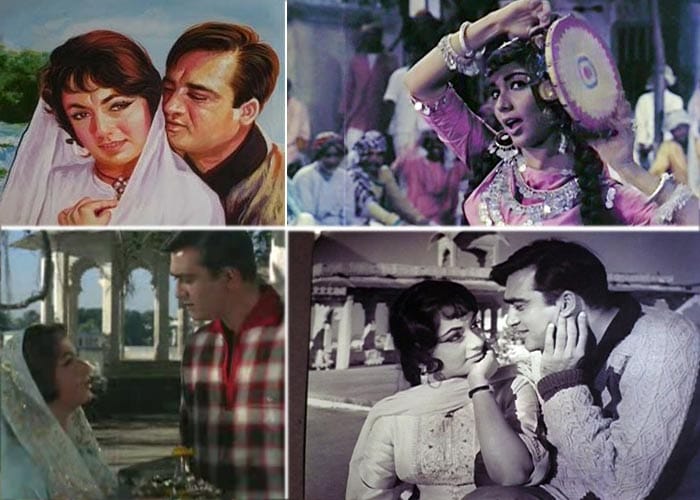
Mera Saaya (1966)

Director: Raj Khosla

Cast: Sunil Dutt, Sadhana, Prem Chopra

Sunil Dutt and Sadhana both put in exemplary performances in this tale of grief-stricken lawyer and a woman who claims to be his dead wife. The film gave Bollywood some of it's best music like the title track Mera Saaya, Naino Mein Badra Chhaya and Jhumka Gira Re.


Quote:
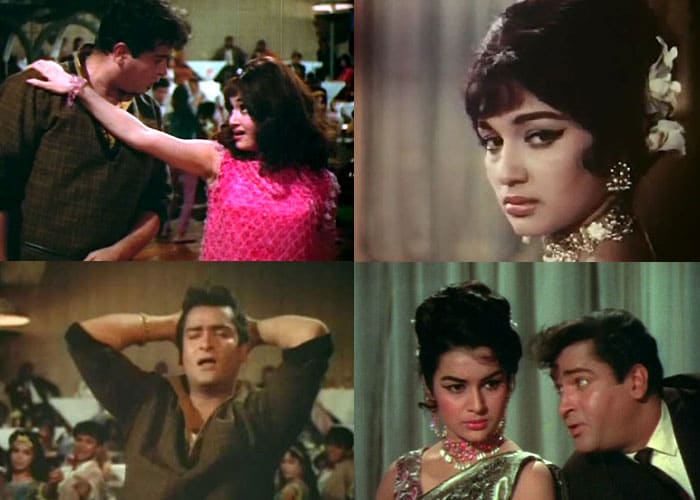
Teesri Manzil (1966)

Director: Vijay Anand

Cast: Shammi Kapoor, Asha Parekh

The story revolves around a woman who blames a drummer of a nightclub for her sister's death, but ends up falling in love with him. Vijay Anand's vision of a Hitchcock style thriller with R D Burman's bouncy score makes it a must see classic.


Quote:
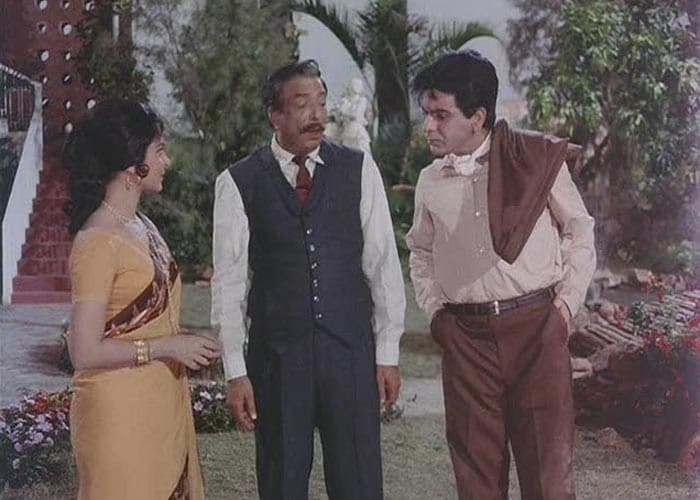
Ram Aur Shyam (1967)

Director: Tapi Chanakya

Cast: Dilip Kumar, Waheeda Rehman, Mumtaz, Pran

The first movie about identical twins separated at birth, Ram Aur Shyaminspired many future movies including Seeta Aur Geeta, Chaalbaaz and Kishen Kanhaiya. The double-role act bagged Dilip Kumar the Filmfare Award for the Best Actor that year.


Quote:
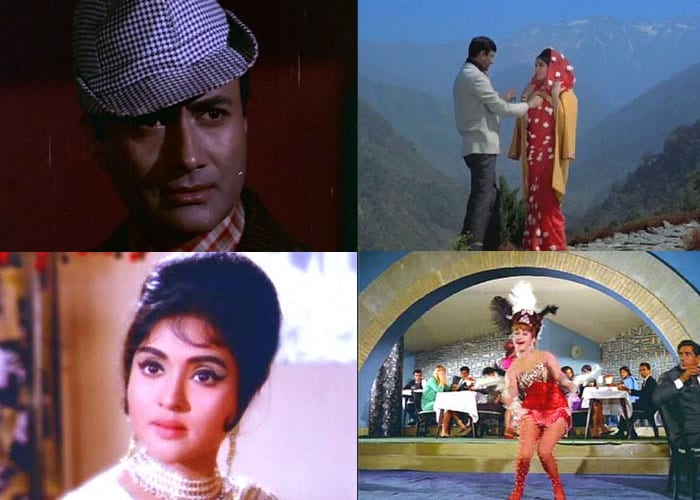
Jewel Thief (1967)

Director: Vijay Anand

Cast: Dev Anand, Vyjayanthimala, Ashok Kumar, Tanuja

This era belonged to Vijay Anand who delivered hit movie after hit movie. Crime caper Jewel Thief dealt with the theme of mistaken identity, drawing influences from Hitchcock thrillers and James Bond's style.


Quote:
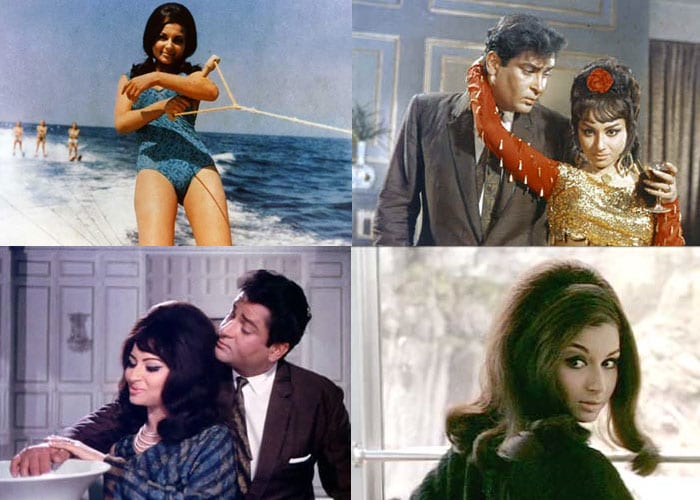
An Evening In Paris (1967)

Director: Shakti Samantha

Cast: Shammi Kapoor, Sharmila Tagore,Pran

Most famous for a song featuring a swim-suited waterskiing Sharmila romanced by a helicopter-borne Shammi Kapoor, the film was another riff on the increasingly popular lost and found them with Sharmila in a double role playing twins separated at birth.


Quote:
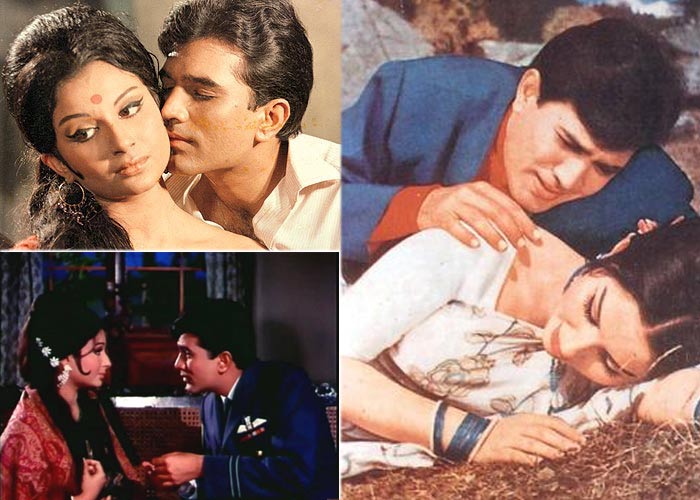
Aradhana(1969)

Director: Shakti Samanta

Cast: Sharmila Tagore, Rajesh Khanna, Sujit Kumar, Farida Jalal

Sharmila Tagore won her first Filmfare award for this movie which was a remake of the 1946 Hollywood film, To Each His Own. Aradhana shot Rajesh Khanna to super stardom and also began his successful onscreen pairing with Sharmila Tagore and they went on to star in films like Safar,Amar Prem and Daag. Kishore Kumar also won his first Filmfare Best Male Playback Singer Award for the hit Roop Tera Mastana.


... ...


876370 thumbnail
Posted: 12 years ago
#18


876370 thumbnail
Posted: 12 years ago
#19


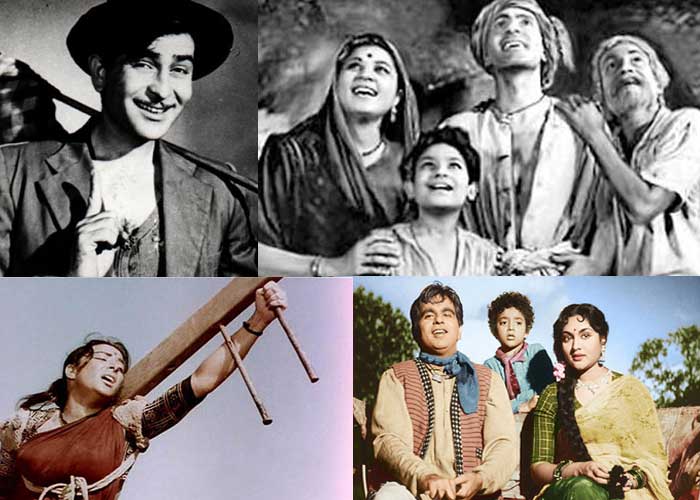
As newly independent India evolved at breakneck pace, so did it's cinema. The Fifties were the golden age of Bollywood, with the first wave of superstars – Raj Kapoor, Dilip Kumar, Madhubala, Nargis and others.

In our second installment celebrating a century of Indian cinema, here's a look at the films that defined the Fifties.
876370 thumbnail
Posted: 12 years ago
#20
Best Films Awards ::

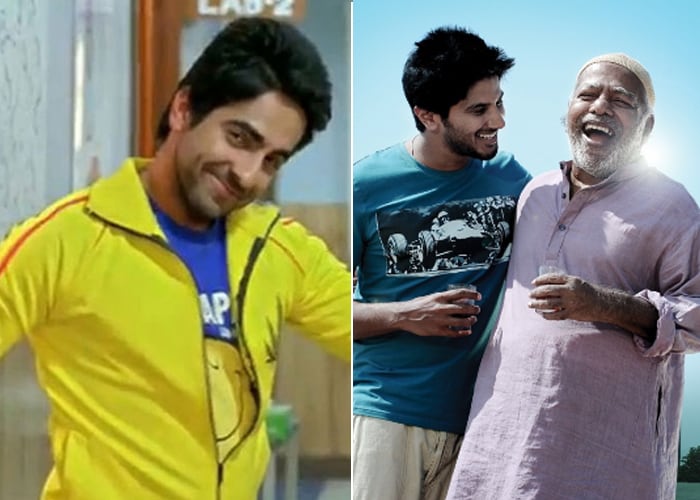
Best Popular Film Providing Wholesome Entertainment: Vicky Donor (Hindi) and Ustad Hotel (Malayalam)


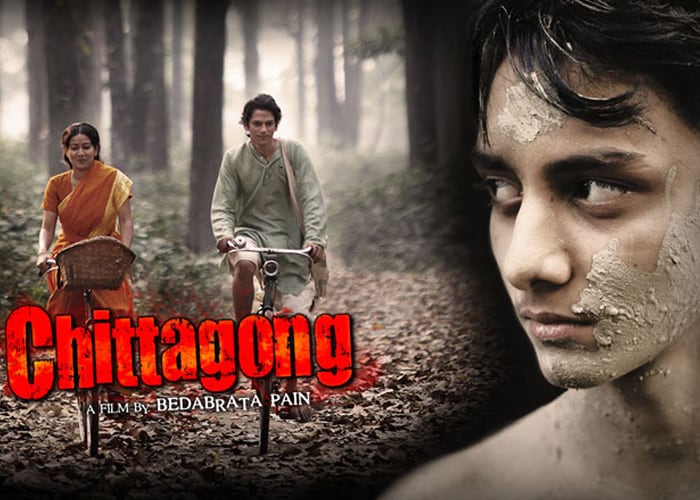
Best Lyrics, Best Playback Singer Male: Bolo Na from Chittagong


Indira Gandhi Award for Best Debut Film of A Director: Chittagong (Hindi) and 101 Chodiyangal (Malayalam)


Nargis Dutt Award for Best Feature Film on National Integration: Thanichalla Njan (Malayalam)


Best Screenplay Writer (Original): Sujoy Ghosh for Kahaani


Best Screenplay Writer (adapted): Bhavesh Mandalia and Umesh Shukla for OMG: Oh My God!

Related Topics

Bollywood thumbnail

Posted by: Elvis12 · 1 months ago

https://youtu.be/RyO9F6mAi0Y?si=ZF5FBRBRdM0zj-hf

https://youtu.be/RyO9F6mAi0Y?si=ZF5FBRBRdM0zj-hf
Expand ▼
Bollywood thumbnail

Posted by: Maroonporsche · 1 months ago

https://youtu.be/oRIIeyIa6nE?si=991xM1gjfY89jwSu

https://youtu.be/oRIIeyIa6nE?si=991xM1gjfY89jwSu
Expand ▼
Bollywood thumbnail

Posted by: Elvis12 · 1 months ago

https://youtu.be/bw7bVpI5VcM?si=8M2RIA19aKI-QmRg

https://youtu.be/bw7bVpI5VcM?si=8M2RIA19aKI-QmRg
Expand ▼
Bollywood thumbnail

Posted by: WhipCreamThong · 1 months ago

I can name so many and some of the biggest fans on this forum will be insecure, but I say Aishwarya Rai Dhoom 2 takes the award from me for the...

Expand ▼
Bollywood thumbnail

Posted by: oyebollywood · 1 months ago

https://x.com/navneet_mundhra/status/1992097757725851998?t=ztnnACfVKTE-ezXnnv7mpg s=19

https://x.com/navneet_mundhra/status/1992097757725851998?t=ztnnACfVKTE-ezXnnv7mpg
Expand ▼
Top

Stay Connected with IndiaForums!

Be the first to know about the latest news, updates, and exclusive content.

Add to Home Screen!

Install this web app on your iPhone for the best experience. It's easy, just tap and then "Add to Home Screen".