

Posted:
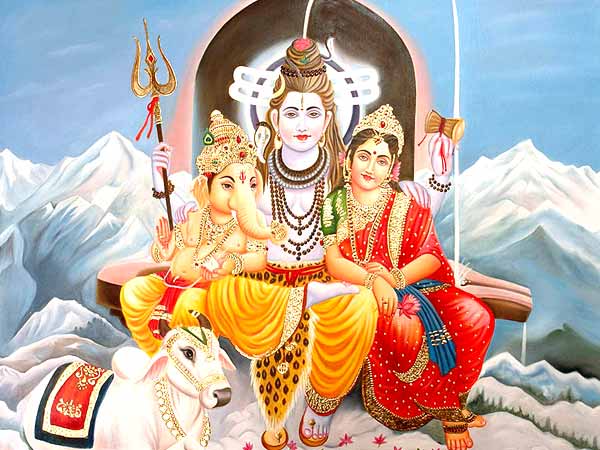
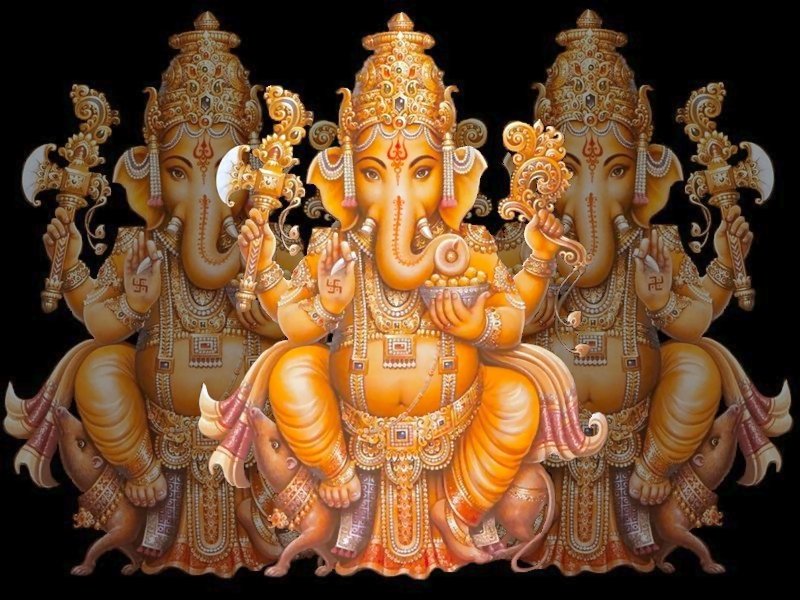
Ganesha, the elephant-headed son of Shiva and Parvati, is widely worshipped as the supreme god of wisdom, prosperity and good fortune.
The most popular legend associated with Lord Ganesha can be found in the Shiv Purana. It says that Lord Ganapati was created out of the dough that Goddess Parvati used for her bath. The Goddess wanted a door-keeper, to prevent the coming of any visitors when she took a bath. So, she created a doll from the dough and breathed life into him. The day she did this came to be known as the birthday of Lord Ganesha, which we today celebrate as Ganesh Chaturthi.
In the meantime, Lord Shiva returned from the battle but as Ganesha did not know him, stopped Shiva from entering Parvati's chamber. Shiva, enraged by Ganesh's impudence, drew his trident and cut off Ganesha's head. Parvati emerged to find Ganesha decapitated and flew into a rage. She took on the form of the Goddess Kali and threatened destruction to the three worlds of Heaven, Earth and the subterranean earth.
Parvati was still in a dangerous mood. Seeing her in this mood, the other Gods were afraid and Shiva, in an attempt to pacify Parvati, sent out his ganas, or hordes, to find a child whose mother is facing another direction in negligence, cut off his head and bring it quickly. The first living thing they came across was an elephant. That elephant was facing north (the auspicious direction associated with wisdom). So they brought the head of this elephant and Shiva placed it on the trunk of Parvati's son and breathed life into him. Parvati was overjoyed and embraced her son, the elephant-headed boy whom Shiva named Ganesha, the lord of his ganas. Parvati was still upset so Lord Shiva announced that everyone who worships Ganesha before any other form of God is favoured. So Ganesh is worshipped first in all Hindu occasions and festivals.
[YOUTUBE]http://www.youtube.com/watch?v=L6rCk1Uxy_c&p=F96F02EA94DF3887[/YOUTUBE]