





France dismantles migrant 'Jungle'
CNN


CALAIS, France (CNN) -- French authorities on Tuesday began dismantling a makeshift camp known as "the Jungle," which housed illegal immigrants who fled dangerous homelands to seek a more prosperous life in Europe.
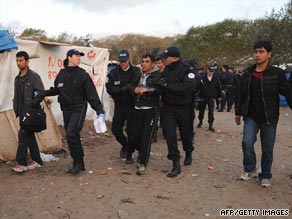
Refugee advocates tried to keep French police from removing illegal migrants from "the Jungle" camp.


The French government said it was targeting human smuggling and did not say where the migrants would be relocated.
The series of squalid shanties cobbled from cardboard, plastic tarpaulins and scraps of wood housed about 300 men from nations such as Afghanistan, Iraq, Iran and Somalia. At one time, the camp sheltered as many as 1,000 people.
Camp resident Mohammed Bashir escaped the Taliban in Afghanistan and made a new home in a tent here, among the heaps of garbage, sand and bramble on the outskirts of the French port city of Calais. Sometimes, eight men shared the tent.
"I never lived in such a condition like this back home, but right now we don't have any other choice," said Bashir, 24, who left behind his family.
"It's very difficult, very hard for a person who has children and parents."
Desperation filled the air in the Jungle.
Many residents survived arduous and illegal treks from their homelands. Some held ambitions to keep going another 20 miles across the English Channel to seek asylum in Britain by hiding on trucks that cross the water by ferry every day. Others hoped to realize refugee status in France.  Watch more about the camp's closure
But Tuesday, they were forced to put their plans on hold as they were evicted from the Jungle.
Don't Miss
Refugee advocates circled the migrants and scuffled with police to keep them at bay. But eventually, the protests were broken up, the migrants were taken away and the shanties started coming down.
Was the French government right to demolish the illegal migrant camp?
The French government's decision drew criticism from humanitarian workers who don't think that demolishing the camp will help resolve illegal immigration issues.
They say moving the migrants is simply displacing the problem.
"We don't know where they're going to go," said Matthieu Tardis, an advocate for asylum seekers. "We don't know what the government plans to do. We are not respecting human rights here, for sure."
The office of the U.N. High Commissioner for Refugees sent staff to Calais earlier in the summer to counsel people about asylum procedures in France and Britain.
According to the U.N. agency, most of the illegal migrants enter Europe through Greece and often fall victim to smugglers who turn a profit by helping migrants reach their destinations.
All the camp residents who fled Afghanistan said they had paid smugglers large sums. They were promised much more than the filthy camp, they said.
Bashir said he had no choice but to flee his home after Taliban militants accused him of spying.

"When they don't need you, they just slaughter you," he said. "They threatened me that [I would] be slaughtered."
Bashir's future remains uncertain. But he is sure of one thing: He cannot go home.















 Kumkum Bhagya

