Page
of
1
Bigg Boss 20: Daily Discussion Thread 23rd Sep 2026

IF Bluffmaster Season 2 (Sign Up Open)

Yeh Fitoor Tera episode discussion thread # 2

Love and War RK poster!

Ishra FF: Hum Hain Rahi Pyaar Ke

DiRa Ricita FF: Judwa
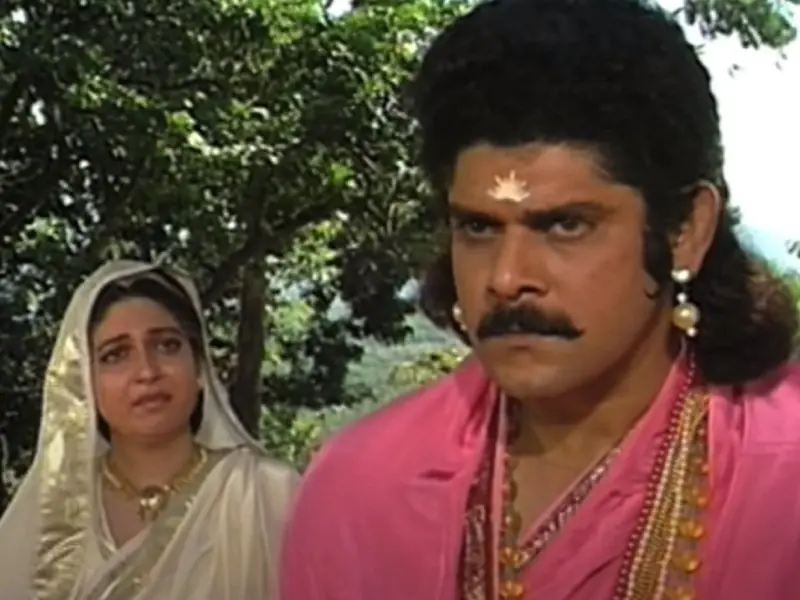
The attached image depicts a tense moment in Mahabharat featuring Kunti seeking out her firstborn son, Karna before the Kurukshetra war.
1. Sacred Setting: On the quiet riverbanks following his morning sun worship, Karna turns to find Queen Kunti standing before him in tears.
2. Respectful Greeting: Unaware of her true intent, Karna greets her with characteristic humility, addressing her as the esteemed mother of the Pandavas.
3. The Tragic Secret: Overwhelmed by decades of silence and maternal grief, Kunti reveals the truth: Karna is her divine firstborn son, born to Surya Dev before her marriage.
4. Emotional Shockwave: A storm of disbelief, bitterness, and pain passes over Karna's face as he realizes his fiercest enemies are actually his younger brothers.
5. Kunti's Plea: Kunti desperately begs him to renounce his allegiance to Duryodhana, take his rightful place as the eldest brother, and claim the throne of Hastinapur without war.
6. Unwavering Loyalty: Bound by honor, Karna refuses to desert Duryodhana, reminding Kunti that it was Duryodhana who gave him dignity when the world rejected him as a chariot-driver's son.
7. : Dialogue of Honor - Karna tells her, "Mother, abandoning the friend who stood by my darkest hours right before battle would be the ultimate act of betrayal."
8. The Sacred Promise: To ease his mother's grieving heart, Karna vows never to kill four of her sons, keeping his sights set only on Arjun.
9. Eternal Balance: He assures her, "Win or lose, you will always remain the mother of five sons-either Arjun survives, or I will."
This scene depicts Karna's unyielding devotion to his personal code of Dharma.
This meeting is a heartbreaking tragedy of fate and maternal regret.
Mahabharata - Kunti Meets Karna: Detailed Scene Explanation
The scene shows Karna standing in the foreground while Kunti approaches him from behind. This is one of the most emotionally significant encounters in the Mahabharata because Kunti is not meeting Karna merely as an ordinary warrior-she is meeting the son she had been separated from since his birth.
Karna stands with a stern and controlled expression. His posture shows confidence, but his face also suggests that he is carrying many unresolved emotions. He has spent his entire life fighting for recognition and dignity, and he has remained deeply loyal to Duryodhana, who gave him honour and friendship when others rejected him.
Kunti watches Karna carefully. Her expression is filled with sadness and hesitation, as though she knows that whatever she is about to say could change the course of his life. She has come to reveal the truth that Karna is actually her eldest son, born before her marriage to Pandu.
Kunti may begin softly:Kunti: "Karna... I have come to tell you something that I should have told you long ago."
Karna turns toward her, surprised by the seriousness in her voice.
Karna: "Why have you come to me, Devi? What is it that you wish to say?"
Kunti struggles to speak. Her eyes reveal the guilt she has carried for years.
Kunti: "You are not who the world believes you to be. You are my son."
For a moment, Karna is completely stunned. The revelation forces him to reconsider everything he has believed about his birth and identity.
Karna: "Your son? Then why was I abandoned? Why did I have to grow up without knowing who I was?"
Kunti cannot easily answer him. She explains that circumstances surrounding his birth forced her to conceal the truth and that the infant Karna was set afloat, eventually being raised by Adhiratha and Radha.
Karna's emotions become complicated. He has finally received the answer to a question that has followed him throughout his life, but the truth arrives at the worst possible moment-when the conflict between the Pandavas and Kauravas is approaching its decisive stage.
Kunti then asks Karna to join the Pandavas. She wants him to take his rightful place as the eldest of her sons.
Kunti: "Come with your brothers. You are the eldest. The kingdom and your family await you."
But Karna faces an impossible choice. He cannot simply forget the years he spent with those who accepted him. Duryodhana's friendship is especially important to him because Duryodhana stood beside him when society treated him as inferior because of his supposed birth.
Karna's thoughts could be expressed as:
"Why did you come to me now, Mother? When I needed a mother, you were silent. When I needed a family, Duryodhana gave me friendship. How can I abandon him now?"
Karna therefore refuses to betray Duryodhana, even after learning the truth about his birth. His decision demonstrates the central conflict within his character: blood ties pull him toward the Pandavas, while gratitude and loyalty bind him to Duryodhana.
Kunti is heartbroken, but Karna does not completely reject her. Instead, he gives her a promise concerning her sons. He knows that the coming war may destroy the family, yet he assures her that she will still have sons after the conflict.
The emotional power of the scene comes from the fact that Kunti has finally found her lost son, but she cannot undo the years of separation. Karna has finally discovered his true identity, but the revelation does not erase the relationships and loyalties that shaped his entire life.
The tale of five sons
Karna had just finished his morning ritual of worshipping Surya at the riverbanks. Everyone is aware of his vow that at this hour, anyone can ask a boon from him, and he won't turn the person away. Kunti, well aware of his vow, chose this very time to visit her eldest.
With the Great War in line, Kunti is overwhelmed with too many emotions. The guilt that she had abandoned her newborn, who is standing in front of her, as a heroic warrior, not with her other sons, but opposite to them. Fighting against them. She is pleading with him to take his rightful place as the eldest and stop this war. But deep down, she also knows that she has no right to ask for anything from the warrior standing in front of her.
Karna, who just learnt that he is not a Suta-putra but the eldest of the Pandavas, son of Kunti and Surya Bhagwan, is shocked and feels betrayed at the same time. All his life, he was treated as a man without any lineage, insulted for his caste, and denied the respect a warrior of his stature deserved. And standing at the brink of war, the queen walks up to him to reveal that all of this was a lie, that his entire identity and existence were a lie and that he is royal blood as well, a Pandava putra.
He looked at Kunti, and anger and disgust rose in his chest. Where was this truth when he was being humiliated? She kept quiet for decades to save her own royal pride. And now she is here, looking for him, because she was terrified her favourite sons might die at his hands.
Duryodhana gave him respect, a kingdom (Anga), and friendship when the world rejected him. He wasn't going to betray his friend. Right or wrong, he couldn't betray the only person who embraced him without any titles. But still bound by his vow that he couldn't send the person away completely empty-handed.
"I won't switch sides," he told her firmly. "I will fight for Duryodhana until the end. But I will promise you this: when this war is over, you will still have five sons. My war is with Arjuna. So, it will either be him, or it will be me in the end."
He was still giving a gift to a mother who had given him nothing apart from birth.
Set against the sacred banks of the Ganges, where the winds of destiny howled through the dust of impending war, the scene captures a profoundly poignant moment between Kunti and Karna, steeped in unspoken tragedy.
The scene is defined by a stark visual contrast: Kunti draped in ascetic, remorseful white garments, standing opposite Karna adorned in vibrant regal warrior attire-a vivid display of the heavy chasm dividing mother and son - an unbridgeable chasm of fate, which never got filled because of the choices they made that drove them forever apart.
A dense, heavy silence hangs between them, forged by decades of abandonment, unspoken longing, heavy guilt, and a love that never had the chance to bloom.
For Kunti, the queen who had kept a heartbreaking secret, breaking her silence was no mere confession. It was a harrowing trial of fire: to look upon the mighty warrior she had once abandoned on the river as a helpless baby - a ghost she had cradled in the deepest chambers of her soul every waking hour.
For Karna, discovering his true identity brings neither simple joy nor an easy return to his mother. Instead, it wounds him with the cruel realization that the mother he had longed for had always existed, yet had chosen to let him go.
While learning he was of noble birth finally validated the innate greatness he had always possessed, the revelation arrived too late to mend the deep scars left by years of relentless struggle and social rejection as a charioteer's son.
Amidst this pain, there is a striking beauty in their quiet restraint. Neither mother nor son can undo the long years between them, yet both are compelled to acknowledge an unyielding bond of blood that has outlasted silence, time, and abandonment.
Kunti approaches him carrying the fragile hope of a mother desperate to reclaim the child she lost. Yet her plea carries a profound sorrow; she reaches out not only out of pure love, but from the terror of losing her other sons, now that fate has placed Karna on the battlefield against his own flesh and blood.
Karna hears her words through the mind of the lonely child who already learned how to live without her. His pain is not just that she left him, but that she only steps forward to claim him now, when it serves her own desperate need.
He cannot bring himself to accept a love that has only awakened out of fear. Yet Karna's anger never fully overpowers his kindness. Even in his hurt, he understands her helplessness without letting his grief turn into hatred, offering her a vow that carries both deep sorrow and quiet affection.
The moment is deeply moving because the truth which should have united a family- arrives just too late to prevent their separation. It hangs between them as a painful reminder of what could have been, turning a long-awaited reunion into a heartbreaking goodbye.
Their meeting remains one of the Mahabharata's most haunting moments: a mother and son finally finding each other, only to discover that while truth can heal the heart, it cannot rewrite fate.
Ultimately, it teaches us how society's hollow ideals and the pretense of traditions compel us to conceal the very truth. When the truth of our loved ones is sacrificed at the altar of these social falsehoods, the price is ultimately paid in the form of a heartbreaking farewell-where the truth is finally found, but both time and destiny have already slipped irrevocably beyond reach.
🌿 Scene 1 - A Mother Who Came Too Late
1. Some truths arrive so late that they can change a person's past, but not their destiny.
2. Karna had spent his entire life searching for the answer to one question "Who am I?" and on this day, the answer came from the very woman he never expected to meet.
3. As he turned towards Kunti, he noticed a strange mixture of affection, guilt and fear in her eyes.
4. He looked at her respectfully and said, "You came looking for me, but your eyes tell me that you have come carrying a secret."
5. Kunti struggled to speak, because the son she had once placed in a basket was now standing before her as one of the greatest warriors of his age.
6. When she finally revealed that he was her firstborn, Karna's world seemed to fall silent for a moment.
7. He looked at her and asked, "If I was yours, Mother, why did I have to spend my whole life wondering where I belonged?"
8. Kunti's silence itself became an answer, but she still hoped that the truth of their blood would be enough to bring Karna to the Pandavas.
9. She asked him to choose his brothers, but Karna's heart immediately remembered the one person who had chosen him when nobody else had.
10. With quiet firmness, he replied, "I cannot repay Duryodhana's faith in me by abandoning him when he needs me the most."
11. Kunti realized that she could not erase years of loneliness and friendship with one revelation made on the eve of war.
12. Yet Karna, despite his own hurt, refused to let his bitterness turn into cruelty and promised, "Whatever happens between Arjuna and me, your other sons will remain safe from my weapon."
13. For Kunti, he was the son she had lost; for Karna, she was the mother he had found too late.
14. They stood together for a moment, connected by blood but separated by choices, promises and the cruel timing of destiny.
15. Karna walked away with the truth he had always wanted, only to discover that some truths bring more pain than answers.


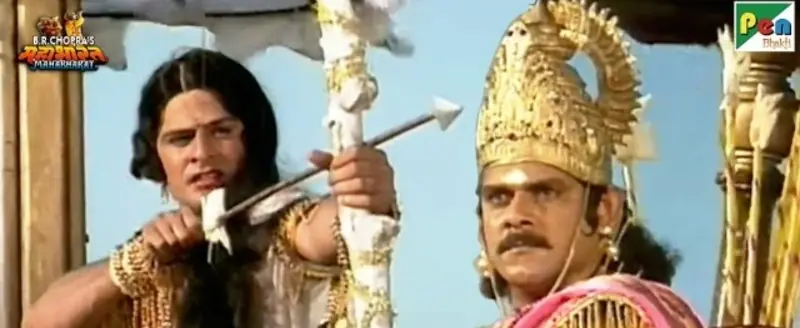
Here's your third scene:
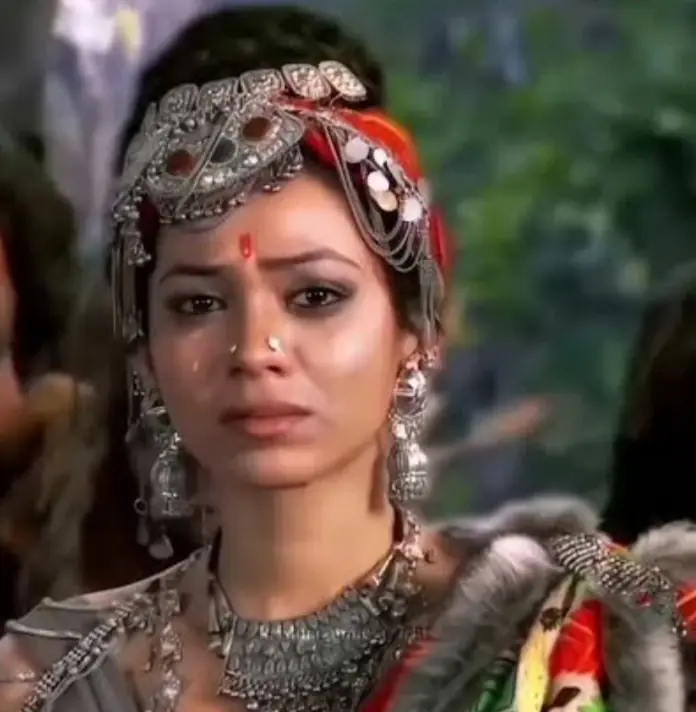
Here's your second scene:
















 Anupamaa
 Sports
 Cricket


6