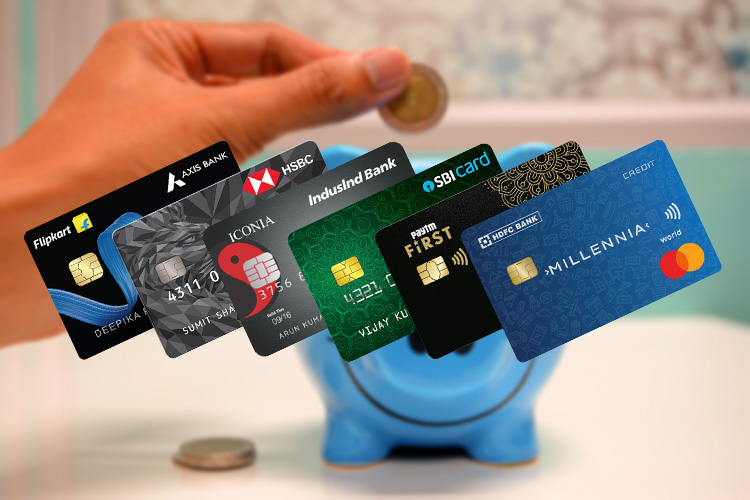
Is credit card good or bad in india??💳

Viswasruti thumbnail
Posted: 6 hours ago
#1

10 Best Credit Cards in India for Cashback (2020) | CardInfo

A credit card in India is neither inherently good nor bad; it is a powerful financial tool that is wonderful if used with strict discipline, but dangerous if treated as free extra income. Opinions are mixed on forums like Reddit where cautious users warn against high interest rates, while experienced spenders highlight the massive cashback and rewards.

The Good (Why it is helpful)

Free rewards: You get cashback, discount deals, and reward points on regular shopping, fuel, and utility bills.

Interest-free period: You can use the bank's money for up to 45 to 50 days without paying any extra charge if you clear the bill on time.

Credit score growth: On-time payments build a strong CIBIL score, making it easy to get future home or car loans.

Safety & security: Credit cards offer better fraud protection and dispute resolution than regular debit cards or cash.

The Bad (Why it is risky)

Very high interest: Indian credit cards charge an annual percentage rate (APR) of 30% to 42% if you miss full payment and only pay the "minimum due".

Debt trap: It is easy to overspend on things you cannot afford, leading to heavy debt cycles.

Hidden fees: Joining fees, annual renewal charges, and GST can sneak up on you if you do not pick a Lifetime Free (LTF) card.

We must be very careful while using the credit cards and even more careful while taking care of those cards!

Created

Last reply

Replies

9

Views

34

Users

3

Likes

13

Frequent Posters

Viswasruti thumbnail
Posted: 6 hours ago
#2

Does It Make Sense to Have A Credit Card in India - Pros and Cons

A credit card provides a line of credit which can be used to make payments. It is different from a debit card in that when you use a debit card, the money gets debited from your bank account directly, whereas a credit card gives a line of credit paid off on a monthly basis.

Indian Context

In India, in the past decade, there has been a surge in the number of credit card users, with private and public banks ranging from Kotak Mahindra Bank to the State Bank of India offering various types of cards. With an improvement in technology, the usage of credit cards has increased rapidly. In addition, payments for almost everything are now online.

Due to demonetization, which led to insufficient currency flow, citizens turned to cards to keep up with monthly purchases. In January 2018, according to the Reserve Bank of India, 36.2 million credit cards were being used.

Cash v/s Card

The first question is, why go through the trouble of getting a credit card when you can use cash for just about everything? Cash is accepted everywhere, it’s tangible, and you don’t have to pay interest.

While these are all valid points, credit cards provide a different meaning to payments. They allow you to keep track of transactions, make large purchases, provide benefits like reward points and discounts and are very useful when you have to make sudden payments.

Viswasruti thumbnail
Posted: 6 hours ago
#3

Pros And Cons Though the shiny plastic may seem tempting and highly sensible, looking at both sides of the story is essential. And if you decide to get a credit card, knowing the best and safest way to use it is imperative. So when deciding to get a credit card, it may help to understand both the pros and cons of having one.

Pros of Having a Credit Card:

Deferred Payment: The most significant plus point of a credit card is the way it functions. Deferred payment allows you to purchase something and pay for it later. This provides the cardholder with simplified access to credit. Also, unlike a debit card, your bank account will not be debited every time you use the credit card.

Easy Procedure: The procedure of applying for a credit card is much easier now than it was in 2008. Banks are much more eager, as well, to provide their account holders with credit cards.

Credit History: When using a credit card, you create a line of credit. The bank receives a complete history of your payment schedule and your usage. A good credit history may make it easier for a potential borrower to get a loan from the bank.

Record of Usage: A credit card statement comes at the end of every month, providing a detailed record of all the payments made, the available credit and the outstanding on your card. This can be extremely helpful when outlining a budget.

To make matters more accessible, the bank sends an SMS or email to the card user every time it is swiped, ensuring not only a record but also a security measure against theft.

  1. Incentives Today, credit cards provide various incentives and offers. Banks advertise their cards based on these incentives. Offers include discounts, cashback and reward points, which can be later used to make purchases like aeroplane tickets.

For example, Kotak Mahindra Bank offers a PVR Gold Credit Card, which ensures the cardholder 24 free tickets at PVR Cinemas all year round.

  1. EMI facility Another advantage of using a credit card is the EMI or equated monthly instalments facility. Credit card users can opt for the EMI facility and pay off the monthly instalments at decent interest rates when making large purchases, like a television or a laptop.

This way, the buyer is not forced to pay the lump sum and does not put a dent in his bank account. Online shopping sites like Amazon and Flipkart provide EMI options, making making purchases through a credit card all the easier.

  1. Interest-Free Period Credit cards have an interest-free period of about 45-60 days, during which you are not charged interest on outstanding credit as long as the due balance is paid off on payment day.

  2. Emergency Payments A credit card is handy when making large payments that appear out of the blue. For example, a credit card can come in very handy in case of sudden medical expenses.

  3. Protective Measures CPP India and OneAssist protect against theft or damage to the credit card, including 24-hour call service to block lost or stolen cards, credit card insurance and assistance in the replacement of the card.

  4. Foreign Currency Transactions Having a credit card reduces the hassle of carrying and converting cash abroad. Though they may charge a higher interest rate, credit cards are easier to use than foreign cash.

Though the advantages are many, there are some cons of having a credit card that must be taken into consideration before applying for one.

Viswasruti thumbnail
Posted: 6 hours ago
#4

Cons of Having a Credit Card:

1. High-Interest Rates

Banks charge a significant interest rate on credit cards, at an average of 3% per month. In addition, bills not paid are carried forward to the next month, and the cardholder is levied with fines and charges.

2. Overspending

The ease with which a credit card can be used and the option of having more than one make it very easy to go above your limit. Since you cannot see the money being deducted from your bank account, buying more than your income can handle becomes tempting.

3. Debt

Overspending can lead to debt. Your income can cover only a certain amount of interest payments, and spending over the limit can lead to an inability to pay due bills on the card.

4. Invisible costs

With a credit card come a host of hidden costs, penalties, fines, and fees. Though the system may seem straightforward, many charges like taxes and fees like joining fees and late payment fees are levied, racking up the expenses.

5. Fraudulent Practices

The same technology that makes credit cards so easy to use also makes fraud possible. With cybercrime on the rise, it is easy to procure a credit card number and use it to make large purchases without the cardholder finding out until the bank statement arrives.

You may also want to know the 13 Things You Need to Know About Credit Cards.

Conclusion

When deciding whether or not you need a credit card, all the above factors, pros and cons, must be kept in mind. A credit card is a huge responsibility. However, its benefits cannot be denied. In the current economic climate, with issues of GST and demonetization, it’s imperative to consider all these points while making a decision.

SalluTheUllu thumbnail
IPL 2026 Participants Thumbnail IPL 2026 Match Winner Thumbnail + 7
Posted: 6 hours ago
#5

I don't get this credit card stuff, I only have a couple of debit cards.smiley44

Is that how you see it too?Should I get one now?smiley5

Viswasruti thumbnail
Posted: 5 hours ago
#6

Originally posted by: SalluTheUllu

I don't get this credit card stuff, I only have a couple of debit cards.smiley44

Is that how you see it too?Should I get one now?smiley5

Before you take one, please read the Pros and Cons carefully. We are giving you the information. But the decision must be yours, esp in such financial matters where risk is involved.

If you feel the debit cards you have are sufficient for your regular use, that will be the best option.

Before getting a credit card, you must check the interest rate, annual fees, and your own budget. Know your spending habits to avoid high debt. A good card helps build credit, but a bad one costs a lot of money. [1, 2]

Key Financial Checks

  • Interest rate (APR): High rates make unpaid balances very costly.

  • Annual fees: Some cards charge yearly just to use them. Avoid these if you can.

  • Late fees: Know what happens if you miss a payment date.

  • Credit limit: Do not pick a limit higher than you can safely manage. [1, 2, 3, 4, 5]

Personal Habits

  • Pay in full: Always plan to pay the full bill every month.

  • Track spending: Only buy what you have the cash to pay for right now.

  • Emergency use: Decide if the card is for daily life or just emergencies. [1, 2, 3, 4]

I can write a simple budget checklist for you, if you tell me:

  • What is your main goal for getting a credit card (building credit, travel rewards, or emergencies)?
  • Are you looking for a card with a specific feature?
SalluTheUllu thumbnail
IPL 2026 Participants Thumbnail IPL 2026 Match Winner Thumbnail + 7
Posted: 5 hours ago
#7

Originally posted by: Viswasruti

Before you take one, please read the Pros and Cons carefully. We are giving you the information. But the decision must be yours, esp in such financial matters where risk is involved.

If you feel the debit cards you have are sufficient for your regular use, that will be the best option.

Before getting a credit card, you must check the interest rate, annual fees, and your own budget. Know your spending habits to avoid high debt. A good card helps build credit, but a bad one costs a lot of money. [1, 2]

Key Financial Checks

  • Interest rate (APR): High rates make unpaid balances very costly.

  • Annual fees: Some cards charge yearly just to use them. Avoid these if you can.

  • Late fees: Know what happens if you miss a payment date.

  • Credit limit: Do not pick a limit higher than you can safely manage. [1, 2, 3, 4, 5]

Personal Habits

  • Pay in full: Always plan to pay the full bill every month.

  • Track spending: Only buy what you have the cash to pay for right now.

  • Emergency use: Decide if the card is for daily life or just emergencies. [1, 2, 3, 4]

I can write a simple budget checklist for you, if you tell me:

  • What is your main goal for getting a credit card (building credit, travel rewards, or emergencies)?
  • Are you looking for a card with a specific feature?

@pink is ME

I spend most of my money on food and clothes, especially online, and I have clubcards for that. What about annual free credit cards, how do those work?

Viswasruti thumbnail
Posted: 5 hours ago
#8

Originally posted by: SalluTheUllu

@pink is ME

I spend most of my money on food and clothes, especially online, and I have clubcards for that. What about annual free credit cards, how do those work?

Credit cards with no annual fee work just like standard credit cards, except the bank does not charge a yearly fee to keep the account open. You receive a credit limit, make purchases, get a monthly bill, and can avoid paying interest if you pay your closing balance in full every month.

Key Features and Mechanics

No Yearly Account Cost: You do not pay a fixed fee simply for holding the card.

Standard Purchases and Payments: They use regular payment networks for everyday shopping, online buys, and bill payments.

Interest Charges Apply: If you leave a balance on the card, you will be charged standard purchase interest, which is often quite high.

Trade-offs and Hidden Costs

Fewer Perks: These cards rarely offer high-tier rewards, concierge services, airport lounge access, or free travel insurance. [1]

Higher Interest Rates: Some zero-fee cards balance out the lack of a fee by charging a higher standard interest rate on unpaid balances.

Other Fees Still Apply: You can still be charged late payment fees, cash advance fees for ATM withdrawals, and foreign transaction fees.

Warning:That is why, we must be very careful while using credit cards.

SalluTheUllu thumbnail
IPL 2026 Participants Thumbnail IPL 2026 Match Winner Thumbnail + 7
Posted: 4 hours ago
#9

Originally posted by: Viswasruti

Credit cards with no annual fee work just like standard credit cards, except the bank does not charge a yearly fee to keep the account open. You receive a credit limit, make purchases, get a monthly bill, and can avoid paying interest if you pay your closing balance in full every month.

Key Features and Mechanics

No Yearly Account Cost: You do not pay a fixed fee simply for holding the card.

Standard Purchases and Payments: They use regular payment networks for everyday shopping, online buys, and bill payments.

Interest Charges Apply: If you leave a balance on the card, you will be charged standard purchase interest, which is often quite high.

Trade-offs and Hidden Costs

Fewer Perks: These cards rarely offer high-tier rewards, concierge services, airport lounge access, or free travel insurance. [1]

Higher Interest Rates: Some zero-fee cards balance out the lack of a fee by charging a higher standard interest rate on unpaid balances.

Other Fees Still Apply: You can still be charged late payment fees, cash advance fees for ATM withdrawals, and foreign transaction fees.

Warning:That is why, we must be very careful while using credit cards.

Thank you for taking the time to provide me with the information I needed.This feedback is indeed valuable, especially coming from someone with such comprehensive knowledge.smiley31

Savera84 thumbnail
Posted: 11 minutes ago
#10

Irrespective of where we are, as far as credit cards are concerned, we must have awareness and discipline.

No bank gives us anything for free. If they give us something, they get double than what they give.

Just use the credit card and clear the bill just before interest kicks in.

When it comes to reaping benefits, don't spend 90% on something unimportant just to get 10% off as a reward.

Cheers..

Edited by Savera84 - 11 minutes ago

Related Topics

Top

Stay Connected with IndiaForums!

Be the first to know about the latest news, updates, and exclusive content.

Add to Home Screen!

Install this web app on your iPhone for the best experience. It's easy, just tap and then "Add to Home Screen".