





Hi all! This is my 1st post on BB forum!
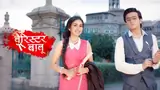
Given the grim mood on the forum here for a few days now, just wanted to share something really poignant from episode 2 that I was re-watching recently!!
The symbolism is so awesome; such exquisite writing & direction for the 1st 5-6 minutes or so, and after that too! Episode starts with Bondita making inquisitive remarks about the unexplained reet-rivaaz in general, & those surrounding widows in particular. The innocent child that she is, her unimpressioned, clean psyche is not able to fathom the what s, why s, and how s of the weird customs & traditions. She keeps asking why & her mom tries to quiet her down - to the extent that someone even hearing Bondita's questions may lead to the condemnation of both mom & daughter from the extended community for life ("paap chadhta hai", as her mom tells her).
The irony here is that due to Anirudh, his unflinching support to Bondita right from the start before they even met (& till now), and due to his open-minded, rational, & egalitarian mindset, Bondita has been able to (& will continue to) talk out loud about the baseless socially-evil practices in the samaaj! Credit where credit is due - Bondita is a curious child (like most children are, at that unimpressioned age) - but it's due to Anirudh's own lofty ideals, notions of equity, & one-world-one-law-abiding basic nature of his, that she has been (& will be able to) speak out & grow her courage to fight against social evil. With only him by her side, she will become the Malkin whose voice is heard & whose mother can stay in the daughter's sasural.
Let's face it - any other man was most likely to be an MCP in those times (many are now too) - that was actually considered correct at that time, & such behaviour towards women was condoned, accepted, & even encouraged. I think women even today in rural Bengal go through a lot. Why just Bengal? I will say that most women in the world face some form of social discrimination, & innumerable tacit challenges and difficulties in life, making it generally harder for them than it is for men.
Example: just look at the gender wage gap in any of the western democracies - rich, developed countries too have their own share of inequity with respect to women :(
Anirudh got a true saathi in her - someone who can walk alongside him & understand his passion for change, ideas of justice, & fitoor for social reform. In turn, she got a real saviour in him in more ways than one can count - both literally & metaphorically! He saved her from her own family, from his family, from the samaaj ke taane and ostracism, from a social evil, and he continues standing up for justice & equality (writing inconsistencies with respect to Mini do not diminish the value of the character of Anirudh standing up for what is right always!). Her mother only taught her to blindly listen to her pati, and she took that as the absolute truth and her prime responsibility to do as her pati says. On the very next day of their wedding, she refers to him by saying "pati is bhagwan", wants to fall at his feet to take his blessings, but he explains that he too has 2 eyes, 2 ears, 1 nose, 2 hands, etc., & that he's as human as her! He tells her aadmi-aurat are baraabar - that is such an out-of-the-world, alien concept for her!
Her mom asked her to blindly follow her husband, and in turn, her husband instructs her to think & live freely as an equal! He sort of "gives" her the right to question (this motivates her already curious, free-spirited mind), the right to equality as a human, the right to search for and fight for rationality, and points out to her that blindly believing what her mother told her is maybe not correct! I say he "gives" the right because sadly that's how unfortunate power dynamics were between men & women that time - the lady "gets any right" only if the man "gives" her, most women were definitely not inherently entitled to the equality that Anirudh was describing. I wonder how many women/girls even today are inherently entitled to ALL the rights that men/boys get so easily & naturally - even before marriage.
If Bondita had been married off to some other random man, I guess there were highly real chances of her free spirit getting lost under that weight of traditions, customs & what not; most women do not get the opportunity to voice out their thoughts even today! They are denied many basic rights & are simply never given any chance where they can prove their potential! Anirudh has been giving & will be the only one to give her this opportunity. This is even starker since her mom was even asking "pati ko naaraz toh nahi karogi naa, Reet naa maan kar?".
She immediately gets an idea - thinks "agar pati hi reet naa maane toh?". At that moment, she sort of wished for a pati like Anirudh, someone who'll support her rights as an individual & getting such a man in 1913 was utopia! Fate bound them together then & there - she runs off to write a letter to her future pati & the scene immediately cuts to Anirudh returning "home", walking down beautiful landscapes in his own "mitti".
It was almost as if he was coming to answer her call, coming back only to fulfill her wish of her pati not agreeing to the reet-rivaaz! She had the spunk & innate ability to courageously think about defying norms & he comes back home - comes to her aid - answers her call - by returning at the very right time! Such literal & figurative symbolism!
And the patriotic male version of rishta tera mera plays in the background as Anirudh looks at his land - the trees, clouds, bullock cart vehicles, people walking, women in pallus, saadhu babas, widows in white! Rishta tera mera here refers to both relationships - his relationship with the land, as well as his future relationship with her! And there's the female version of the song which goes "main hoon iss mitti se hi...vilaayati babu hai tu", "main dhool hun aasmaan tu" (she's the land & refers to the home country, he's the sky & refers to vilaayat) - they are such contrasting personalities in some sense & what makes them come together is what is interesting!
The song keeps referring to his "mitti", and his "desh", which actually refers to Bondita here, apart from the literal homeland! "Aaja tujhko mitti pukare" - is both the literal land & its varied people calling him to their aid, as well as figuratively refers to Bondita calling out to him to be her partner! "Aaja Ye desh hai tera isko gale lagaale" - he will slowly realize that his over-arching dream & purpose in life - the goal of bringing reform in society - will be achieved by embracing Bondita! "Yehi hai pyaar tera jo, yehi hai Rishte saare" - we'll see his pyaar for Bondita & his saare rishte-naate revolving around her after the leap!
I hope we get more symbolic scenes & sequences like this! I also hope like him, she too reciprocates & puts him first unlike mahaan ITV female leads who care about some random xyz & their feelings more than even their own!
SSP's shows usually have the recurring theme of saath-saath chalna of the leads & I hope they stick to it! I am a huge fan of Rabindranath Tagore (& his entire family of social reformers), Raja Ram Mohan Roy, Ishwar Chandra Vidyasagar, Saratchandra Chatterjee, etc. Their lives & times are so inspiring even after nearly 150 years! And Anirudh's character has some aspects of all of them! That makes the show worth it even though it is ITV, jiska koi bharosa nahi! But the "soch" behind the main characters is worth giving the show a fair chance! Rabindranath Tagore and Raja Ram Mohan Roy greatly uplifted not just society, but even the personal lives of so many women closely related to them!
And I really like old-world stories, really old films, legends, erstwhile literature, relics from the bygone era, etc. So I hope they keep up with the 1913-era look, story, characters, and circumstances! That has an inexplicable old-world charm of its own and re-creates an entire "puraani duniya" in our imagination! I'm perhaps expecting a little too much from ITV & especially Colors - they're well known for interfering in scripts - but will catch up till they don't change the very base of characters. If they do change things for TRP, then bye to ITV again!
On another note, RC s & Bhowmiks should have proper guards & doors to their havelis! The VFX of the outside view of the havelis is too bad :( they need more naukar chaakar, at least 1 maharaj ji in the Zamindar household, more people like Koeli, etc. (how can Bihari multi-task so much!). Kaka should get richer clothes & some jewellery too like rings, chains, sone chandi ke sikke etc. tbh to look the part of Tulsipur's malik/Zamindar, & he should deal with their lands, farms, groves, peasants, tenants, labourers, workers, etc (which we don't see at all - they should show us the Zamindaari!); plus the landed gentry/nobility/landowning class needs to be shown with more "shaan"! And no meeting of kuwari ladki with a married man, that too alone at night! Big no! Hahaha! Rudhita marriage was indeed valid in 1913! So was polygamy (polygamy was technically legal in India till around 1955, & outlawed after that if I remember right!), but I really hope they don't go that far!
They need to add in more details of that era - such intricacies will make the whole thing so much better! And Anirudh needs to practice law - Binoy said that he had talked to Governor General in Calcutta for Ani's practice there - what happened to that? And Ani can't just have "samaaj mei badlaav" as a full-time profession by just building public toilets - practice your law to bring that change in society Mr. Barrister Babu! I'm happy to see him getting mad at people around for their dumb beliefs, ideas, etc., and his entitlement too - after all, he's a Barrister, and just 20! Highly educated people are also sometimes highly opinionated, stubborn, and do think they are the only ones who are right (they may mostly be right, too!). He'll learn and grow with time & experience, just like Bondita!
If anyone has made it this far, thanks a ton! Sorry for any typos / syntax errors in my paragraphs! This isn't proof-read!
I know I have written too much already, but I like writing about such insightful, layered & eloquent screenplay!










 Anupamaa
 Yeh Fitoor Tera

