





ashish sharma @ashish30sharma
https://the-artifice.com/ashish-sharma-interview/ ... very thoughtfully written,kudos and thanku amena.
Interview with Ashish Sharma: It Pays to Know Yourself
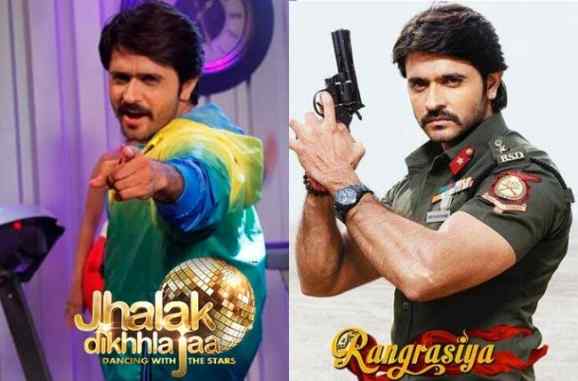
Bollywood is recognized the world over as India's Hindi-language film industry. It is celebrated for its worldwide reach and appeal, and is equally notorious for its over-the-top reputation. However, the glitz and glamor of India's films have long overshadowed the developing and thriving world of Indian television. But now, India's TV shows"dramas, soap operas, talk shows, and reality TV alike"are going global. Over the years, Indian TV has gradually built up a thriving American audience. Nearly every cable provider in America offers multiple Hindi-language channel packages"and for good reason. Customers wanting to watch Indian TV shows, movies, and sports shop around for the best package, since the other regular channels don't vary much between providers. The huge Asian-Indian population in the US (nearly 3.5 million) makes for a lot of customers. Fans who aren't fluent in Hindi take to websites that upload the shows with subtitles and/or written scene-by-scene narrations. Indian TV has also catapulted many talented new actors to international star status. One such star is Ashish Sharma, my interviewee.
Sharma is an actor and producer. He is currently playing the lead role in the Hindi-language drama series Rangrasiya, and co-producing regional language programs in the state of Rajasthan. Since June, Sharma is also participating in Jhalak Dikhhla Jaa, the official Indian edition of the popular dance show Dancing with the Stars. This has increased his workday from 12 hours to a staggering 16. He is now one of the finalists. Thiswas one of his most memorable acts.
It takes significant singularity to stand out among the glut of Indian television actors, and Sharma is unique in more ways than one. He is trained at one of India's finest acting schools, and has worked in both theater and films prior to joining television. The dedication with which he approaches every scene sets him a class apart in an industry that often values quantity over quality. The effortlessness with which he emotes, sometimes without even uttering a word, demonstrate that feelings truly have no language; they are universal. These and other points are discussed in the interview.
India is nine and a half hours ahead of America's east coast. This considerably narrows the time window in which a professional business contact can occur between New York and Mumbai. Getting in touch with an interview subject halfway across the world"one who works no less than 12 hours a day"proved somewhat troublesome. How early in the morning is too early to call? How late is too late? When he texts back "Cheers!" does he mean yes? These and other considerations eventually paid off, and Ashish Sharma took some time out of his busy day to type back to me. His responses are well-thought out and peppered with the occasional emoticon.
Current Project
Better known as Rudra Pratap Ranawat to the Indian TV audience, Sharma plays the lead role in Rangrasiya, a soap opera with an unconventional story and refreshingly real characters. Rudra of Rangrasiya is one of the most well-written characters to grace Indian TV screens in a while. A paramilitary officer, Major Ranawat is deeply layered. He has a tough, emotionless exterior holding in years of bottled-up pain, which occasionally spills out silently through his eyes when he is alone. A disturbed past mars his present abilities to trust or love, making him seem heartless and rude. Rudra is a package of contradictions"simultaneously strong, vulnerable, confident, and insecure. When the interview was conducted in late April, the story was building on how the love of an innocent but bright village girl forces Rudra to introspect for the better. The fast-paced show has since delved into Rudra's marriage to said girl, his turbulent relationship with his mother who had abandoned him when he was eight, his quest to uncover a stalker harassing him and his family, and most recently, the sudden death of his wife, followed by a seven year leap, after which Rudra is seen as a single parent still affected by grief.
It would be quite easy to depict Rudra as unrealistically vile and despicable. It is much harder to portray him as coming to terms with his unapologetically human flaws. It is harder still to make audiences fall in love with him because he resists the very emotion of love with every fiber of his being. How can an actor convincingly portray a character that goes deep beyond the surface? We start the interview on this this note.
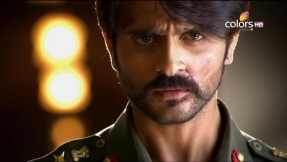
Ashish Sharma as Rudra in Rangrasiya
In prior interviews, Sharma has often alluded to the methods he undertook to capture every last nuance of Rudra. He stared out of windows to get a distant look in his eyes, he grew a mustache to add to the personality of the character, and when Rudra was hospitalized after a particularly brutal battle, Sharma deprived himself of sleep to achieve a fatigued look. I am curious about his dedication and eye for detail"specifically, what drives him to be so particular. He looks back:
I guess we are who we are because of our upbringing. I have been brought up with a simple understanding of life and the thought that you are your own competition, so I try to better myself every time I do something new. That pushes me to seek precision.
Continuing this train of thought, I wonder if he has always been this particular about everything, even as a child, and if he is as picky about the non-work aspects of his life. He says quite simply that he is.
Yeah I think that's in my system or nature to be like this"a Virgo trait maybe. I like to be perfect in anything I do, and at times that can be annoying to people around me"especially my wife.
Candidness is always refreshing, but is even more so when it comes from someone who appears to be quite self-aware.
Origins
Since his childhood has come up, we push the retrospection a small step forward, as Sharma talks about his earliest experiences with acting.
My affair with acting started when I was really young"7-8 years old. I used to collect the neighborhood kids, prepare small skits with them, and perform them in community centers. This went on till I graduated. It was theatre that I used to enjoy at that time.
Comparing these early days to the acting he does today, he says
Those days as a student were the best, because there was no pressure of life and career. [There was] just acting and the zest to learn. I was more free mentally, and had lots of time to do things like reading, rehearsing for hours, and hanging out with co-actors and friends.
Sharma has an uncanny ability to tie things together. Even as he reminisces, he is analytical. For example, he follows the recollection of free time with a discussion of what it meant to him in the long run. Even the "hanging out," which in its day merely served to kill some time, in hindsight "filled" him with valuable "life experiences, relationships, breakups, love, fights, failure, accomplishment, [and] all kinds of emotions life had to offer."
And now after being caught up in the grueling work routine, I miss that, as work brings along different pressures.
But wait. There's more tying back to be done. The pressures of work have their corresponding consequences:
For me my only inspiration is life, and I like to explore different facets of it. So somewhere I feel restricted now.
What follows is a serious note on how he deals with it all.
Now I've found a way around; I have kept the zest to learn alive. I like to stay away from the things that come along with being an actor"all the perks and jazz. It feels nice when you're acknowledged, because that's what you work for, but being dependent and addicted to that is suicidal.
The description of "zest" as the avoidance of the high life, the special treatment, all the love (albeit pseudo) that money and fame can buy has got to be a first. It reflects his need to be in control of his own life, and anything that threatens to share some of that power is unacceptable.
His disciplined outlook on life and its pleasures isn't the only thing that sets Sharma apart from others in his field. For all they're worth, his methods, hard-work, and self-analysis all pay off to the point where Rudra's expressions and body language come across as natural and familiar. Sharma's effective subtlety often stands in contrast to the over-the-top histrionics that inevitably creep their way into some of the characters in Rudra's life. This excess of acting was, for the longest time, considered the norm of Indian soap operas. In fact, to a certain degree, it still is. Writer and actor Chinmay Mandlekar, active in TV as well as in film, finds it "unfair to judge someone's talent based on their performance on television." Because, he says, "often the best of actors do loud acting due to the demand of the medium. Very few of them have retained their style of acting while on the small screen." That would put Sharma among the very few. But he insists that he isn't elitist.
I mostly don't connect to most of my co-actors, and I keep to myself. So at times, that is termed as arrogance, but that doesn't bother me. Rather than pushing myself unnecessarily to strike a conversation, I prefer being called arrogant.
As an introvert myself, it's always nice to meet someone who also has to deal with appearing unapproachable even when feeling like a dazzling ray of sunshine on the inside.
Journey through Characters
Fishing to connect with him some more, I ask Sharma to do something he seems quite adept at: amateur psychology. He analyzes his own trajectory of growth as an actor:
With time, as one grows up, the understanding of life changes. And with every character I play, something inside changes, as every character leaves something inside me. It's a two way affair"my understanding and experiences of life influence my characters, and while I am on the journey of that character, it leaves something of its own inside me.
Before shifting again to what Rudra has left inside Sharma, I bring up some of the work he did before Rangrasiya. His TV debut in 2010 was as a Robin Hood-style gangster named Avdesh. The following year, he starred in a period drama as Chandragupta Maurya, one of the first emperors of India. Suspecting Sharma would have different methods for his different characters, I ask him how differently he approaches them. He doesn't disappoint.

Sharma as Avdesh in Gunahon ka Devta (God of Sins)
Yeah, I approach differently with respect to what I am supposed to play. And that depends on various factors, like the story, character, and the maker's vision. Like for Avdesh, I just picked up my own self while I was in school or college, when getting into fights was just cool. Chandragupta was more about research and text; it was history so it needed that. I just went in with the thought of a student who is a fighter, and I left myself in the hands of Chanakya [Chandragupta's advisor], so I never rehearsed much. I simply reacted.
And by now it seems as if none of Sharma's responses is complete without the requisite self-reflection. Sure enough:
I grew along with Chandragupta; I believe he had the most of me in him.
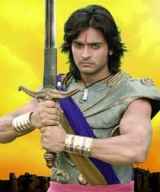
Sharma as Chandragupta Maurya
If Avdesh and Chandragupta today seem simple and straightforward, a lot of credit for that must go to Rudra for providing the appropriate reference point. As Sharma notes:
Rudra, by far, is the most complicated human being I have played. So, yes the approach had to be different.
He indulges me with a fairly detailed description of his abstract methods.
The most important thing was to get the psyche right. I didn't have any emotional reservoir which I could connect him to, so I adopted to prepare from the inside out. I created imaginary situations and kept placing myself in those circumstances, and every time it ignited a different emotion or reaction. Then I worked on the outer layer, and then just placed those emotions into this physical Rudra I created"the balance was important.
At this point it seems fitting for Sharma to devise a method as complex as it is systematic.
Devising a Method
Sharma was trained at Actor Prepares, an acting institute in Mumbai run by Anupam Kher, one of India's most versatile actors. But Sharma's self-proclaimed "affair with acting," which started before he even knew what an affair was, has attributed him with enough sensibility as to what works for him. Taken with his "zest to learn," this has allowed him to come away with a style tailor-made to suit those sensibilities. As with most other things concerning himself, he is well aware of this. He takes mild offense to a question about his take on various schools of acting.
As a student of acting I was trained in different styles and approaches, but I always differed on one thing. That is, how can we generalize, or say that this particular theory works for everyone? I believe it is so individualistic"what works for me need not work for somebody else. So I believe every actor has to find his or her own method or approach that works the best for them. I agree or disagree with the various theories, be it Stanislavasky, Miesner, Adler, or Brecht. I assorted what worked for me, and made my own individual approach.
Indeed what, in theory, seems like the complicated task of building a new technique from bits and pieces of established ones, to Sharma is a "simplified process" allowing him to "convey things to the audience in a simplified manner." It's becoming clear now that his assertion of the importance of balance was no mere aphorism; it comes through as one of Sharma's defining traits.
Balance defines not just Sharma, but also acting itself. Working with other actors entails intimate interaction on an emotional level. As such, achieving a dynamic equilibrium with co-performers must be influenced by personal preferences. I pose the question of the kind of actors that make his 12-hour work day seem less like work and a bit more like pleasure. Not surprisingly, he can describe his ideal co-actors as easily as he can himself, as those "who offer something from their own pockets, and are not completely dependent on the script or director." He is quick to characterize his preference as selfish rather than for the sake of better overall acting.
I believe [acting is] just give and take, action and reaction. I love it when that happens, because in that case, unknowingly, you grow and learn from your co-actor's experience. And I love to steal different perspectives.
Steal' is a strong and potentially problematic word, though it might be safe to say that intellectual property, when altered sufficiently, becomes one's own. He adds, in what seems like an afterthought:
But then, I have to work with all kinds of different actors and approaches, so I have found a way to work around that.
While he doesn't elaborate on this workaround, he does detail the kind of environment that puts him most at ease.
I enjoy working in an atmosphere where there are no egos to satisfy or pretenses to live. Everybody is equally important from a spot boy to the director. Ideas are nobody's monopoly; they can come to anyone. Everybody should be heard and respected equally.
And a less utopian fancy: "an eased off, fun environment" because "too much seriousness takes away the enjoyment of work."
Perspectives on the Television Industry
Enjoying his work quite a bit, Sharma has recently turned producer. He and his wife set up Desi Fillum Compani in 2012. The production house is working on regional language shows in Rajasthan, Sharma's native state. He says, "As a producer I want to make limited series fiction shows adapted from literature or fantasy." Hopefully, this will give him a chance to expand the creative potentials of his logical, analytic mind. But for now, he readily offered an educated guess on where Indian television may go in the next five or ten years, and where it should go according to him.
Indian TV is young and is evolving. It will take time to shift or change from what it is right now, but new makers have come [along] who are creatively superior [to the established ones]. Indian TV will eventually move out of the kitchen, and get into a more substantial zone, like the shows we used to make earlier, like Buniyaad, Hum Log, and Dekh Bhai Dekh.
Those shows aired quite a while back. Hum Log, India's first soap opera, was on during Sharma's infancy in 1984 and '85. Buniyaad (a drama set during the India-Pakistan partition-era) and the sitcom Dekh Bhai Dekh aired in the late '80s and early '90s respectively. To this day, they remain the gold standard of television in India. It certainly bodes well for young actors of today to keep those tidbits in mind.
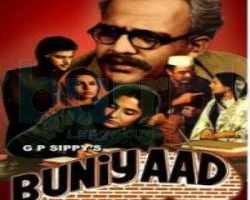
Buniyaad, a family drama set in the Indo-Pak partition era, remains the gold standard of Indian television
Compared to the hundred years of the Hindi film industry, Indian TV is still in its embryonic stages. This is apart from the more obvious, inherent differences of the two mediums. Sharma happens to have some experience with film as well, having essayed a minor role in the critically acclaimed anthology Love, Sex aur Dhoka (2010) prior to his foray into television. Many struggling actors accept television roles with the hope of one day making it to the big screen, but Sharma made the opposite transition. Alluding to Mandlekar's assertion on the loudness of small screen acting, I ask Sharma if TV has molded him in any way. He maintains that it has not.
As an actor, I have experienced all the three prime mediums: theatre, film, and TV, and my approach towards them has been almost the same. Due to the change in medium, yes the technicality changes, but not the process.
The key word there is almost.' And while his process may not change, as it turns out, he himself has.
TV has made me think fast as an actor, and adapt and improvise equally fast.
So he views television as on the job training of sorts. As such, having to work every single day has its own benefits.
Field training is the best form of training. I get to sharpen and correct myself every day. [Film schedules are more spread out,] which might slow down the learning process. And that is a medium where there is no scope of falling flat; a second chance is a rarity there. One shouldn't go to the battlefield without all the arms and ammunition.
So Bollywood is the battlefield, and Sharma's growing experience is his ammunition. He then likens himself to a grain, which "goes through a process to become flour and then into bread to be able to fulfill hunger." I can only guess that the flour is television, and bread is what was earlier a battlefield.
"Rapid Fire" Round
On this metaphorical note, we move to end with what should have been called a rapid-fire if we had spoken on Skype or over the phone. But given the circumstances, it would suffice if he types at 100 words per minute.
1. Proudest moment as an actor:
When my dad called me after watching one of the episodes of Rangrasiya (the Vandemataram sequence), and said, Aaj tum ek paripakv abhineta lage mujhe. Aaj mera beta kahin bhi nazar nahi aaya.' [In translation], Today, I saw an accomplished actor on screen. I couldn't see my son"it was all character.'
(See Rudra in action"including the aforementioned Vandemataram sequence"here.)
2. Fondest memory of acting school:
For the final presentation, we were supposed to do a play. I [had been] doing theatre before I joined Actor Prepares. Andha Yug was one of the plays I could never do. Playing Ashvathama was my unfulfilled desire, and [one day] our teacher came and announced that we would be doing Andha Yug. I looked up with a twinkle and nervousness... Names were called, and their respective characters. Finally he announced, Ashish you're doing Ashvathama,' and I was literally choked with excitement.
3. Favorite actors:
John Turturro, Michael Fassbender, Jack Nicholson, Meryl Streep, Johnny Depp, Ranbir Kapoor, and Peter Dinklage
4. Dream directors:
Christopher Nolan, Woody Allen, Gasper Noe, Anurag Basu, Anurag Kashyap, Vishal Bhardwaj
5. Music:
Sufi songs, old Hindi classics, John Mayer,
All-time favorite: Dikhai diye yun' (Bazaar)
(I also asked him to describe a bad audition experience, but he made no answer. )
Conclusion
Over the course of our virtual conversation, and our interactions prior to it, Sharma has come across as highly balanced and disciplined, with a commendable work ethic. He enjoys his job as much as he is serious about it. He balances the focus he gives to microscopic details by never losing sight of the big picture, which includes not only his own career but also the trajectory of the television industry itself. The pride he takes in his work is evident, and his self-confidence is endearing.
After having interviewed him, I would love to think that I have gotten a sense of Ashish Sharma, the man. But honestly, it would be wrong for me to stake any claims on having done that, because it wouldn't have happened so smoothly without Sharma's own input. As I've continually harped on throughout this piece, Sharma knows himself better than anyone else can ever hope to, right down to which childhood experiences impacted which aspects of his personality, and in what ways. His responses, while generously honest, are highly measured. For example, someone who subconsciously seeks to be in control and micromanage his life will predictably control which questions to answer and which to deem unfitting. To be fair, one unanswered question doesn't take much away from the charm of fifteen scrupulously answered ones. Cheers!


























 Hindi TV Shows
 Kyunki Saas Bhi Kabhi Bahu Thi 2

