










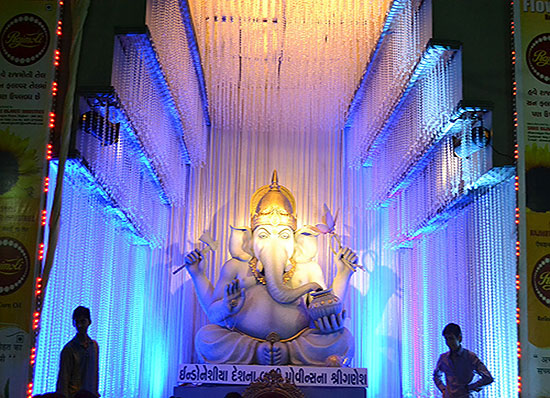
The most serious impact of the festival on the environment is due to the immersion of plaster-of-Paris idols in bodies of water. Traditionally, idols were sculpted from mud taken from nearby bodies of water; after the festival they were returned to their source, a cycle meant to represent the natural cycle of creation and dissolution.
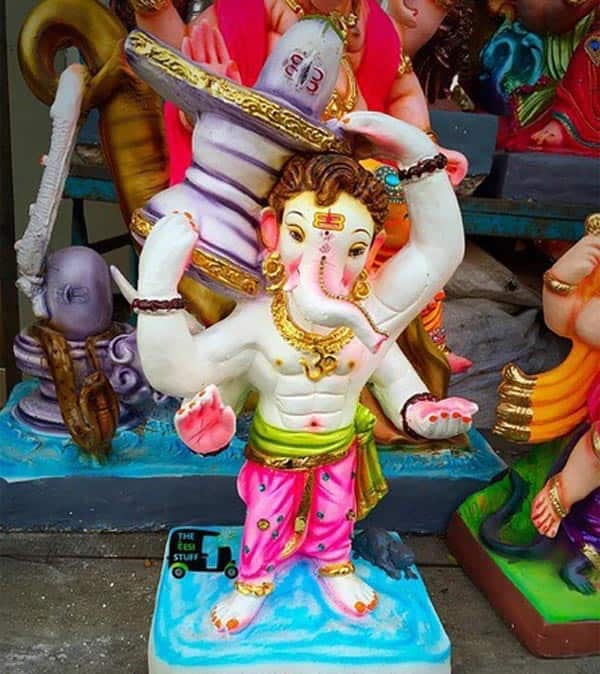
As the commercial production of Ganesha idols increased, earthen or "natural" clay (shaadu maati in Marathi and banka matti in Telugu) was replaced by plaster of Paris. Although the man-made plaster is easier to mould, lighter and less expensive than clay, it is non-biodegradable (insoluble in water). The paint used to decorate the plaster idols contains heavy metals such as mercury and cadmium, which pollute the water. In addition, the non-biodegradable accessories adorning the idol accumulate in beach sand.
In Trinidad and Tobago (where Ganesha Chaturthi is widely celebrated), Radio Jaagriti has educated the public on the environmental implications of plaster-of-Paris models and clay idols of Ganesha have been encouraged for immersion to prevent environmental damage. In Goa the sale of plaster-of Paris Ganesha idols has been banned by the state government, and celebrants are encouraged to buy traditional, artisan-made clay idols.[39] Recent initiatives to produce clay Ganesha idols in Hyderabad have been sponsored by the Andhra Pradesh Pollution Control Board.[40]

























 Cricket
 Kundali Bhagya
 Geet - Hui Sabse Parayee
 Anupamaa

