






January is here, with eyes that keenly glow,
A frost-mailed warrior
striding a shadowy steed of snow.
- Edgar Fawcett
 January Month
January is the first month of the year in the Julian and Gregorian calendars, and one of seven Gregorian months with the length of 31 days.
January begins (astrologically) with the sun in the sign of Capricorn and ends in the sign of Aquarius. Astronomically speaking, the sun begins in the constellation of Sagittarius and ends in the constellation of Capricornus.
January is named for Janus (Ianuarius), the god of the doorway; the name has its beginnings in Roman mythology, where the Latin word for door (ianua) comes from - January is the door to the year.
January BirthStones
Garnet - The Nightmare Protector - January

Garnet is the accepted birthstone for the month of January. It is also the accepted anniversary gemstone for the second year of marriage. When most people think of garnet, they picture the dark red bohemian garnet that was popular in Victorian times. You may be surprised to learn that garnets are found in every color except blue, including brilliant green tsavorite garnet, raspberry pink rhodolite garnet, and orange malaya garnet. Bright red "anthill" garnets are found in Arizona. Legend holds that Noah hung a large garnet in the ark for illumination. It reportedly also gives its wearer guidance in the night, protection from nightmares, and according to the Egyptians, is an antidote for snake bites and food poisoning. It was also thought to have a special affinity with the blood. Garnets are durable and brilliant and will give years of pleasure. Garnets are found in the U.S., Africa, Sri Lanka, Brazil and India.
Onyx

Emerald

Rose Quartz

Coral

January Flower
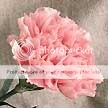
Dianthus caryophyllus (Clove Pink) is a species of Dianthus. It is probably native to the Mediterranean region but its exact range is unknown due to extensive cultivation for the last 2,000 years. It is the wild ancestor of the garden Carnation.
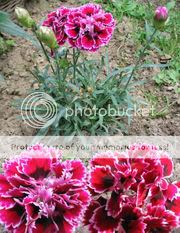
It is a herbaceous perennial plant growing to 80 cm tall. The leaves are glaucous greyish green to blue-green, slender, up to 15 cm long. The flowers are produced singly or up to five together in a cyme; they are 3–5 cm diameter, and sweetly scented; the original natural flower colour is bright pinkish-purple, but cultivars of other colours, including red, white, yellow and green, have been developed.
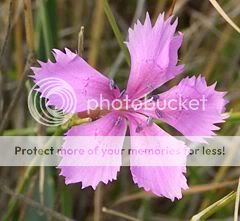
Carnations are often worn on special occasions, especially Mother's Day and weddings. They were known as "Jove's Flower" in ancient Rome as a tribute to one of their beloved gods. In Korea, red and pink Carnations are used for showing their love and gratitude toward their parents on Parents Day (Korea does not separate Mother's Day and Father's Day, but has Parents Day on May 8). Sometimes, you can see old parents wear a corsage of Carnation(s) on their left chest on Parents Day. Not only on Parents Day, but also on Teacher's Day (May 15), people express their admiration and gratitude to their teachers with Carnations, as Carnation has the meaning of 'admiration', 'love', and 'gratitude'.


Edited by maha_prakrti - 18 years ago












 Health and Fitness
 Tum Se Tum Tak

