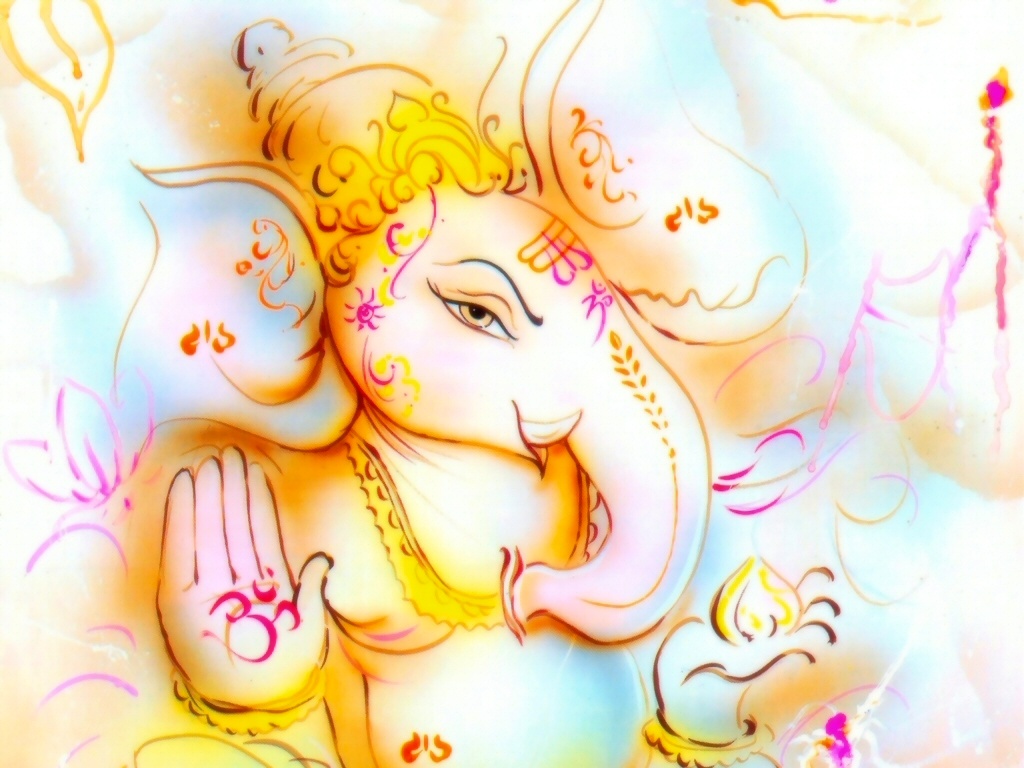
{|~ Happy Ganesh Chaturthi ~|}

Kore-Soteira thumbnail
13th Anniversary Thumbnail Dazzler Thumbnail + 2
Posted: 12 years ago
#1
|| Shree Ganeshay Namah ||

https://i.imgur.com/PDtME7p.jpg

Welcome Banner:- Radhikerani
Today is Bhadrapad Shudh Chaturthi and according to Hindu Mythology, this is considered as Auspicious
Auspicious, Yes because on this day the whole world WELCOMES 🤗
the Sukhkarta, Dukhharta, the giver of everything and whose mere presence brings a smile 😊 on our face.
The whole street shouts, 'Ganapati Bappa Morya'

Yes you guessed it right it is 😉,

Ganesh Chaturthi


Hello and welcome to the beautiful thread dedicated to our Bappa.
So at the top of your voice say,

Ganapati Bappa Morya 🤗


About Ganesh Chaturthi


Ganesha Chaturthi is the Hindu festival celebrated on the birthday (rebirth) of LordGanesha, the son of Shiva and Parvati.

It is believed that Lord Ganesh bestows his presence on earth for all his devotees during this festival. It is the day Shiva declared his son Ganesha as superior to all the gods, barring Vishnu, Lakshmi, Shiva and Parvati. Ganesha is widely worshipped as the god of wisdom, prosperity and good fortune and traditionally invoked at the beginning of any new venture or at the start of travel. The festival, also known as Vinayaka Chaturthi ("festival of Ganesha") is observed in the Hindu calendar month ofBhaadrapada, starting on the shukla chaturthi (fourth day of the waxing moon period). The date usually falls between 19 August and 20 September. The festival lasts for 10 days, ending on Anant Chaturdashi (fourteenth day of the waxing moon period).

While celebrated all over India, it is most elaborate in Maharashtra, Gujarat, Tamil Nadu, Goa, Andhra Pradesh, Karnataka, Odisha and Chhattisgarh. Outside India, it is celebrated widely in Nepal and by Hindus in the United States, Canada, Mauritius,Singapore,Malaysia, Thailand, Cambodia, Burma, Fiji, Trinidad & Tobago, and Guyana.

LEGEND:-

Traditional ganesh hindu stories tell that Lord Ganesha was created by goddess Parvathi, consort of Lord Shiva. Parvati created Ganesha out of sandalwood paste that she used for her bath and breathed life into the figure. She then set him to stand guard at her door while she bathed. Lord Shiva returned and, as Ganesha didn't know him, he didn't allow him to enter. Lord Shiva became enraged and asked his follower ghosts to teach the child some manners. Ganesha was very powerful, being born of Parvati, the embodiment ofshakti (or power). He defeated the ghost-followers (called "Ghana"s) and declared nobody was allowed to enter while his mother was bathing. The sage of heavens, Narada, along with the Saptarshi (the seven wise rishis) sensed a growing turmoil and went to appease the boy with no results. Angered, the king of Gods, Indra attacked the boy with his entire heavenly army but even they didn't stand a chance. By then, this issue had become a matter of pride for Parvathi and Shiva.

After the devas were defeated, the trinity, the controller, preserver and destroyer of the universe launched an attack against Ganesha. Amidst the fighting, Shiva severed the head of the child. And brought on Parvathi's rage. Seeing her son dead, Parvathi revealed her true self, as the Adi-shakti, the prime energy that fuels the universe and sustains matter. Taking on a terrible form, she vowed to destroy the universe where her son was killed and re-create a better one. The Gods prostrated before her and Shiva promised that her son will live again. The trinity hunted the world for a head and came across a mother elephant crying for her dead baby. They consoled the mother and fixed the head of the baby elephant in place of Ganesha's head. Lord Shiva also declared that from this day, the boy would be called as "Ganesha" (Gana-Isha : lord of the Ganas). In this way, Lord Ganesha came to be depicted as the elephant-headed God.

DATE:-

The festival is observed in the Hindu calendar month of Bhaadrapada, starting on the shukla chaturthi (fourth day of the waxing moon). The date usually falls between 19 August and 20 September. The festival lasts for 10 or 12 days, ending on Anant Chaturdashi. This festival is observed in the lunar month of bhadrapada shukla paksha chathurthi madhyahana vyapini purvaviddha. If Chaturthi prevails on both days, the first day should be observed. Even if chaturthi prevails for the complete duration of madhyahana on the second day, if it prevails on the previous day's madhyahana period even for one ghatika (24 minutes), the previous day should be observed.

CELEBRATIONS, RITUALS, TRADITIONS:-

1] In Hinduism:-

Two to three months before Ganesh Chaturthi, artistic clay models of Lord Ganesha are made for sale by specially skilled artisans. They are beautifully decorated and depict Lord Ganesh in vivid poses. The size of these statues may vary from 3/4 of an inch to over 70 feet. The tallest Ganesha Idol made which stood 117 feet tall was situated in the city of Visakhapatnam in 2012.

Ganesh Chaturthi starts with the installation of these Ganesh statues in colorfully decorated homes and specially erected temporary structures mandapas (pandals) in every locality. The pandals are erected by the people or a specific society or locality or group by collecting monetary contributions. The pandals are decorated specially for the festival, either by using decorative items like flower garlands, lights, etc. or are theme based decorations, which depict religious themes or current events.

The priest, usually clad in red or white dhoti and uttariyam (Shawl), then with the chanting of mantras invokes the presence of Ganesha using the statue as a channel, or body for his energy. This ritual is the Pranapratishhtha. After this the ritual called as Shhodashopachara (16 ways of paying tribute) follows. Coconut, jaggery, 21 modakas, 21 durva (trefoil) blades of grass and red flowers are offered. The statue is anointed with red unguent, typically made of kumkum and sandalwood paste. Throughout the ceremony, Vedic hymns from the Rig Veda, the Ganapati Atharva Shirsha Upanishad, and the Ganesha stotra from the Narada Purana are chanted.

Some homes buy their own small clay statue, and after 1,3,5,7 or 11 days immerse it in a bucket or tub at home, so as not to pollute public lakes or rivers. After a few days the clay is used in the home garden.

The main sweet dish during the festival is the modak (modak in Marathi, modakam/kudumu in Telugu, modaka in Kannada and modagam in Tamil). A modak is a dumpling made from rice flour/wheat flour with a stuffing of fresh or dry-grated coconut, jaggery, dry fruits and some other condiments. It is either steam-cooked or fried. Another popular sweet dish is the karanji (karjikai in Kannada) which is similar to the modak in composition and taste but has a semicircular shape.

In Andhra, kudumu (rice flour dumplings stuffed with coconut and jaggery mixture), Vundrallu (steamed coarsely grounded rice flour balls), Panakam (jaggery, black pepper and cardamom flavored drink), Vadapappu (soaked and moong lentils), Chalividi (cooked rice flour and jaggery mixture), etc., are offered to Ganesha along with Modakams. These offerings to god are called Naivedyam in Telugu.

In Andhra, Clay Ganesh (Matti Vinayakudu in Telugu) and Turmeric Ganesh (Siddhi Vinayakudu in Telugu) is usually worshipped at homes along with plaster of paris Ganesha.

Public celebrations of the festival are hugely popular, with local communities (mandalas) vying with each other to put up the biggest statue and the best pandal. The festival is also the time for cultural activities like singing and theater performances, orchestra and community activities like free medical checkup, blood donation camps, charity for the poor, etc.

Today, the Ganesh Festival is not only a popular festival, it has become a very critical and important economic activity for Mumbai, Visakhapatnam, Hyderabad, Bangalore and Chennai. Many artists, industries, and businesses survive on this mega-event. Ganesh Festival also provides a stage for budding artists to present their art to the public. In Maharashtra, not only Hindus but many other religions also participate in the celebration like Muslims, Jains, Christian and others. In Mangalore, there is a belief that the eldest son of the home should be present during pooja.

2] OUTSIDE INDIA:-

Ganesh Chaturthi is celebrated in the UK by the migrant Hindu population as well as the large number of Indians residing there. The Hindu culture and Heritage Society, UK - a Southall based organisation celebrated Ganesh Chaturthi for the first time in London in 2005 at The Vishwa Hindu Temple. The Idol was immersed in the river Thames at Putney Pier. Another celebration organised by an Gujarati group has been celebrated in the Southend-on-Sea which attracts over 18000 devotees.Annual celebrations also take place on the River Mersey at Liverpool.

The festival is similarly celebrated in many locations across the world. The Hindu Swayamsevak Sangh USA, an organisation of Hindus based in the US organises many such events to mark the Hindu festivals.


In USA, Ganesh Chaturthi is celebrated by various associations of people from India. (Various Indian Associations of North America and in Temples across USA.)

The Philadelphia Ganesh popularly known as PGF is the largest Sarvajanik (fully contributed by public funds) Hindu festival in North America. Since 2005 the festival is conducted every year in Bharatiya Temple, Chalfont, Pennsylvania. The 10 days are marked by processions, devotional programs, cultural events, India filmi-orchestra and a weekend carnival. While the Marathi community plays a big role in organising the festival, participation from all communities such as Gujarati, Tamil, Telugu, North Indian, Bengali etc. is seen as the reason for its success and uniqueness.

In Canada, Ganesh Chaturthi is celebrated by associations of Marathi-speaking people. (MBM in Toronto, MSBC in Vancouver, etc.)

Celebration of Ganesh Chaturthi in Mauritius dates back to 1896. The first Ganesh Chaturthi Puja was held in the 7 Cascades Valley next to Henrietta village by the Bhiwajee family who is still celebrating this pious festival for more than a century. Over the years the festival gained such popularity on the island that Mauritian government has attributed a public holiday for that day.

In Malaysia and Singapore, the festival is more commonly known as Vinayagar Chakurthi because of the relatively larger Tamil-speaking Hindu minority among the other South Asian ethnic groups. It is very common to see pictures or statues of Lord Ganesha at the entrance of homes, business premises and schools. These idols are usually decorated with flower garlands alongside offerings of fruits and sweets. Most Ganesha temples mark Vinayagar Chaturthi with morning prayers, abhishegam (ritual bathing of the deity) and free vegetarian lunch for devotees and the poor. Chariot processions organised by Ganesha temples in the evenings often attract huge crowds of devotees and tourists.

HISTORY:-

It is not known when and how Ganesh Chaturthi was first celebrated. Ganesh Chaturthi was being celebrated as a public event in Pune since the times of Shivaji (1630-1680), the founder of the Maratha Empire. The Peshwas, the de facto hereditary administrators of the Empire from 1749 till its end in 1818, encouraged the celebrations in their administrative seat Pune as Ganesha was their family deity (Kuladevata). With the fall of the Peshwas, Ganesh Chaturthi lost state patronage and became a private family celebration again till its revival by Indian freedom fighter and social reformer Lokmanya Tilak.

In 1893, Lokmanya Tilak transformed the annual domestic festival into a large, well-organized public event. Tilak recognized the wide appeal of the deity Ganesha as "the god for everybody",and popularized Ganesh Chaturthi as a national festival in order "to bridge the gap between Brahmins and 'non-Brahmins' and find a context in which to build a new grassroots unity between them", and generate nationalistic fervour among people in Maharashtra against the British colonial rule. Tilak was the first to install large public images of Ganesh in pavilions, and also established the practice of submerging in rivers, sea, or other pools of water all public images of the deity on the tenth day after Ganesh Chaturthi.

Under Tilak's encouragement, the festival facilitated community participation and involvement in the form of intellectual discourses, poetry recitals, performances of plays, musical concerts, and folk dances. It served as a meeting ground for people of all castes and communities in times when, in order to exercise control over the population, the British discouraged social and political gatherings.

Credit for the info:- https://en.wikipedia.org/wiki/Ganesh_Chaturthi


Edited by kalyani_shiva - 12 years ago

Created

Last reply

Replies

41

Views

9.8k

Users

18

Likes

68

Frequent Posters

srutyhc thumbnail
14th Anniversary Thumbnail Navigator Thumbnail
Posted: 12 years ago
#2
GANESHA CELEBRATION TRIUMPH

How is Ganesh Chaturthi Celebrated:

The festival begins with the installation of huge elaborately crafted statutes of Ganesha in homes and podiums, which have been especially constructed and beautifully decorated. Artisans put months of effort into making the statues. It's forbidden to look at the moon on this first night as legend had it the moon laughed at Lord Ganesha when he fell from his vehicle, the rat. On Ananta Chaturdasi (the last day), the statues are paraded through the streets, accompanied by much singing and dancing, and then immersed in the ocean or other bodies of water. In Mumbai alone, more than 150,000 statues are immersed each year!

What Rituals are Performed During Ganesh Chaturthi:

Once a statue of Lord Ganesh is installed, a ceremony is undertaken to invoke his holy presence into the statue. This ritual is called the Pranapratishhtha Puja, during which a number of mantras are recited. Following this a special worship is performed. Offerings of sweets, flowers, rice, coconut, jaggery and coins are made to the God. The statue is also anointed with red chandan powder. Prayers are offered to Lord Ganesha every day during the festival. Temples devoted to Lord Ganesha also organize special events and prayers. Those who have a Ganesha statue in their house treat and care for him as a much loved guest.

Why are the Ganesh Statues Immersed in Water at the End of the Festival:

Hindus worship idols, or statues, of their gods because it gives them a visible form to pray to. They also recognize that the universe is in a constant state of change. Form eventually gives away to formlessness. However, the energy still remains. The immersion of the statues in the ocean, or other bodies of water, and subsequent destruction of them serves as a reminder of this belief.

What to Expect During Ganesh Chaturthi:

The festival is celebrated in a very public manner. Local communities compete with each other to put up the biggest and best Ganesha statue and display. Expect very crowded streets, filled with boisterous devotees, and lots of music.
Kore-Soteira thumbnail
13th Anniversary Thumbnail Dazzler Thumbnail + 2
Posted: 12 years ago
#3

32 Forms Of Lord Ganesha:-

  1. Bala Ganapati
  2. taruna Ganapati
  3. Bhakti Ganapati
  4. Vira Ganapati
  5. Shakti Ganapati
  6. Dvija Ganapati
  7. Siddhi Ganapati
  8. Vighna Ganapati
  9. Uchchishta Ganapati
  10. Kshipra Ganapati
  11. Herambha Ganapati
  12. Lakshmi Ganapati
  13. Maha Ganapati
  14. Vijaya Ganapati
  15. Nritya Ganapati
  16. Urdhava ganapati
  17. Ekakshara Ganapati
  18. Varada Ganapati
  19. Trykshara Gannapati
  20. Kshpira Prasada Ganapati
  21. Haridra Ganapati
  22. Ekadanta Ganapati
  23. Srishti Ganapati
  24. Uddanda Ganapati
  25. Rinamochana Ganapati
  26. Dhundhi Ganapati
  27. Dwimukha Ganapati
  28. Trimukha Ganapati
  29. Sinha Ganapati
  30. Yoga Ganapati
  31. Durga Ganapati
  32. Sankathara Ganpati

108 Names Of Lord Ganesha:-

1. Akhuratha : One who has Mouse as His Charioteer
2. Alampata : Ever Eternal Lord
3. Amit : Incomparable Lord
4. Anantachidrupamayam : Infinite and Consciousness Personified
5. Avaneesh : Lord of the whole World
6. Avighna : Remover of Obstacles
7. Balaganapati : Beloved and Lovable Child
8. Bhalchandra : Moon-Crested Lord
9. Bheema : Huge and Gigantic
10. Bhupati : Lord of the Gods
11. Bhuvanpati : God of the Gods
12. Buddhinath :God of Wisdom
13. Buddhipriya : Knowledge Bestower
14. Buddhividhata : God of Knowledge
15. Chaturbhuj : One who has Four Arms
16. Devadeva : Lord! of All Lords
17. Devantakanashakarin : Destroyer of Evils and Asuras
18. Devavrata : One who accepts all Penances
19. Devendrashika : Protector of All Gods
20. Dharmik : One who gives Charity
21. Dhoomravarna : Smoke-Hued Lord
22. Durja : Invincible Lord
23. Dvaimatura : One who has two Mothers
24. Ekaakshara : He of the Single Syllable
25. Ekadanta : Single-Tusked Lord
26. Ekadrishta : Single-Tusked Lord
27. Eshanputra :Lord Shiva's Son
28. Gadadhara : One who has The Mace as His Weapon
29. Gajakarna :One who has Eyes like an Elephant
30. Gajanana : Elephant-Faced Lord
31. Gajananeti : Elephant-Faced Lord
32. Gajavakra : Trunk of The Elephant
33. Gajavaktra : One who has Mouth like an Elephant
34. Ganadhakshya : Lord of All Ganas (Gods)
35. Ganadhyakshina : Leader of All The Celestial Bodies
36. Ganapati : Lord of All Ganas (Gods)
37. Gaurisuta : The Son of Gauri (Parvati)
38. Gunina : One who is The Master of All Virtues
39. Haridra : One who is Golden Coloured
40. Heramba : Mother's Beloved Son
41. Kapila : Yellowish-Brown Coloured
42. Kaveesha : Master of Poets
43. Krti : Lord of Music
44. Kripalu : Merciful Lord
45. Krishapingaksha : Yellowish-Brown Eyed
46. Kshamakaram :The Place of Forgiveness
47. Kshipra : One who is easy to Appease
48. Lambakarna : Large-Eared Lord
49. Lambodara : The Huge Bellied Lord
50. Mahabala : Enormously Strong Lord
51. Mahaganapati : Omnipotent and Supreme Lord
52. Maheshwaram : Lord of The Universe
53. Mangalamurti : All Auspicious Lord
54. Manomay : Winner of Hearts
55. Mrityuanjaya : Conqueror of Death
56. Mundakarama : Abode of Happiness
57. Muktidaya : Bestower of Eternal Bliss
58. Musikvahana : One who has Mouse as His Charioteer
59. Nadapratithishta : One who Appreciates and Loves Music
60. Namasthetu : Vanquisher of All Evils and Vices and Sins
61. Nandana : Lord Shiva's Son
62. Nideeshwaram : Giver of Wealth and Treasures
63. Omkara :One who has the Form Of OM
64. Pitambara : One who has Yellow-Coloured Body
65. Pramoda : Lord of All Abodes
66. Prathameshwara : First Among All
67. Purush : The Omnipotent Personality
68. Rakta : One who has Red-Coloured Body
69. Rudrapriya : Beloved Of Lord Shiva
70. Sarvadevatman : Acceptor of All Celestial Offerings
71. Sarvasiddhanta : Bestower of Skills and Wisdom
72. Sarvatman : Protector of The Universe
73. Shambhavi : The Son of Parvati
74. Shashivarnam : One who has a Moon like Complexion
75. Shoorpakarna : Large-Eared Lord
76. Shuban : All Auspicious Lord
77. Shubhagunakanan : One who is The Master of All Virtues
78. Shweta : One who is as Pure as the White Colour
79. Siddhidhata : Bestower of Success and Accomplishments
80. Siddhipriya :Bestower of Wishes and Boons
81. Siddhivinayaka : Bestower of Success
82. Skandapurvaja : Elder Brother of Skand (Lord Kartik)
83. Sumukha : Auspicious Face
84. Sureshwaram : Lord of All Lords
85. Swaroop : Lover of Beauty
86. Tarun : Ageless
87. Uddanda : Nemesis of Evils and Vices
88. Umaputra : The Son of Goddess Uma (Parvati)
89. Vakratunda : Curved Trunk Lord
90. Varaganapati : Bestower of Boons
91. Varaprada : Granter of Wishes and Boons
92. Varadavinayaka : Bestower of Success
93. Veeraganapati : Heroic Lord
94. Vidyavaridhi : God of Wisdom
95. Vighnahara : Remover of Obstacles
96. Vignaharta : Demolisher of Obstacles
97. Vighnaraja :Lord of All Hindrances
98. Vighnarajendra : Lord of All Obstacles
99. Vighnavinashanaya : Destroyer of All Obstacles and Impediments
100. Vigneshwara : Lord of All Obstacles
101. Vikat : Huge and Gigantic
102. Vinayaka : Lord of All
103. Vishwamukha : Master of The Universe
104. Vishwaraja : King of The World
105. Yagnakaya : Acceptor of All Sacred and Sacrificial Offerings
106. Yashaskaram : Bestower of Fame and Fortune
107. Yashvasin : Beloved and Ever Popular Lord
108. Yogadhipa : The Lord of Meditation


Favorite Foods of Lord Ganesha :-

Lord Ganesh accepts whatever His devotees offer him with love and devotion. But we as devotees know what our Lord loves the most. With the advent of Ganesh Chaturthi, devotees start preparing His most preferred sweets to be offered to Him and then later distributed as Prasad (Sanctified Food). Food becomes divine when offered to the Lord and when consumed by mortals, it purifies their mind, body and soul.

Following are the most favorite food of Lord Ganesh. We have listed the ingredients and methods how to prepare them so that every devotee can offer it to their Lord and feel uplifted in joy and devotion.

  1. Modak
  2. Boondi Ladoo
  3. Peda
Edited by kalyani_shiva - 12 years ago
Kore-Soteira thumbnail
13th Anniversary Thumbnail Dazzler Thumbnail + 2
Posted: 12 years ago
#4

8 Avatars of Lord Ganesha :-

1] Vakratunda :-
Ganesha's first avatara is of Vakratunda (twisted trunk) an embodiment of the Absolute Impersonal aspect of Godhood called Brahman in the form of Ganesha.

A demon named Matsara was born out of the Pramaada (Heedlessness) of Indra, the king of Gods.

This demon performed severe penance and invoked the grace of Lord Shiva and obtained the boon of fearlessness from Him.
Having obtained the boon he went about conquering all the three worlds," He was coronated as the king of Asuras by their preceptor Sukracharya. The defeated gods went to Kailasa and prayed to Lord Shiva for protection. On hearing the mission of gods, Matsara went to Kailas and vaniquished Lord Shiva also.

When the gods were at their wit's end to know what to do next. Lord Dattatreya came there. He advised the gods to invoke the grace of Lord Vakratunda and imparted to them the secret of the monosyllable mantra Gam. All the gods including Shiva did penance accordingly and at last Lord Vakratunda appeared and assured them that he would subdue the demon. The demon was so terrified at the sight of Vakratunda that he surrendered to Him and sought refuge at His feet. The Lord forgave him, and restored the lost glory and kingdoms to the gods, and to the various kings on earth.


2] Ekadanta :-
The next incarnation was in the form of Ekadanta (single tusked) who defeated the demon Madasura. The famous sage Chyavana created Madasura.

The Asura sought his father's permission and went to Sukracharya, who was Chyavana's brother as well as the preceptor of the Asuras. He prostrated to the Guru and expressed his desire to become the ruler of the whole universe. Sukracharya was pleased with his nephew's submission and initiated him into the Shakti Mantra Hrim. Madasura did penance on this mantra for thousands of years.

At last the deity of Shakti, appeared, before him and blessed him with the fulfillment of all his desires. Thereafter the demon went about raging battles against all the kings and the gods, and was victorious everywhere. He thus became the ruler of all the three worlds. In his reign, all virtues and righteousness disappeared from the world. He married Saalasa the daughter of Pramada Asura and begot three children in her, viz. Vilasi, Lolupa and Dhanapriya. The worried gods approached Sanat kumara and sought his advice to overcome their plight Sanatkumara instructed them to propitiate Lord Ekadanta and seek his protection.

He also described the glory of Ekadanta thus "Eka stands for Maya the "embodied". and Danta for Truth (Satta). Thus Ekadanta represents the Supreme Truth which wields the Maya." The Devas then meditated upon the Lord Ekadanta for hundreds of years. Pleased by their devotion the Lord appeared before them and assured them that He would remove their miseries. Narada, the celestial saint, promptly informed Madasura of the boon given to the gods by the Lord and prompted him to wage war against Ekadanta The demon got ready for a battle with the Lord. But alas as soon as he reached the battlefield and beheld the terrible form of Ekadanta, all his courage drained away and he surrendered to the Lord.


3] Mahodara:-
The third incarnation was of Mahodara who vanquished Mohasura, the demon of Delusion and Confusion. Once again the mouse was the mount of Ganesha.

The confused nature of this tale makes it difficult to understand exactly what was going on. It seems that once Shiva was sunk in meditation for ages and showing no signs of coming out of it. Meanwhile, the gods were in need of help. Parvati therefore assumed an alluring form and wandered round his meditating spot. Shiva was brought back to normal wakeful consciousness by this act and she abandoned the alluring cover' so as to speak. This abandoned energy form became a demon in its own right over the ages and Ganesha subdued it.
Shiva and Parvati are the parents of Ganesha, so the psychological implications of this tale make the head spin. Mohasur worshipped the Sun God and attained the name of Daitya Raja meaning King of the Demons. He also conquered all the three worlds... "All the gods, sages hid in caves and jungles in fear of him. There was anarchy all over. At this time Surya, Sun God advised all the gods to worship Mahodara ie, Ganesha. "All the Gods and the Sages started worshiping Mahodara. Ganesha was pleased and granted them with a boon, saying that he would slay Mohasur himself. When Shukracharya heard this, he told Mohasur to surrender in front of Mahodara. Lord Vishnu also explained to Mohasur that if he surrendered he will not be killed or destroyed.

That's why he should accept the friendship of Mahodara. By saying this he started praising and singing the glories of Lord Lambodara. "Listening to this Mohasur became frightened and he requested Lord Vishnu to bring Mahodara giving him due honour and respect. When Lord Mahodara arrived, Mohasur greeted and welcomed him with pomp and gaiety. He sang his praises and asked for forgiveness for his evil sins. Mohasur promised the gods that he would return them their Swargalok and assured that he would be always on the path of righteousness.

He also assured them that henceforth, he would not a dare to harass the Gods and Sages. Listening to this Lord Mahodara was pleased and commanded him to go back to Pataal lok and never return again. All the Gods and the Sages were elated, They all started singing the praise of Lord Mahodara.

4] Gajanan:-
Equally perplexing in the tangled web of intergenerational sexuality is the next tale, of the avatar of Gajanana or Gajavaktra who defeated the demon Lobhasura (Greed or Covetousness).

Gajanana means "the Lord with an elephant face", and Lobha was the demon of greed. Kubera, the Treasurer of the heavens, once visited Kailasa, the abode of Lord Shiva.

There he was blessed with the vision of the Lord and Goddess Parvati. Parvati was so beautiful that Kubera looked at Her with lustful eyes. The Mother became angry at this, and Kubera shivered with fear. From the fear of Kubera, there manifested a demon named Lobhasura. Lobhasura descended to the world of Asuras, where he received his education from Sukracharya, the guru of Asuras.

He was initiated into the mantra "0m Namah Shivaya". The demon then performed penance and in due course the Lord appeared and blessed him with the boon of fearlessness. The demon Lobha now went about conquering the three worlds and became the sovereign ruler. He sent word to Lord Shiva that he would like to rule over Kailas, and that it would be better if He relinquished His abode. The Lord thought for a while and decided to leave His abode.

The gods, tyrannised by the demonic rule, approached sage Raibhya who instructed them to pray to Lord Gajaanana. The Devas invoked the grace of the Lord and sought His protection. The Lord blessed them, and sent Vishnu as His messenger to the demon to apprise him of the strength of Gajaanana Lobhasura was convinced of the Lord's strength and surrendered without putting up a fight.

5] Lambhodara:-
Once upon a time Lord Vishnu had assumed the form of Mohini, the enchantress, to delude the demons. When Lord Shiva beheld this seductive form. He was struck with passion.

Vishnu immediately gave up the Mohini form and assumed His usual form. Shiva became sad and angry. Out of the seeds of His disappointment was born a terrible demon Krodhasura.

This demon invoked the grace of the Lord Sun and became a powerful king. He married "Preeti" the beautiful daughter of Sambara and begot two sons in her"- Harsha and Soka.

The gods undertook penance to invoke the grace of Lord Ganesha in the form of Lambodara. The Lord appeared before them and for the sake of the world, subdued Krodhasura.

6] Vikata :-
His next incarnation was of Vikata("The mishappen"), who subdued Kama, the demon of desire.

The demon named Kamasura, i.e. the embodiment of lust, was born out of the seeds of Lord Vishnu. Like all other demons he was accepted by the preceptor Sukracharya as his disciple. Kamasura performed penance on Lord Shiva and after long and arduous austerities he was blessed by the Lord.

He became the supreme ruler of the three worlds. He was ceremoniously married to Trishna, the daughter of Mahishasura, and begot two sons in her, viz. Soshana and Dushpoora.

The Devas, tormented by his rule, approached Mudgala Rishi for showing them a way out. The teacher advised them to meditate on the mantra OM at a place called Mayuresa Kshetra. Pleased by their devotion. Lord Ganesha appeared to them in the form of Vikata, and brought about their salvation.

7] Vighnaraja :-
The 7th incarnation of Ganesha Vighnaraja had a very unusual mode of conveyance - a Sheshnaag or Shasha. In this lifetime Ganesha managed to subdue the demon Mamasur (also known as Mamtasur or Mama), the demon of the ego.

This is His (Ganesha's) most popular incarnation, known as The Remover of Obstacles. Riding his vehicle called Sheshnag, a serpent, he strode into battle with Mamtasur, and overcame him." Parvati Devi, the daughter of Himavan, was married to Lord Shiva.

After the marriage, one day when She was relaxing in the company of Her friends. She burst out in laughter in a playful mood, and out of Her laughter was born a handsome male form He prostrated to the Mother She was surprised at this manifestation of the form and asked him who he was and what he wanted. He said that he was born from Her laughter and asked Her as to how he could serve Her. She named him Mama, as he was born out of her outburst, when She was swayed by "Maan", the sense of I-ness, Ego. She then instructed him to remember Lord Ganesha always, who would fulfill all his desires.

Mama retired to the forests to meditate on Lord Ganesha. On the way, he met Sambara Asura, who managed to allure him into the Asuric cult and initiated him into the demonic methods of worship. Thus Mama of angelic nature became Mamasura, the demon. He married Mohini, the daughter of an Asura chief in due course he became the ruler of alt the three worlds.

The Devas who were exiled from their worlds propitiated Lord Ganesha, Who incarnated as Vighnaraja, subdued Mamasura and established righteousness and peace.

8] Dhoomravarna:-
Ganesha has a mouse as his mount here. His life mission this time around was to defeat the demon Ahamkarasur, the demon of self-infatuation.

Once, Brahmaji, the grandsire, bestowed on the Sun deity, the lordship over the 'world of activities'. One day, a thought dawned in the mind of Sun: "All the worlds are governed by Karma"-activities; and by virtue of my being the Lord of Karma Rajya, I can consider myself to be the supreme governor of all the worlds.

As this thought passed his mind, he happened to sneeze and out of the sneeze there arose a demon. He went down to the world of Asuras and Sukracharya gave him the name "Aham" on account of his birth from the ego of Sun.

He meditated on Lord Ganesha, who appeared before him in the form of Dhumravarna and blessed him to be the sovereign ruler of all the three worlds. Aham married "Mamata", daughter of Pramadasura, and begot two sons in her named Garva and Sreshta.

Tired of the demonic rule of Aham, the Devas meditated upon Lord Ganesha for salvation, and the Lord descended to their rescue- Ere long, Lord Ganesha in the form of Dhoomravarna subdued the demon Aham.

*********************************************************************************
Ganesh Symbolism:-


*************************************************************************************

Online Ganesh Puja link :-


Edited by kalyani_shiva - 12 years ago
Kore-Soteira thumbnail
13th Anniversary Thumbnail Dazzler Thumbnail + 2
Posted: 12 years ago
#5
Messages by my friends, this thread would not have been possible without their help. Thanks a ton 🤗
Radhikerani:-

https://i.imgur.com/gG0PuSr.jpg

https://i.imgur.com/jLJSeYV.jpg
******************************************************************************************************

Sudhisnshiva:-


*****************************************************************************************************
TimenTIMEagain:-

Thank You Lord Ganesha for helping me thru my life and enabling me too live another precious day.Happy Ganesh Chaturthi to everyone.


Edited by kalyani_shiva - 12 years ago
srutyhc thumbnail
14th Anniversary Thumbnail Navigator Thumbnail
Posted: 12 years ago
#6
is it i am not supposed to post the articles..here..
Kore-Soteira thumbnail
13th Anniversary Thumbnail Dazzler Thumbnail + 2
Posted: 12 years ago
#7

Originally posted by: srutyhc

is it i am not supposed to post the articles..here..


You can post additional information here 😊
xDoppelgangerx thumbnail
16th Anniversary Thumbnail Dazzler Thumbnail + 2
Posted: 12 years ago
#8


Arijit007 thumbnail
13th Anniversary Thumbnail Sparkler Thumbnail Networker 1 Thumbnail
Posted: 12 years ago
#9
such a beutifull thred, ganpati bappa moriyaa.
shivamala thumbnail
15th Anniversary Thumbnail Voyager Thumbnail
Posted: 12 years ago
#10
I thank everyone for the beautiful pictures and the stories. They are just wonderful.

Related Topics

Members Lounge thumbnail

Posted by: Life_Is_Dutiful · 3 months ago

Dussehra or Vijayadasami is the Hindu festival that marks the end of Sharad Navratri. The word Dussehra is derived from the Sanskrit words dasha...

Expand ▼
Members Lounge thumbnail

Posted by: Life_Is_Dutiful · 4 months ago

A very Happy Onam to all!

Expand ▼
Members Lounge thumbnail

Posted by: x.titli.x · 4 months ago

Happy Janmashtami!

Expand ▼
Members Lounge thumbnail

Posted by: Minionite · 4 months ago

Celebrated in the Hindu month of Shravan, Raksha Bandhan or Rakhi Poornima is the day a brother promises to protect his sister and the sister...

Expand ▼
Members Lounge thumbnail

Posted by: nushhkiee · 5 months ago

A very happy Guru Purnima to all!

Expand ▼
Top

Stay Connected with IndiaForums!

Be the first to know about the latest news, updates, and exclusive content.

Add to Home Screen!

Install this web app on your iPhone for the best experience. It's easy, just tap and then "Add to Home Screen".