FlauntPessimism thumbnail

Epic Explorers

Posted: 6 hours ago
#1

Mahabharata Ki Pathashala _Round 3 Mann ki baat_ Voting thread


Welcome to the Mahabharat Mann ki Baat responses...

As a part of our Mahabharata Ki Pathshala, we had requested, all the participants to think as a character of Mahabharata, and respond on why they had carried out some of the acts which probably seems to be very wrong to us today...

To clarify, some of the participants had put up the responses including reasons which are nowhere supported by texts, even things which are completely against what is mentioned in the texts, I have removed those parts so that responses remain

Below are the responses from the participants, we request everyone to vote for two entries (rank 1st and 2nd). Participants can vote too...

Also welcoming our judge for the round...

Edited by FlauntPessimism - 5 hours ago

Created

Last reply

Replies

2

Views

24

Users

1

Frequent Posters

FlauntPessimism thumbnail

Epic Explorers

Posted: 5 hours ago
#2

1) Character Bheem

Q1- You kept harassing younger Kaurava brothers as a child, who were just learning to adjust with a new set of cousins. While I understand this was as children, but that was what sowed the biggest discord.. Justify yourself

You are right that, as a child, I often bullied and harassed my younger Kaurava brothers.

I was stronger than them, and I sometimes used that strength without thinking about the fear or humiliation I caused.

But I was also a child growing up in a house where suspicion and rivalry already surrounded us.

I never imagined that those childish acts would grow into hatred that would consume an entire generation.

That does not make my behavior right, and I will not hide behind the excuse that I was only a child.

I should have understood that the Kauravas were my cousins, not enemies to be crushed.

Yet the hostility between us was never created by me alone; resentment, jealousy, and manipulation existed on both sides.

As we grew older, what began as childish rivalry became a struggle for power and survival.

I regret the fear and humiliation I caused them when we were young, even though I cannot accept responsibility for everything that followed.

If I had known where those early wounds would lead, perhaps I would have chosen strength with restraint rather than strength used to dominate.

Q2-- You kept on reminding Dhritrashtra and Gandhari onYou how you killed their sons, on how you broke their bones, is it human? How do you justify it

You ask me whether it was human to remind Dhritarashtra and Gandhari of how I killed their sons and broke their bones.

No, not all of it was human or righteous.

I was consumed by years of humiliation, injustice, and the pain of losing those I loved.

My anger did not end when the war ended; it followed me into their grief.

I knew they were mourning their sons, yet I still spoke words that wounded them further.

I cannot justify cruelty simply because I had suffered cruelty myself.

I can explain my rage, but I cannot claim that every word I spoke was dharma.

The war gave me reasons to fight, but it did not give me the right to mock grieving parents.

I was victorious on the battlefield, but in those moments, my anger overcame my humanity.

I can defend why I fought, but I must accept responsibility for how cruelly I spoke afterward.

2) Character - Hidimba

Q1) How did you fall for Bheem the day, he killed your brother? Even if your brother was evil, you had stayed with him, no one forced you to. And he was your protector. One is devastated at the death of even a very close neighbor, and you fell in for the murderer of your family on the same day and even bore a child on that very day? Were you an opportunist

Opportunist? What opportunity? I loved Bheem before he killed my brother, not after. Hidimb ordered me to lure Bheem and his family to their deaths, but I chose to warn them. Yes, my brother protected me but even a cage can have a guard.

Bheem did not murder him; Hidimb attacked, and Bheem fought back. I could mourn my brother without defending his cruelty. And Ghatotkacha was certainly not delivered on the same day. Rakshasa biology is magical, not ridiculous! I simply rejected fear, chose courage and claimed my own future.

Q2) Why did you never try Ghatochkach or your grandson become the heir of Pandavas, especially when they were powerful, Meghvarma was definitely better than a child in Uttara's womb. Did you know they wont accept, so just ignored?

Ignored it? No. I simply did not raise my son and grandson to beg for a throne. Ghatotkacha had his own people and realm; why should Hastinapur be the only measure of greatness? He fought for the Pandavas as family, not as a candidate campaigning for succession. Meghavarma may have been powerful, but power alone does not establish a royal claim. Parikshit was Abhimanyu's son and the surviving heir of the recognised Kuru line.

Did I suspect the court might reject my forest-born descendants? Of course I was in love, not naïve. But I would rather see my children rule with dignity elsewhere than plead for acceptance in Hastinapur. Some inherit crowns; mine inherited freedom and considerably better flying skills.


3) Character - Shalya

Q1) Why were you arguing with Karna during his battle with Arjuna, and blaming him to be inefficient. As a charioteer, you duty was to support your warrior, and yet you behaved just oppositely (in fact even promised Yudhisthir to help in way you could). How do you justify this

I was deceived into promising allegiance with Adharma. I was bound by promise but could not forego my duty.

I seized the opportunity when I was humiliated into becoming a charioteer for Karna. Karna, i agree was a skilled warrior but he sided with Adharma. Abhimanyu's martyrdom at the hands of 8 yodhas was Adharma. I did not raise my weapon but made my words sharper. That way, I fulfilled my promise and my duty.

Come to think of it, i tried to persuade Karna to see beyond his blind loyalty and his own skewed beliefs.

Q2) You decided to battle with Pandavas disguised as Brahmins when they had won the Draupadi swayamvar. Was is something acceptable? They won fair, the rules didn't bar them, aside harming a Brahmin was a crime, so why do that. Justify yourself

No response Given

FlauntPessimism thumbnail

Epic Explorers

Posted: 32 minutes ago
#3

4) Character - Ashwatthama

Q1 - Why did you redirect the Bhrahmastra towards the womb of Uttara, they were completely unrelated to the war. How do you justify it, do you approve the punishment you got for it?

I did not seek to punish Uttara; I sought to end the lineage of those whom I held responsible for my father's death.

Drona was brought down through deception, and Dhrishtadyumna slew him when he had laid down his weapons.

As his son, I could not separate the unborn heir from the lineage that had taken my father from me.

My mind was consumed by grief, humiliation and vengeance, not by hatred of Uttara herself.

I knew Krishna would condemn my deed, yet in that moment I believed I was answering a blood-debt that had never been avenged.

I bear the consequence of my action, but I will not deny the grief that gave birth to it.

Q2) How do you justify your approach of attacking sleeping enemies and in fact beheading a sleeping Prativindya?? That is not a war crime, that is inhumanity

You call them sleeping enemies; I saw those who had destroyed my father after he had laid down his weapons.

Dhrishtadyumna had slain Drona when he was no longer fighting, and I could not accept that as a righteous victory.

The war had already shattered the boundaries I had believed warriors were bound to honour.

I had sworn to Duryodhana that I would avenge the destruction of our side and those who had caused it.

That night, I chose vengeance over honour, believing that those who had shown no mercy had forfeited mine.

I knew what I was doing; I acted as a son avenging his father, not as a warrior seeking glory.

5) Character - Bheeshma

Q1) How do you justify abduction of Amba, Ambika and Ambalika for your brother? As someone who wasn't even powerful enough to abduct the wives himself, does it make sense to get him 3 girls without even asking their wishes. And to make matters worse, you had Amba leave after her abduction claiming if she loves someone else she cant marry your brother, when you clearly knew that world don't easily accept abducted girls. That made her life a mess

- Bound by my sacred oath to protect Hastinapur, my duty was to secure the royal line and defend the empire's honor.

- Winning maidens in open contest against rival kings was an accepted Kshatriya custom, done openly rather than through deceit.

- As regent, it fell on me to secure noble brides for the newly crowned Vichitravirya to ensure the dynasty's survival.

- My intent was never to demean the princesses, but to elevate them to the highest status as queens of Bharatvarsha.

- When Amba revealed her devotion to Salva, righteousness forbade me from forcing a woman to marry against her heart.

- Releasing her with full honor was the only moral path, believing a righteous king would accept her untouched purity.

- I could not foresee that Salva's rigid pride would lead him to reject her, casting her into an unjust plight.

- Marrying her myself was impossible without violating the absolute vow of celibacy that anchored my entire existence.

- Forcing my brother to accept a bride devoted to another would have violated marital dharma and poisoned the realm. I carried the burden of her tragic fate with a heavy heart, yet I acted strictly within my vows and Kshatriya duty.

Q2) What is your justification for never trying to sort out the issues between children Kauravas & Pandvas. If Vidur could find it out, there is no reason why you couldn't, yet you did nothing to ensure that a seed of enmity isn't sown.. How do you justify it?

- As the elder statesman and guardian of the throne, my primary mandate was the preservation and unity of the Kuru empire above all else.

- I recognized the simmering rivalry early, but as a counselor bound to the throne, my authority was strictly advisory while Dhritarashtra held the sovereign power of the King.

- Vidura possessed the freedom of a minister to speak without political restraint, whereas my grand position required me to maintain absolute neutrality so as to not openly fracture the royal court.

- I trusted that the shared upbringing, common Gurukul education under Drona, and fundamental values of Dharma would eventually temper the cousins' animosity as they matured.

- Stepping in with brute force or open taking of sides would have fractured the kingdom into civil war decades earlier, destroying the very empire I was sworn to protect.

- When Dhritarashtra's blind affection continuously overruled my counsel, I was left to navigate a tragic compromise to hold the fragile peace together.

- My forbearance was not out of ignorance or apathy, but a desperate effort to shield Hastinapur from an immediate collapse while upholding the delicate order of the realm.

6) Character - Karna

Q1) Why did you leave Duryodhana and others to die while escaping yourself the moment you got a chance while your fight with Gandharvas.. Isn't it being highly unloyal. How do you justify it

I will not disguise my defeat as something noble I was overpowered by the Gandharvas and I fled. But fleeing a battle I could no longer win was cowardice in that moment, not a decision to betray Duryodhana. I had neither the strength nor the means to rescue him once I was defeated. Should I have surrendered myself as well merely to prove loyalty, when I could no longer fight? I accept that I failed my friend on that day what I reject is the claim that my failure was born from disloyalty. My loyalty to Duryodhana was a choice I made knowingly, and I stood by that choice even after learning that the Pandavas were my own brothers.

Q2) What were your exact thoughts during your promise to Kunti about not killing others except Arjun? Like Kunti never asked you to spare her children (which might have given you an excuse that you can't not give anything to someone who asks for). If you would have killed or captured Yudhisthir you would have won the war for Duryodhana (which ideally you should have done), but you didn't do that even when you had a chance, didn't even try for it, while on the other hand by deciding to still kill Arjun, if possible, you made it difficult for Pandavas to win. This makes it seem that the war was nothing but just personal platform to show that you are better than Arjun.. This seems the act of a very opportunistic person. How do you justify it

You ask why I spared Yudhishthira when his death might have strengthened Duryodhana's chances. Because choosing Duryodhana's side did not mean that I had to extinguish every bond of blood and become the slayer of all my brothers. When Kunti revealed the truth, I had already chosen Duryodhana over the kingdom Krishna offered me; my promise to Kunti did not change my allegiance. I could fight the Pandavas without making the death of four of them my personal objective. I spared them not to help them win, but because there was a line even my loyalty to Duryodhana could not make me cross. And my resolve against Arjuna was not a separate agenda it was simply one battle within the war I had already chosen to fight.

Edited by FlauntPessimism - 31 minutes ago

Related Topics

Mahabharat Katha thumbnail

Posted by: Quantum-Dot · 15 days ago

Mahabharat ki Pathshala Season 1 (Round 4: Pg 20, Imp Note Pg 22)

Jab baat ho Mahabharat ki, toh seekhne ka safar kabhi khatam nahi hota...📖✨ This Janmashtami, get ready to enter a Pathshala where knowledge...

Expand ▼
Mahabharat Katha thumbnail

Posted by: MoonKS · 10 days ago

Krishna as the Shanti Doot. 🦚❤️ Before the war, Krishna went to Hastinapur as a messenger of peace. He tried his best to stop the war and asked...

Expand ▼
Mahabharat Katha thumbnail

Posted by: Agni_Jytsona · 10 days ago

" During the Pandavas’ exile, Krishna once visited Draupadi and jokingly asked what she would cook for him. Draupadi replied that their supplies...

Expand ▼
Mahabharat Katha thumbnail

Posted by: Swetha-Sai · 10 days ago

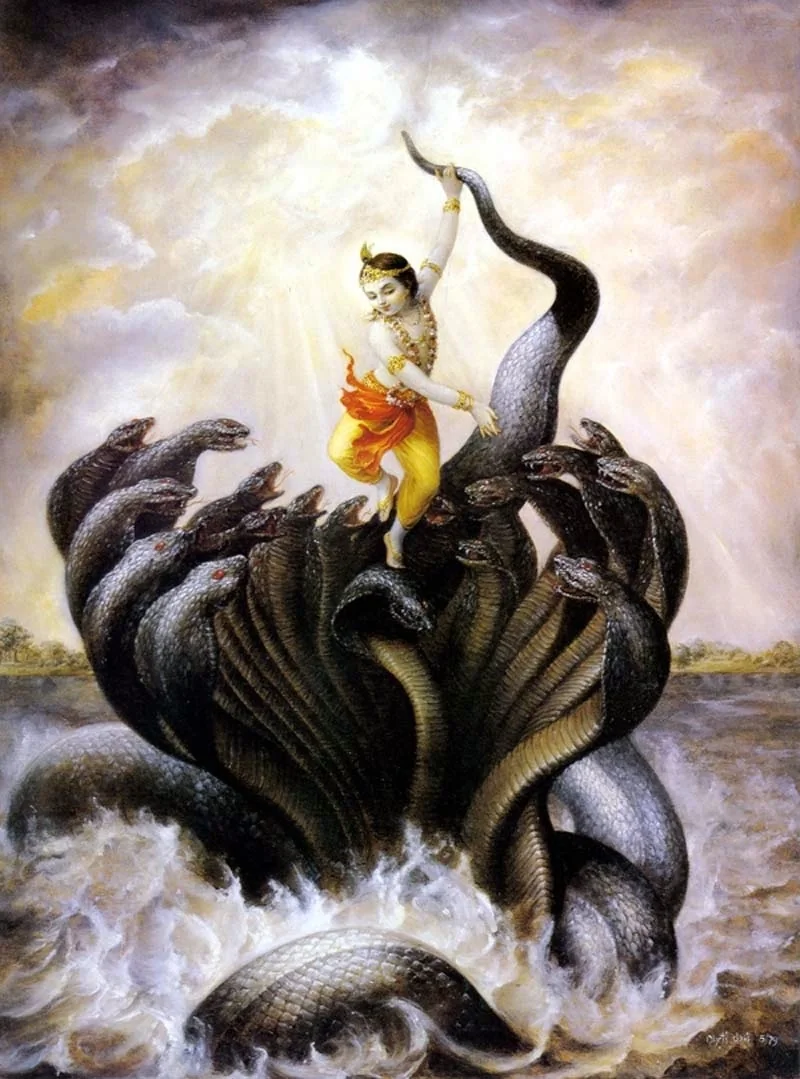
Sri Krishna & Kaliya Story - Kanha Ki Toli Round

Kaliya was a ferocious naga that lived on the Ramanaka Dwipa of the Yamuna River but left the island in fear of the Garuda, a celestial being...

Expand ▼
Mahabharat Katha thumbnail

Posted by: nutmeg7 · 9 days ago

🦚 Calling all Kanha ke deewane! 🦚 This Janmashtami, why celebrate from afar when you can be right where the magic began — Gokul! 💙✨ Get ready...

Expand ▼
Top

Stay Connected with IndiaForums!

Be the first to know about the latest news, updates, and exclusive content.

Add to Home Screen!

Install this web app on your iPhone for the best experience. It's easy, just tap and then "Add to Home Screen".