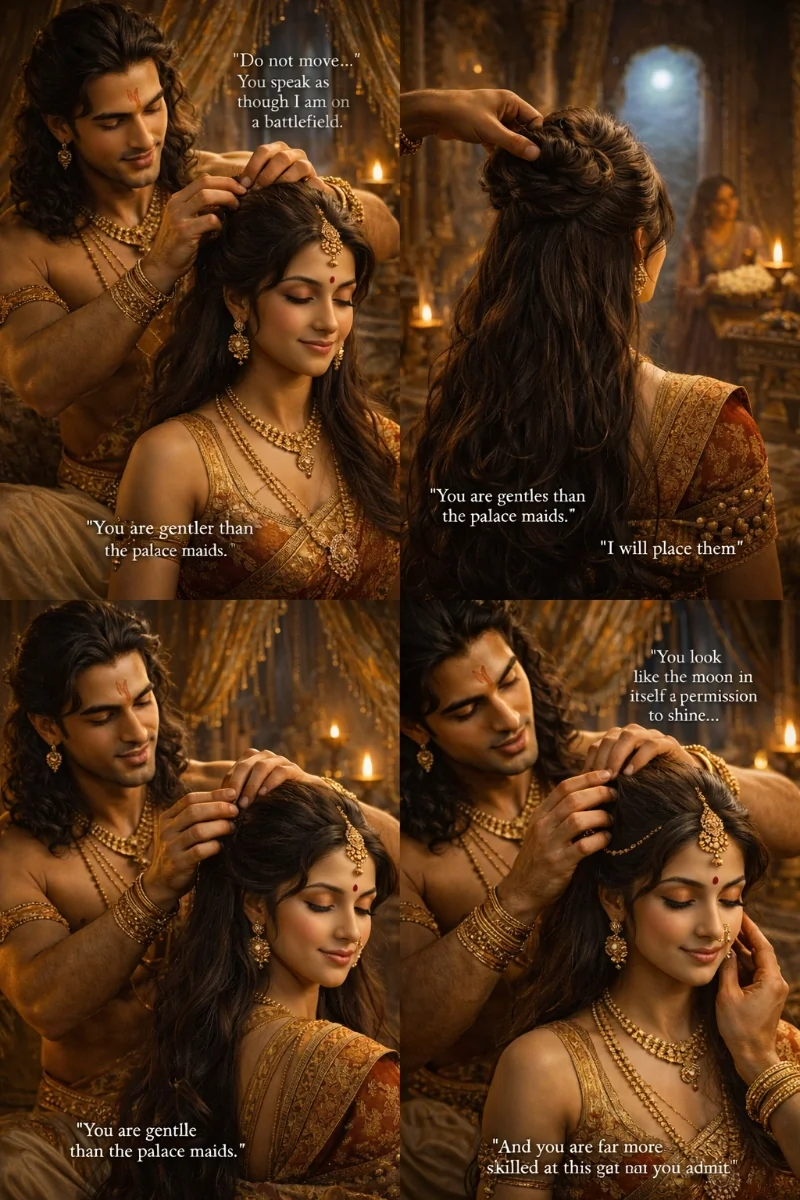
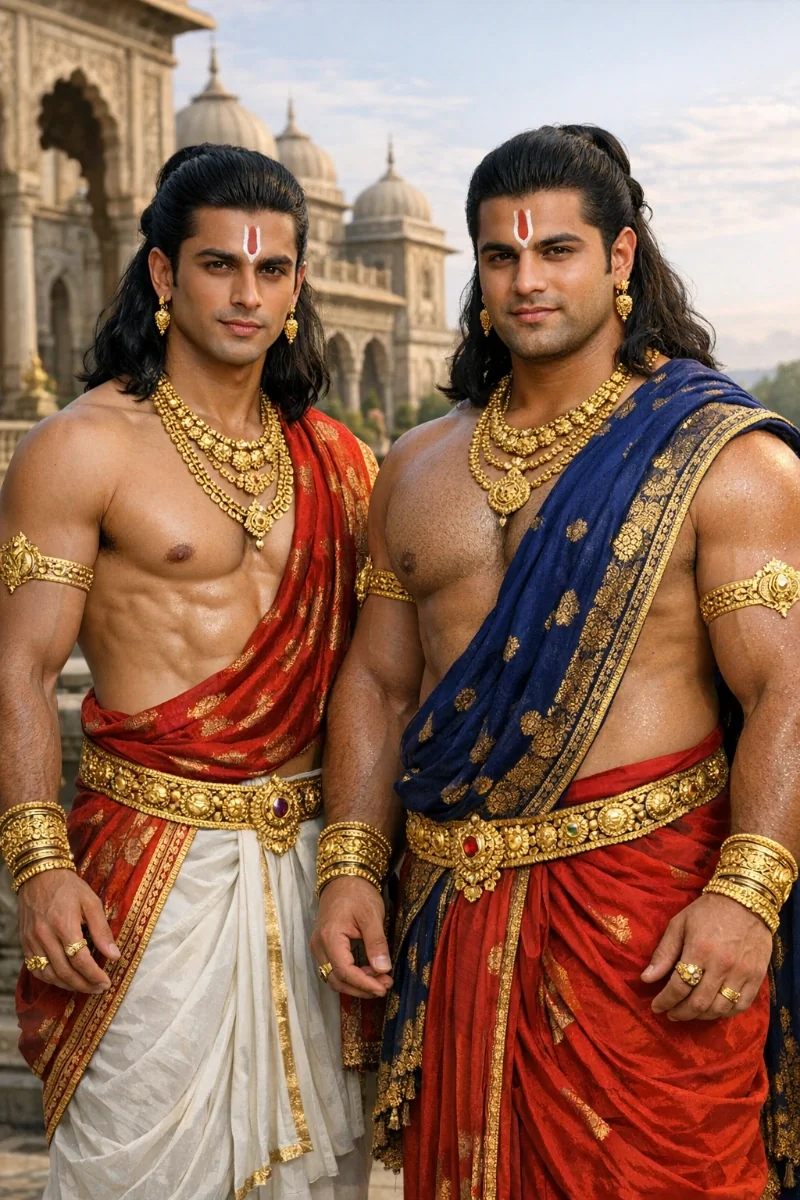
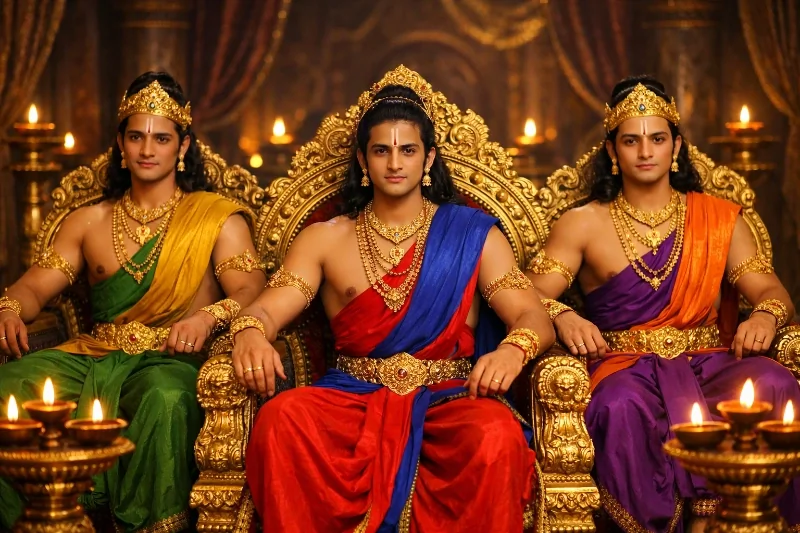
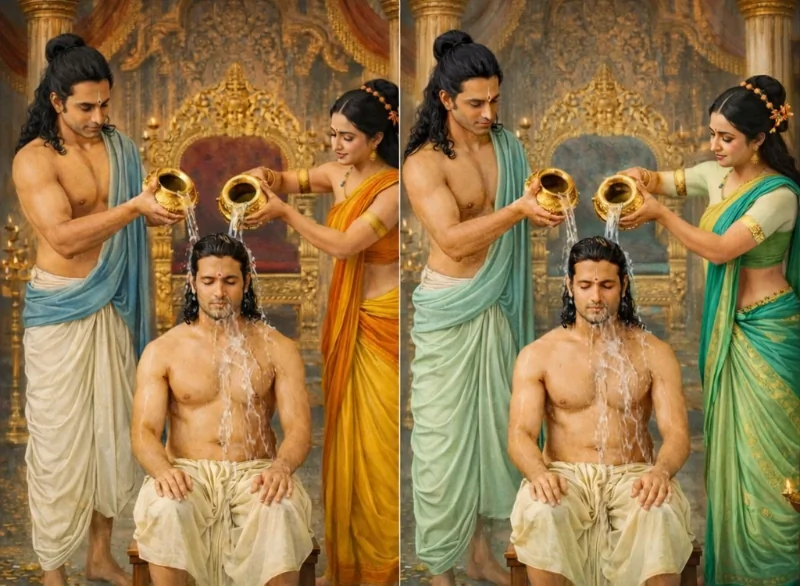
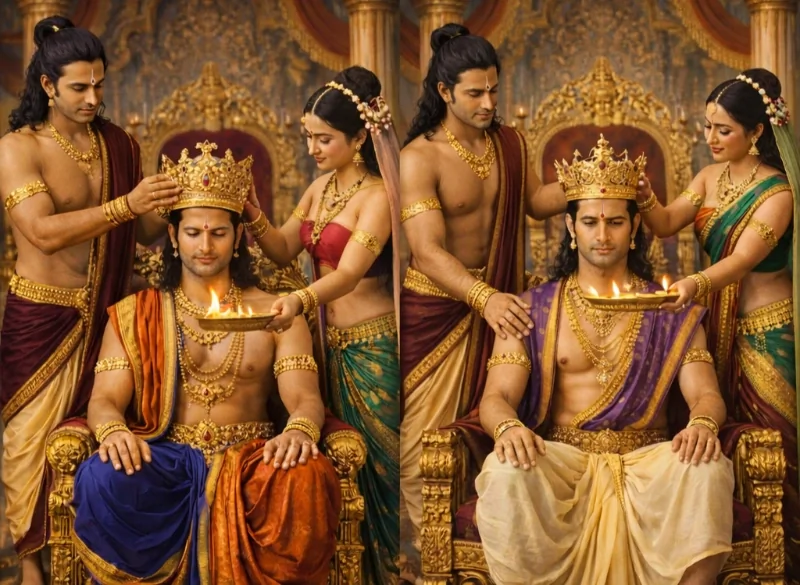
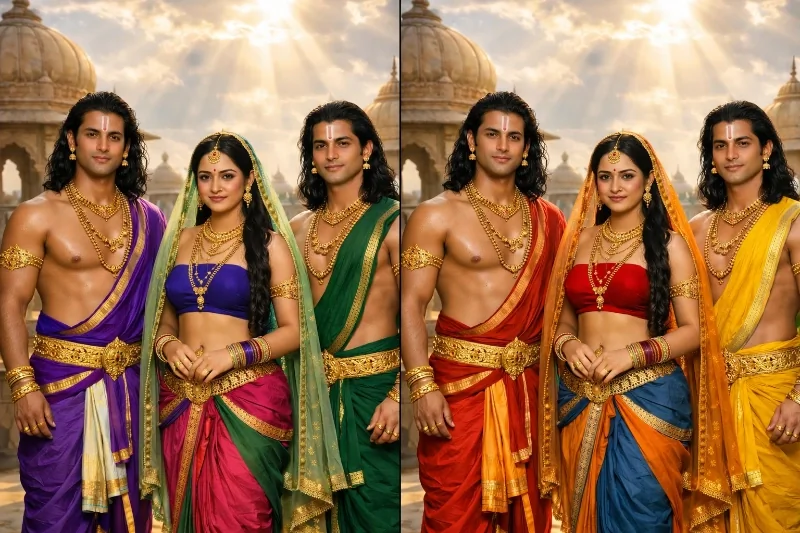
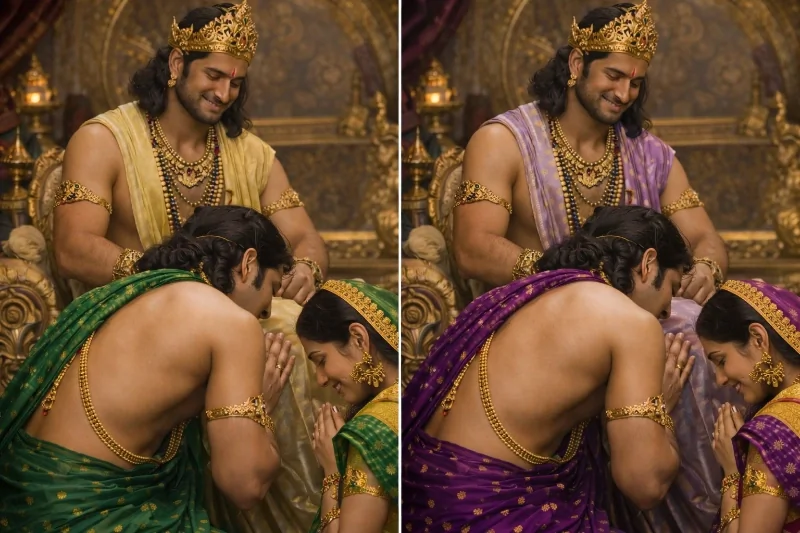
image and sentence formation credit to chat gpt
When Faith Wielded Fire: The Brothers of Ayodhya and the Storm Beyond Sindhu
Dawn broke softly over Ayodhya, but there was a strange weight in the air—as if the city itself knew that something was about to change.
When Sage Gargya delivered King Yudhajita’s proposal, Ram had agreed without hesitation. Duty, after all, was the axis upon which his life turned. But once the decision was made, it rippled through the palace like a quiet storm.
That evening, in the private chambers where crowns meant nothing and only brotherhood mattered, Ram, Lakshman, and Bharat sat together.
No court. No ministers. Just three brothers.
Bharat’s Resolve
Bharat rose first.
“If this is your will, Bhaiya,” he said softly to Ram, “then it is already mine.”
Ram looked at him—not as king to subject, but as elder brother to younger. “The land by the Sindhu is rich, but not unguarded. The Gandharvas are fierce. I would not send you if there were another way.”
Bharat smiled faintly. “You taught us that a warrior’s worth is not in avoiding storms but in walking straight into them. Taksh and Pushkal are ready. They’ve grown under your shadow. Let them step into their own light now.”
Lakshman leaned forward, his eyes sharp but warm. “And you will lead them as only you can. No army stands long when Bharat stands at its head.”
Bharat’s voice dropped, heavy with emotion. “I do not fear battle, Lakshman. I fear only failing the faith Ram places in me.”
Ram placed a hand on his shoulder. “You have never failed me. Not once.”
Lakshman’s Faith
Later, in the courtyard, Lakshman stood watching his sons, Angad and Chandraketu, sparring with Taksh and Pushkal. Steel met steel with laughter instead of anger.
Lakshman turned to Ram. “They are growing too fast.”
Ram smiled faintly. “Time does not wait for fathers.”
Lakshman’s gaze remained on the boys. “Bharat’s sons will win kingdoms. I have no doubt. But my faith is not only in their strength.”
Ram raised an eyebrow.
“It is in you,” Lakshman said quietly. “As long as you stand, no shadow can swallow them.”
Ram didn’t reply immediately. He rarely did when emotions ran deep. But his silence carried trust stronger than any oath.
Urmila and Mandavi
Inside the women’s chambers, Urmila and Mandavi prepared the ceremonial trays.
Mandavi’s hands trembled slightly as she arranged the lamps. Urmila noticed.
“You’ve faced exile,” Urmila said gently. “This is only a campaign.”
Mandavi smiled, but her eyes were moist. “A mother does not measure danger. She only measures distance.”
Mandavi touched her hand. “They are sons of Raghu’s line. Fear may knock, but it does not enter.”
The young princes entered then, laughter fading into reverence as they saw their mothers waiting.
The Arti Ceremony
The courtyard glowed with golden lamps. Conch shells sounded. The queens stepped forward.
Mandavi performed arti for Taksh and Pushkal, circling the flame before their faces, her voice steady despite the tears gathering in her eyes.
“May your swords be sharp,” she whispered, “but your hearts remain gentle.”
Urmila did the same for them. “Protect each other,” she murmured. “Victory means nothing without family.”
Ram, Lakshman, and Bharat stood behind the mothers—not as kings or warriors, but as fathers and uncles swallowing their pride and their fear.
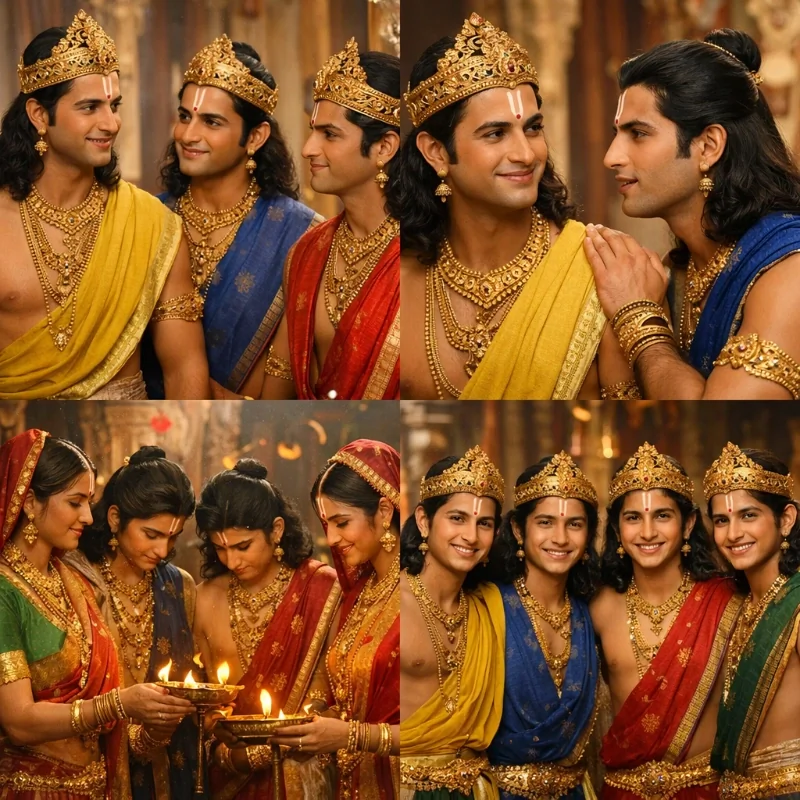
A Cute Brotherly Moment
As the formalities ended, the four cousins gathered near the palace gates.
Taksh nudged Angad. “Since you’re staying back, try not to let Ayodhya fall apart.”
Angad scoffed. “Is it so ? Impossible.”
Pushkal turned to Chandraketu with mock seriousness. “Take care of Uncle Ram and Uncle Lakshman and our mother and aunt They forget to rest.”
Chandraketu grinned. “And you take care of Uncle Bharat. He does the same.”
Lakshman overheard and chuckled. “You boys speak as if we are ancient.”
“Not at All. ” Angad smiled with pride.
Kush and Lav, smiled.
They laughed—arms slung around each other’s shoulders, four princes who had grown up sharing lessons, meals, and mischief.
Then Taksh’s expression softened.
“Truly,” he said quietly to Angad and Chandraketu, “look after Ayodhya. Look after our mothers. And… look after each other.”
Pushkal added, “We’ll win this duel. And when we do, we expect a grand welcome.”
Chandraketu clasped his cousin’s forearm. “Return victorious. We’ll keep the lamps burning.”
For a moment, none of them spoke.
Then Angad pulled them into a rough embrace. “Enough of this. If you start crying, I’ll tell everyone.”
Pushkal laughed. “You’d cry first.”
“Never.”
They broke apart, but the warmth lingered.
The Departure
At sunrise, under the constellation of Saumya, the army assembled.
Bharat mounted his chariot. Taksh and Pushkal stood tall beside him.
Before the wheels began to turn, Bharat looked back at Ram.
Their eyes met.
In that glance was everything—childhood memories, exile, loyalty, unspoken gratitude.
Lakshman stepped beside Ram. “They will conquer,” he said firmly.
Ram nodded. “Yes.”
Not because of strategy. Not because of numbers.
But because they carried something stronger than weapons—
They carried faith.
And in Ayodhya, as the dust of the departing army rose into the morning light, four brothers stood bound by love, and four sons stepped forward to carve their own destiny—held up by the blessings of their mothers and the unshakable trust of their fathers.
The city did not feel empty.
It felt proud.
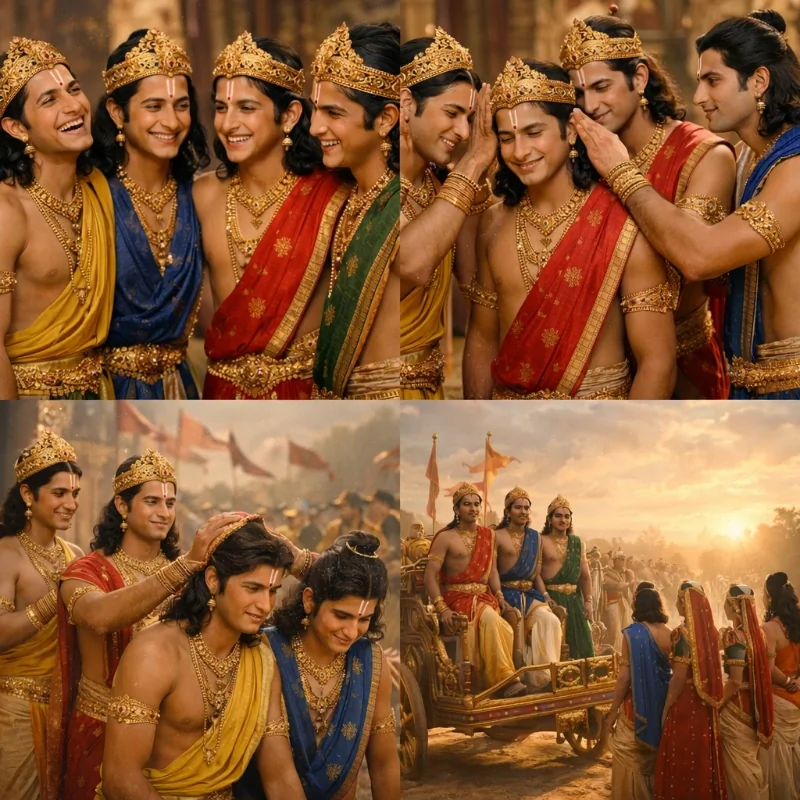
The news reached him like a war drum in the distance—Bharat was coming.
Not alone, not as a prince returning home, but at the head of a vast and thundering army. With him rode Gargya and Yudhajit, King of the Kaikeyas—warriors seasoned by age and counsel, their banners snapping like impatient flames in the wind.
When Yudhajit heard that Bharat had crossed into his dominion with such strength, his heart did not tighten with suspicion—it soared. For this was no invasion of ambition. It was the march of destiny.
Without delay, the aged king gathered his finest warriors. The elders blessed the campaign. Priests kindled sacred fires. The conches sounded. Beneath a sky trembling with omens, the combined forces advanced toward the City of the Gandharvas.
The Gandharvas, swift as thought and fierce as wildfire, did not retreat. They rose in wrath. War cries shattered the air. The earth braced herself.
What followed was no mere battle—it was a storm of annihilation.
For seven days and seven nights, steel met steel without mercy. Chariots splintered. Elephants fell like collapsing towers. Rivers ran red, thick and terrible, bearing broken weapons like driftwood and lifeless warriors like fallen constellations. Scimitars flashed like lightning; spears lunged like starving crocodiles. The sky itself seemed to avert its gaze.
Neither side yielded.
But on the seventh day, something within Bharat shifted.
He had always been the gentle one. The brother who wore humility like a crown. The prince who had once refused a kingdom. Yet beneath that quiet devotion lived a fire no less fierce than Ram’s own.
When he saw his soldiers falling—when he heard the cries of the wounded—when he remembered the burden of protecting dharma—his restraint burned away.
His eyes blazed.
Calling upon sacred mantras taught by venerable elders and seers, Bharat invoked the dreadful Samvarta Astra—the weapon of dissolution, the very breath of Time that ends worlds.
The arrow leapt from his bow like a streak of destiny.
And in a single, shattering instant, three hundred thousand Gandharvas were caught in the noose of destruction. They fell as if Time itself had exhaled. The battlefield fell silent—terribly, unnaturally silent.
Even the Celestials would later whisper that never had they witnessed such devastation compressed into the blink of an eye.
The war was over.
Bharat did not revel in victory.
He walked through the conquered cities not as a conqueror drunk on triumph, but as a guardian assuming responsibility. The land of Gandhar was ravishing beyond description—overflowing with treasure, lush groves, shimmering waters, markets heavy with fragrance and color. The cities stood proud and magnificent, as if rival sisters vying in beauty.
And yet, Bharat’s heart was elsewhere.
He remembered the counsel of the elders. “Power is not possession,” they had told him, “it is stewardship.”
So he did not claim the cities for himself.
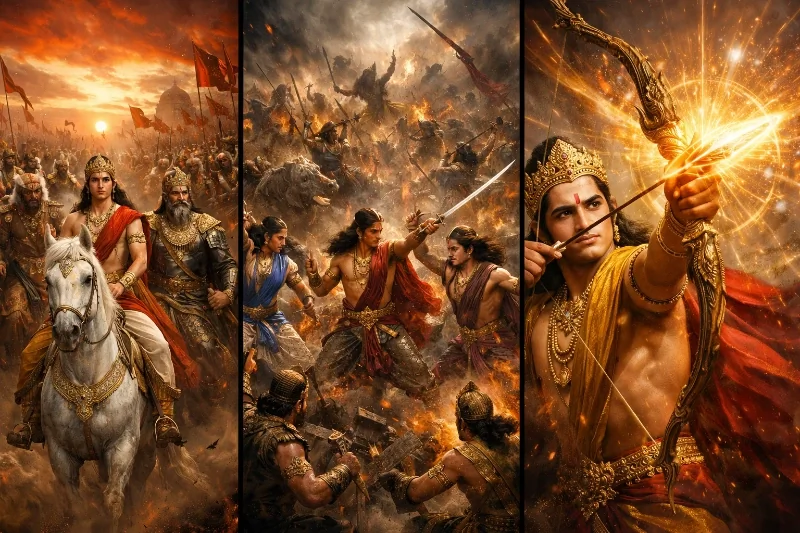
Instead, he established Taksh in Takshashila and Pushkal in Pushkalavati, entrusting the future to the next generation. He shaped governance with wisdom, ensuring justice would root itself deeply in that fertile soil.
Yet every night, when the torches dimmed, he looked toward the east.
Toward Ayodhya.
Toward his brothers.
Meanwhile
In Ayodhya, life moved with grace, but the bonds of the brothers remained its quiet axis.
Lakshman, steadfast as ever, stood by Ram—not out of duty alone, but out of devotion that had long ago dissolved the boundary between self and service. And Urmila, Lakshman’s wife, —had borne her years of separation like a hidden ascetic, her strength rarely sung, yet immeasurable.
Mandavi, Bharat’s wife, carried her own quiet pride. She understood her husband’s heart better than most. She had married not merely a prince—but a vow. Her patience was not resignation; it was faith.
Often she would say softly, “The throne is not what calls him. It is his brother.”
When at last Bharat returned to Ayodhya, he did not enter with fanfare. Dust clung to his garments. His face bore the gravity of one who has seen too much blood.
He went straight to Ram.
Like Indra bowing to Brahma, Bharat bowed to his elder brother.
Ram—Dharma embodied—lifted him with affection shining in his eyes. Lakshman stood nearby, pride and relief mingling in his gaze.
Bharat spoke not of his own valor, but of duty fulfilled, of territory secured, of cities entrusted, of order restored. He did not dwell on the slaughter—though the weight of it lingered behind his words like a shadow at dusk.
Ram listened in silence.
He knew what it cost.
Soon thereafter, preparations began for ceremonies of state—the formal recognition of Taksh and Pushkal as sovereign rulers of their respective cities. Messengers rode. Invitations were dispatched. The royal priests consulted auspicious hours.
The palace stirred with renewed life.
Mandavi oversaw arrangements with grace. Urmila lent her gentle authority. The mothers offered blessings. Garland-makers worked through the night. Goldsmiths polished diadems until they shone like captured sunlight.
The brothers stood together once more—not divided by exile, not separated by war.
Not as rivals.
But as pillars.
Each wishing not for personal glory, but for the other’s honor.
In their shared silences lived a depth words could not reach. They had endured exile, temptation, battle, grief. Yet what bound them was not shared blood alone—it was chosen loyalty.
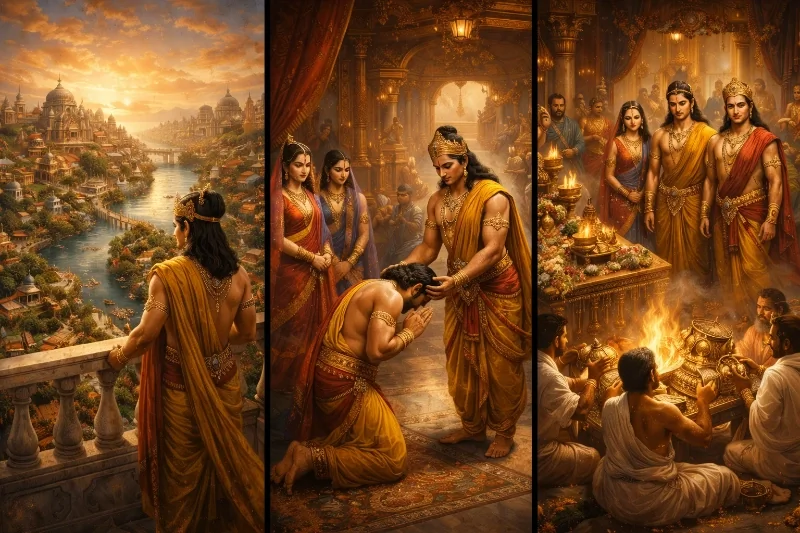
And as the coronation fires were lit and sacred hymns rose into the morning sky, Ayodhya shimmered once more—not merely as a kingdom of wealth and splendor—
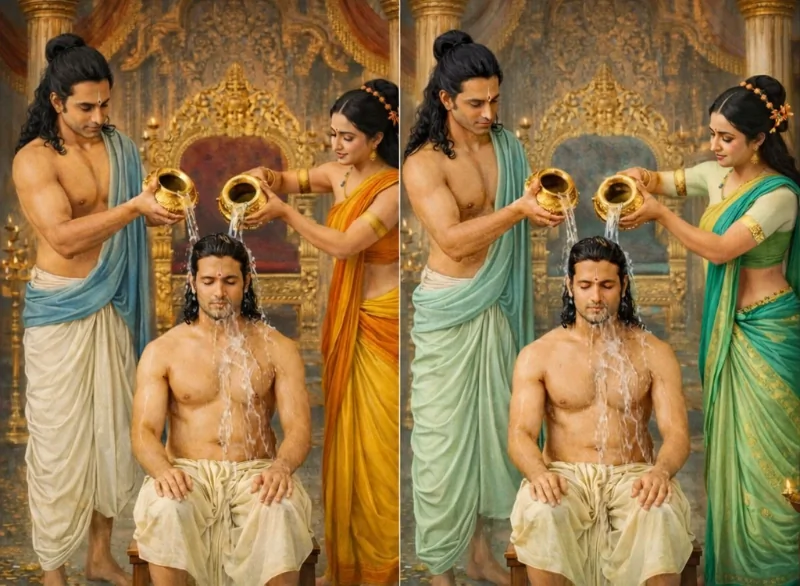
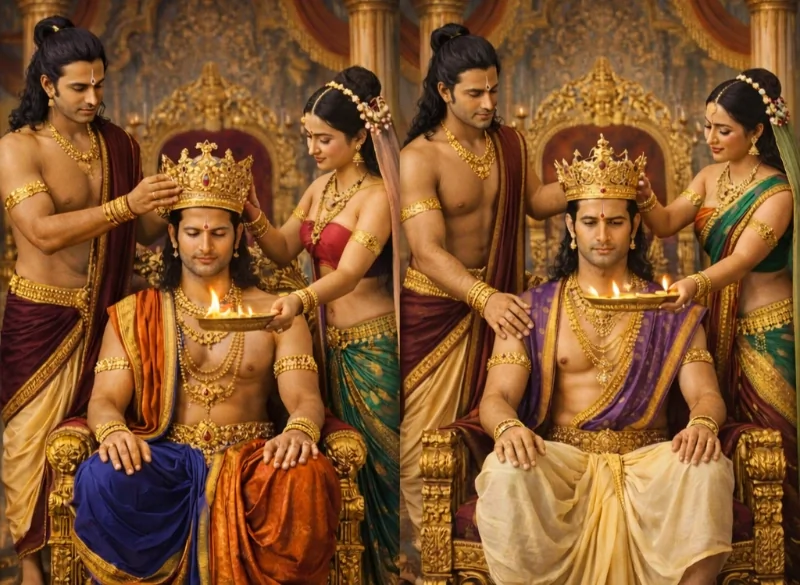
But as a realm upheld by love, sacrifice, and the unbreakable will of brothers who placed dharma above themselves.
Taksh and Pushkal, had great time with Angad and Chandraketu Kush and Lav, the brothers exploring different regions together and talk under the shade of trees before they returned.
For five years, Bharat and Mandavi remained there—not as a distant sovereign, but as a patient architect. They strengthened trade routes, fortified boundaries, nurtured temples, and adorned the land with Tal, Tamal, Tilak, and Bakul trees. Markets thrived. Caravans multiplied. Music returned to the streets.
They advised the young princes in matters of administration.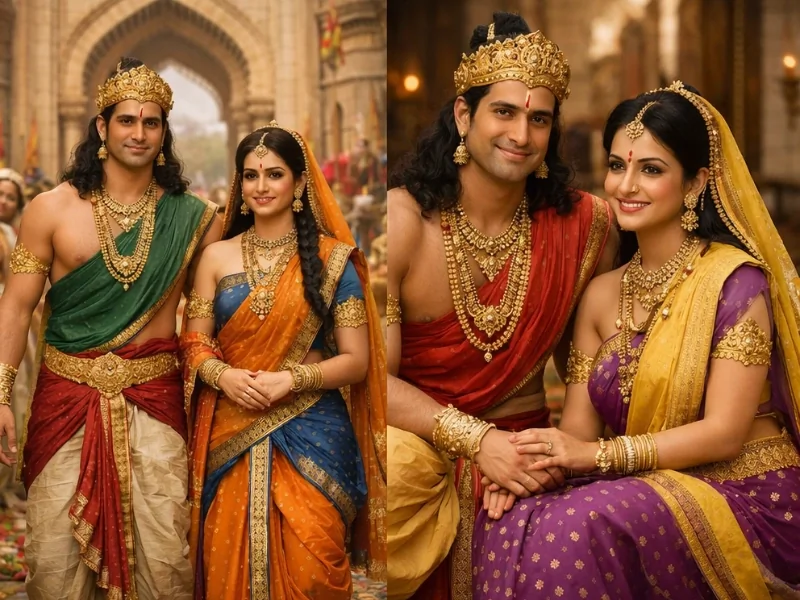
And yet, their labor was never for ambition, nor for the comfort of rule. Every decree bore the quiet memory of exile; every harvest was offered in silent dedication.
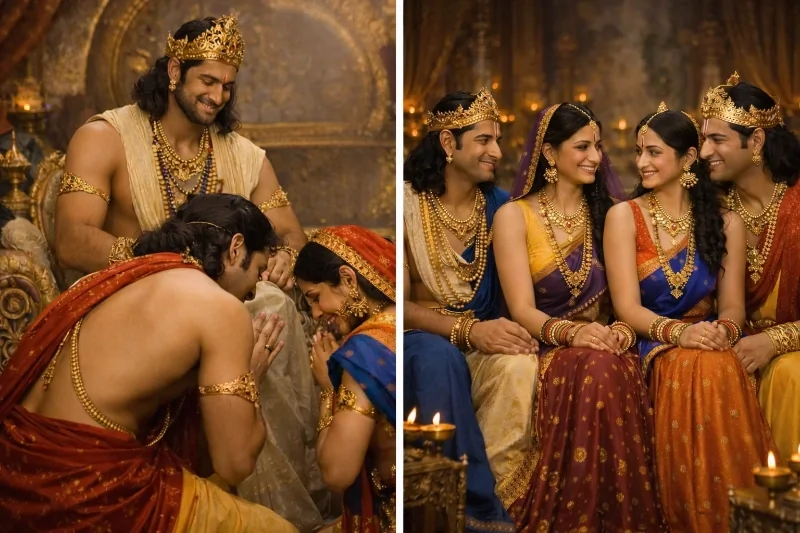
When at last the time ripened, they returned to Ayodhya—not to reclaim authority, but to lay it gently at the feet of Ram. They came not as rulers triumphant, but as loyals, fulfilled.
There, in the sacred rhythm of service, they found their true dwelling. Beside Lakshman and Urmila, whose long vigil had been woven of patience and love, Bharat and Mandavi took their place—not above, not apart, but alongside.
Edited by cuteamanboy - 5 days ago


















 Health and Fitness
 Tum Se Tum Tak
 Anupamaa

