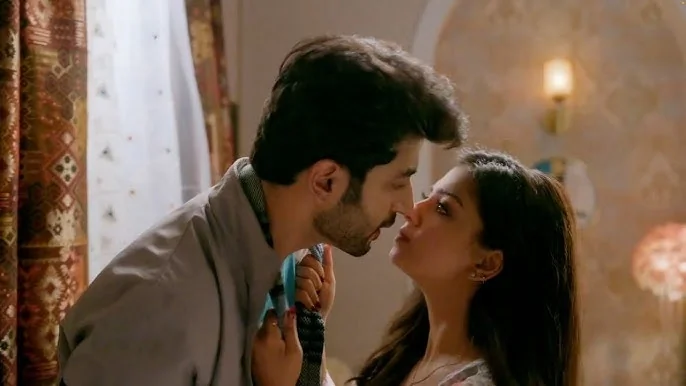
Chhup Chhup Ke ~ Rajdheer SS ~ Chapter 5 on pg 1

Romance

Aleyamma47 thumbnail
Monsoon Magic MF Contest Participant Thumbnail Love-O-Rama Participant Thumbnail + 3
Posted: 3 days ago
#1

Rajdheer.jpg

Introduction:

Rajji and Dheeraj are bound by a marriage born of betrayal, fear, and dignity rather than love. As their feudal families clash and silence replaces consent, two wounded souls learn that safety can precede affection-and that quiet choices can become the bravest vows of all.

Created

Last reply

Replies

13

Views

303

Users

4

Likes

23

Frequent Posters

Aleyamma47 thumbnail
Monsoon Magic MF Contest Participant Thumbnail Love-O-Rama Participant Thumbnail + 3
Posted: 3 days ago
#2

Chapter 1 (The First Wrong Love)

Rajji fell in love the way she did everything else—completely, foolishly, and without a safety net.

He was her college classmate, charming in a reckless way, careless with money, time, and promises. Everyone knew it. The unpaid bills, the half-truths, the borrowed cash that never returned—he wore his wastefulness like a badge of rebellion. To Rajji, though, he was freedom. Laughter between lectures. Stolen coffees. The intoxicating thrill of being chosen.

Dheeraj saw through him from the very beginning.

“You don’t love him,” Dheeraj had said once, quietly but firmly. “You love the idea of being needed.”

Rajji had laughed it off, irritation masking discomfort. Dheeraj always spoke like this—measured, observant, as if he could read people too well. She hated how easily he saw the cracks she tried to ignore.

“He’s not a bad person,” she’d snapped. “Just… misunderstood.”

Dheeraj didn’t argue after that. He rarely did. But his silence lingered, heavier than words.

Days passed. Then came the announcement that shattered what little balance Rajji had left.

Bhanu had arranged her marriage.

A wealthy family. Respectable. Settled. Everything Rajji was not ready for.

She pleaded. She cried. She begged Bhanu to stop the nuptial preparations, her voice shaking as she confessed she wasn’t prepared, that she needed time, that her life was not something to be bartered away so easily.

Bhanu refused to listen.

Security, stability, reputation—these were words he trusted more than his daughter’s tears.

When Rajji told her boyfriend, she expected reassurance. A plan. Hope.

What she received instead was fear weaponised into love.

“If you marry someone else,” he said, his voice trembling in a way that terrified her, “I’ll end my life. I swear it. I won’t survive it, Rajji.”

The words lodged themselves into her chest like shards of glass.

She tried to reason with him. Tried to calm him. But desperation has a way of sounding convincing when love is already fragile.

By nightfall, Rajji made a decision that would alter everything.

She packed a small bag. No explanations. No goodbyes. Not even to Dheeraj—whose warnings echoed in her head like a cruel prophecy.

They checked into a hotel on the outskirts of the city, anonymity disguised as escape. The room smelled of cheap air freshener and panic. The walls felt too close. The silence, too loud.

As Rajji sat on the edge of the bed, hands clenched in her lap, reality finally settled in.

She hadn’t run toward love.

She had run away from fear.

And somewhere, miles away, Dheeraj felt it—the unmistakable sense that Rajji had stepped onto a path from which coming back would never be easy.

When Paths Cross Unknowingly

The decision to leave the city had not been impulsive.

Vidya had suggested it first—temples, quiet roads, unfamiliar air. A few days away from noise, from expectations. For peace, she’d said. For clarity.

Dheeraj hadn’t objected.

Neither had Narmada.

For Dheeraj, the journey was less about prayer and more about distance. Distance from a restlessness he refused to name. From thoughts of Rajji that surfaced far too easily—her stubborn defiance, her misplaced faith in people who did not deserve it.

The town they arrived in was small, reverent, wrapped in the slow rhythm of temple bells and early morning chants. A place where people came to shed burdens—or pretend they could.

It was Narmada who noticed them first.

A young couple. Always arguing. Voices hushed but sharp. Body language tense, brittle. The girl—quiet, withdrawn, eyes constantly apologetic. The man—agitated, possessive, impatient.

They were everywhere. Outside the temple gates. At the small eateries nearby. In the hotel lobby.

Fights disguised as conversations.

Narmada’s unease grew with each passing day.

One night, returning late after prayers, she heard raised voices in the corridor. A door half-open. Words spilling out without care.

“This marriage is my way out,” the man snapped. “Do you think I love you? I need what you have—your gold, your security. Once we’re married, it’s mine.”

Silence followed. Then a sound that froze Narmada in place—a stifled sob.

By morning, the girl was pale, shaken. And by evening, she was crying openly, her jewellery gone, her hands empty, her trust stripped bare.

The man had vanished.

It didn’t take long for the truth to settle in.

When Vidya finally saw the girl clearly—really looked at her—recognition struck like lightning.

She was family.

A relative she hadn’t seen in years. A girl she had watched grow, now reduced to shame and fear in a strange town.

Vidya’s fury was quiet but terrifying.

She confronted Rajji that very night.

“What were you thinking?” Vidya demanded, not unkindly but with a disappointment that cut deeper than anger. “Running away? Trusting a man who threatened you instead of protecting you?”

Rajji broke.

She cried the way people do when they know they were wrong but don’t know how to undo it. Every decision spilling out—her love, her fear, her silence, her humiliation.

Vidya listened. Then she did what she always did when chaos threatened her family.

She decided.

“This ends now,” Vidya said firmly. “You will not be left alone to clean up someone else’s cruelty.”

When Vidya announced her decision to arrange Rajji’s marriage, the room fell silent.

And then she said his name.

“Dheeraj.”

Rajji looked up sharply.

Dheeraj, who had warned her.
Dheeraj, who had watched from a distance.
Dheeraj, whose concern had never been loud—but had always been real.

He didn’t speak. Not immediately.

But when his eyes met Rajji’s, there was no judgement there.

Only resolve.

This marriage was not born out of romance.
It was born out of repair.

And neither of them yet understood how deeply it would change them both.

-------

To be continued.

Aleyamma47 thumbnail
Monsoon Magic MF Contest Participant Thumbnail Love-O-Rama Participant Thumbnail + 3
Posted: 2 days ago
#3

Chapter 2 (The Weight of Saying Yes)

Dheeraj said no.

Not loudly. Not dramatically.
But firmly enough that the room fell silent.

“This is not the solution,” he told Vidya, his voice controlled, careful. “You can’t repair one mistake by forcing another.”

Vidya looked at him steadily. She had raised sons. She knew when resistance came from ego—and when it came from fear.

“She is broken,” Vidya said. “Not irresponsible. Not immoral. Broken.”

Dheeraj didn’t deny it.

But his refusal held.

“This marriage will turn into obligation,” he said. “For me. For her. And obligation breeds resentment.”

What he did not say was what truly stopped him:

He had already cared once.
And caring had not been enough to protect her.

To marry Rajji now would mean standing beside a woman who had loved someone else. A woman who would look at him and see safety—but not desire. He was not afraid of sacrifice.

He was afraid of becoming a reminder of her worst decisions.

Rajji heard about his refusal from a distance.

It cut deeper than she expected.

Not because she wanted him to agree—but because she understood why he hadn’t.

He didn’t want to be her punishment.

She avoided him completely after that. Kept her head down. Spoke only when necessary. Accepted Vidya’s care with gratitude laced with guilt.

She told herself this was fair.

She had made choices.
She would carry their consequences alone.

But Vidya was not finished.

That night, she went to Dheeraj’s room.

“You think refusing makes you righteous,” Vidya said calmly. “But it only makes you absent.”

Dheeraj didn’t respond.

“She doesn’t need a saviour,” Vidya continued. “She needs someone who won’t abandon her when the world decides she’s disposable.”

“I won’t abandon her,” Dheeraj said at once.

Vidya’s eyes softened—but her voice sharpened.

“Then don’t.”

Silence stretched between them.

“You are afraid she won’t love you,” Vidya said quietly. “And that is a selfish fear disguised as principle.”

That landed.

Dheeraj looked away.

“I am not asking you to demand her heart,” Vidya went on. “I am asking you to give her dignity. Love, if it comes, will come later. Or it won’t. But safety must come first.”

For the first time, Dheeraj felt the full weight of what saying no truly meant.

Walking away was easier. Cleaner. Safer—for him.

Saying yes would mean choosing discomfort. Choosing restraint. Choosing a life where his feelings might never be returned.

By dawn, he had made his decision.

When Dheeraj finally spoke to Rajji, his voice was steady—but his eyes were tired.

“I won’t pretend this is ideal,” he said. “And I won’t ask you for anything you can’t give.”

Rajji looked at him, stunned.

“But if you are willing,” he continued, “I will stand beside you. Not to own you. Not to correct you. But to make sure no one ever corners you again.”

Her eyes filled instantly.

“I don’t deserve—”

“This isn’t about deserving,” Dheeraj interrupted gently. “It’s about choice. I’m choosing this.”

And for the first time since everything had fallen apart, Rajji felt something unfamiliar settle in her chest.

Not relief.

Not gratitude.

Something steadier.

A Marriage Without Celebration

The wedding happened quickly.

Too quickly for reflection. Too quickly for protest.

There were no grand announcements, no music meant to announce joy. Only necessary arrangements—practical, efficient, almost clinical. Vidya ensured everything was done with dignity, but nothing about the ceremony carried warmth.

Rajji sat still as the women dressed her, her reflection unfamiliar in the mirror. The bridal red felt loud against the quiet inside her. Each ornament placed on her body felt heavier than the last—not because of its weight, but because of what she no longer owned.

Choice.

Across the hall, Dheeraj stood alone.

He wore the groom’s attire like a uniform. Straight-backed. Controlled. His face revealed nothing to those who looked—but inside, he counted breaths like a man preparing for impact.

This was not how he had imagined marriage.

Not vows spoken in certainty. Not hands sought in comfort.

Only acceptance.

When they were finally seated before the sacred fire, they did not look at each other.

The priest’s chants flowed steadily, ancient words filling the silence neither of them dared to break. Hands met only when required. Eyes lifted only when instructed.

Each ritual felt transactional.

Bind. Promise. Obligate.

The priest’s voice slowed when the moment arrived.

The hall seemed to contract around them—every whisper dying, every movement stilled. Rajji felt it before she saw it: the shift in attention, the weight of ritual pressing down on her spine.

Dheeraj reached for the mangalsutra.

For a fraction of a second, his hand hesitated.

Not out of doubt—but out of awareness.

This was not an ornament.
It was a declaration the world would not let either of them undo.

He lifted it carefully, fingers steady, eyes lowered in respect. Rajji bowed her head automatically, the gesture learned, inherited, unquestioned.

As the thread touched her skin, something in her chest tightened sharply.

Not joy. Not fear.

Finality.

The mangalsutra settled against her collarbone, cool at first, then warm. The priest chanted blessings about protection, longevity, unity—words that floated past her like smoke. Rajji’s vision blurred, but she did not cry.

Dheeraj tied the knot once.

Firm. Clean.

Not too tight.

When he stepped back, Rajji remained still, as if afraid that moving would make the reality heavier.

Then came the sindoor.

The priest instructed Dheeraj to apply it, and for the first time since the rituals began, he looked at her properly.

Rajji met his gaze.

There was nothing romantic in the moment. No soft smiles. No promise of passion.

Only consent.

Dheeraj dipped his fingers into the vermillion. His hand rose slowly—deliberately—as though giving her time to stop him if she wished.

She didn’t.

The sindoor touched the parting of her hair, bright against her skin. A visible mark. A social seal.

A married woman.

Rajji felt her throat tighten—not because of what she had gained, but because of what she had lost forever.

When the priest announced the marriage complete, applause broke out around them. Blessings followed. Rice fell like soft rain.

But Rajji heard only the echo of her own heartbeat.

The Bajpayee House: Betrayal Spoken Aloud

Rajji crossed the threshold slowly.

The sindoor was still fresh.
The mangalsutra still unfamiliar against her skin.

Vidya walked beside her.
Narmada followed.

Vidya said nothing.

Bhanu looked up once—and froze.

For a moment, her face did not register anger. Only shock. The kind that drains colour before it sharpens into pain.

“What… is this?” Bhanu asked quietly.

Rajji opened her mouth, but no sound came out.

Yash was quicker.

“So this is how you repay us?” he snapped, eyes raking over Rajji with open contempt. “Run away once, then come back married like a heroine?”

Bhanu’s hand trembled as she rose.

“Take it off,” she said suddenly—to Rajji. “That chain. That mark. Tell me this is some misunderstanding.”

Rajji shook her head.

“No,” she whispered. “It isn’t.”

Something in Bhanu cracked.

“I raised you,” Bhanu said, her voice rising for the first time. “I raised you like my own daughter. Fed you. Defended you. Covered for you when you made mistakes.”

Her eyes burned as they flicked to Vidya—still silent, still watching.

“And this is how you thank me?” Bhanu continued. “By betraying my trust the same way she did?”

The room went still.

Yash’s mouth curved into a cruel smile. “History repeating itself,” he said. “Mother like daughter. Always choosing their own disgrace over family.”

Rajji flinched.

Not at Yash.

At Bhanu.

“I didn’t mean to—” she began.

“You didn’t mean to?” Bhanu interrupted sharply. “You didn’t mean to humiliate us? To make us a joke?”

Her voice broke—not with rage, but grief.

“I stood between you and the world,” Bhanu said. “And you walked away anyway.”

Vidya did not intervene.

Not once.

Her silence was louder than defence.

Rajji stood there, hands clenched, realising something devastating:

Bhanu’s anger was not about society.
It was about abandonment.

And Rajji had no defence for that.

When Vidya finally turned, it was only to Dheeraj.

“We’re leaving,” she said.

No explanation.
No apology.

She did not owe them one.

Mahadev’s House: Honour Without Mercy

Mahadev did not shout.

That was worse.

He stood when they entered, eyes sharp, posture rigid. His gaze moved methodically—from Rajji’s face, to the mangalsutra, to Dheeraj.

“So,” he said coolly, “this is the decision you bring into my house.”

Dheeraj straightened. “Yes.”

Mahadev’s lips tightened. “You married without my consent. Without discussion. Without thought for consequences.”

“I married with intent,” Dheeraj replied.

Rajji’s breath caught.

Mahadev turned his gaze on her then—not cruel, not kind.

Assessing.

“A woman with complications,” he said flatly. “With a past that will follow her into this house.”

Rajji felt the words settle over her like a sentence.

Before Vidya could speak, Mahadev raised a hand.

“This is not a discussion,” he said. “This is a declaration. This house does not absorb scandals quietly.”

Dheeraj’s voice changed.

Not louder.

Harder.

“She is not a scandal,” he said. “She is my wife.”

Mahadev’s eyes narrowed. “And what do you expect us to do with that?”

“Accept it,” Dheeraj said. “Or reject me with her.”

That landed.

Vidya spoke then—for the first time since leaving the Bajpayee house.

“You taught your son discipline,” she said calmly. “I taught him conscience. This is where those lessons meet.”

Mahadev said nothing.

But something in his rigid certainty faltered.

Rajji stood silently between them, realising something with startling clarity:

She was no longer the problem being discussed.

She was the line being drawn.

------

To be continued.

Aleyamma47 thumbnail
Monsoon Magic MF Contest Participant Thumbnail Love-O-Rama Participant Thumbnail + 3
Posted: 2 days ago
#4

Chapter 3 (A Threshold Without Welcome)

The grihapravesh happened at dusk.

Not because the moment was auspicious—but because it was decided.

The entrance of Mahadev’s house stood prepared: lamps burning steadily, the threshold freshly washed. A kalash filled with rice rested just inside the doorway, positioned carefully where the bride would be required to cross. Tradition waited, precise and intact, for a bride whose place was still being negotiated.

Rajji stood at the doorway.

Dheeraj stood beside her.

Close enough that she could feel the warmth of his arm through the silk of his sleeve. Close enough to know she was not being sent in alone.

Inside, Kamakshi and Priya watched. Faces measured. Voices held back. No one smiled. No one stepped forward to welcome her.

An aarti ka thaal was brought.

The diya circled slowly before Rajji’s face, then—without pause—before Dheeraj’s. The bell chimed softly, the sound echoing against a silence that refused to soften.

No blessing followed.

The thaal was lowered.

All eyes returned to the kalash at the threshold.

Rajji lowered her gaze to her feet. She slipped off her sandals, the cool stone biting into her skin. For a moment, she hesitated—not because she did not know the ritual, but because the symbolism felt cruel. To cross this line meant leaving behind the last illusion of choice.

Before she could move, Dheeraj shifted slightly—subtle, deliberate—and angled himself so the kalash stood directly in front of them both.

“I’m here,” he said quietly.

Rajji inhaled.

She nudged the kalash gently.

Rice spilled, soft against stone.

No one clapped.

The sound lingered anyway.

As she crossed the threshold, the weight of her jewellery settled heavily against her skin. The mangalsutra tugged at her neck like a reminder. The sindoor burned—not physically, but in the way truth does when it cannot be erased.

A plate of vermillion mixed with water was placed before her. She dipped her feet into the red liquid; the colour bloomed slowly, staining her skin. She inhaled once, steadying herself.

Dheeraj remained beside her.

When she stepped forward, he matched her pace—neither ahead nor behind—his steps falling carefully between the red marks she left behind, as though guarding them.

Her footprints appeared on the floor, deep and unmistakable, spreading inward—symbols of Lakshmi’s arrival, meant to bless a house that had not asked for her blessing.

They stopped just short of the inner rooms.

A cloth soaked in vermillion was placed into Rajji’s hands.

The paste was cool, heavy.

Her fingers trembled—not from uncertainty, but from the weight of what was being asked of her.

Dheeraj reached out—not to take over, not to guide—but to steady her wrists.

“Just press,” he murmured. “I’m here.”

Rajji pressed her palms against the wall.

Two clear handprints appeared.

Permanent.
Unavoidable.

Dheeraj stood close enough that no one could pretend this crossing belonged to her alone.

Mahadev observed from a distance.

“This house runs on discipline,” he said evenly. “Not sentiment.”

Dheeraj answered without raising his voice.

“Then discipline should begin with respect.”

The room went still.

Vidya watched. Silent. Unmoving.

Kamakshi and Priya stepped aside—not welcoming, merely allowing passage.

Dheeraj moved first—not to claim the house, but to clear the way. He took Rajji’s hand then, openly, without permission, and led her inside.

Outside, the red footprints were already being wiped away.

Inside, the handprints remained.

And Rajji understood something that settled deep, unshakeable—

This house might never accept her.
But the man beside her already had.

The Night That Asked for Nothing

The house went quiet slowly.

Not with the softness of sleep, but with the rigid discipline of a place that did not know how to rest. Doors closed in measured intervals. Footsteps faded. Somewhere a clock marked time with mechanical patience.

Rajji sat on the edge of the bed in the small room she had been given, her back straight, her hands folded in her lap. The day clung to her skin—rituals, voices, glances that never softened. Even the bangles on her wrists felt too loud, chiming softly each time she moved.

Dheeraj stood near the window.

He hadn’t removed his sherwani yet. He hadn’t sat down. It was as though taking space in the room felt like a transgression he refused to commit.

“This wasn’t supposed to be like this,” he said quietly.

Rajji looked up, startled.

He shook his head slightly. “Not the marriage. The silence.”

She considered that, then answered honestly. “Silence feels safer tonight.”

He nodded. He understood.

Dheeraj reached for the extra pillow and blanket folded neatly at the foot of the bed. He placed them on the floor, close enough to the bed that his presence would be felt, far enough that her space remained untouched.

“I’ll sleep here,” he said. Not as a question.

Rajji’s fingers tightened around the edge of the bedsheet. “You don’t have to—”

“I want to,” he said gently. “It’s easier this way. For both of us.”

She didn’t argue.

He lay down fully clothed, one arm folded beneath his head, eyes on the ceiling. The light from the hallway slipped in beneath the door, drawing a thin line across the floor between them.

For a long while, neither spoke.

Rajji listened to the sounds of the house—distant murmurs, a cough, the creak of old wood settling. Every sound reminded her that she was surrounded by people who did not want her there.

Then she heard Dheeraj exhale, slow and controlled.

“They erased the footprints,” he said softly, not looking at her. “I saw.”

Rajji swallowed. “I know.”

“But not the handprints.”

“No.”

A pause.

“I’ll make sure they stay,” he said.

She turned to look at him then. In the dim light, his face was calm, resolved—not defensive, not resentful.

“I don’t need you to fight for me,” she said quietly.

“I know,” he replied. “I just need you to know I will.”

The words settled between them, heavier than vows.

Rajji lay back, pulling the blanket around her shoulders. The ceiling felt closer here, lower than any room she had slept in before. Still, for the first time since the wedding, she did not feel exposed.

On the floor beside her, Dheeraj shifted slightly, careful not to disturb the fragile peace of the room.

“This house won’t be easy,” he said.

“I didn’t expect it to be,” she answered.

“And I won’t ask you for anything,” he added. “Not affection. Not gratitude. Not even trust. We’ll take this one day at a time.”

Her throat tightened.

“That’s more than enough,” she whispered.

The light outside dimmed as someone switched off the corridor lamp. Darkness filled the room, complete and unassuming.

They slept under the same roof that night.

Not as husband and wife.

Not as strangers either.

But as two people who had chosen restraint over entitlement, presence over possession.

And in that quiet, unclaimed space between them, something fragile but real began to take shape.

------

To be continued.

Edited by Aleyamma47 - 2 days ago
Aleyamma47 thumbnail
Monsoon Magic MF Contest Participant Thumbnail Love-O-Rama Participant Thumbnail + 3
Posted: 2 days ago
#5

Chapter 4 (The First Morning)

Morning arrived without ceremony.

No sunlight filtered gently through curtains. No soft sounds of a home waking. The house stirred the way it always did—efficiently, without regard for new occupants.

Rajji woke before the alarm of routine could claim her.

For a moment, disoriented, she stared at the unfamiliar ceiling. Then everything returned at once—the rituals, the handprints, the erased footprints, the silence.

She sat up slowly.

Her bangles clinked, too loud in the quiet room. The mangalsutra rested against her skin, no longer alien, but not yet familiar enough to be comforting.

She needed the bathroom.

The realisation came with a tightening in her chest.

The attached bathroom door stood slightly ajar.

Rajji slipped inside without thinking, mind still fogged with unease. She shut the door behind her—but didn’t lock it. Habit had deserted her. Everything familiar had.

She turned on the tap. The sound of running water filled the small space, steadying. She set aside her night clothes, her movements quick, efficient—eager to finish before the house fully woke.

On the bed, Dheeraj stirred.

His head throbbed dully, the residue of exhaustion and an unsettled night. For a moment, he lay still, disoriented, struggling to place where he was. The room felt wrong. Too quiet. Too heavy.

Fragments returned out of order—rituals, voices, standing beside Rajji at the threshold—but the night itself felt blurred, as though sleep had erased its edges.

He sat up, rubbing his temples.

He needed water.

And the bathroom.

Still half-asleep, moving on instinct rather than thought, Dheeraj crossed the room and pushed the bathroom door open—

—and froze.

Rajji turned at the same instant.

For a heartbeat, time collapsed into a single, unbearable second of realisation.

She screamed.

He shouted, stumbling back immediately, slamming the door shut with a sharp crack that echoed through the room.

“I’m sorry—!” he blurted, turning away at once, face burning. “I didn’t—I thought—”

Inside, Rajji’s heart raced as she grabbed the towel, hands shaking.

“Don’t come in!” she cried, panic sharp in her voice.

“I won’t,” Dheeraj said instantly, back to the door, eyes fixed on the opposite wall as though sight itself were the offense. “I swear. I’m not looking.”

Silence followed—thick, mortifying.

The house continued its morning rhythm beyond the walls, oblivious.

Then the shock tipped into something raw and defensive.

“What were you doing in there?” Dheeraj snapped suddenly, words spilling out before he could stop them. “That’s my bathroom—don’t you know how to lock a door?”

The sentence hung in the air, wrong the moment it was spoken.

Inside, Rajji stiffened.

The towel clenched in her fists. The shame threatening to consume her flared instead into anger—hot, sharp, resolute.

She opened the door and stepped out.

Wrapped firmly in the towel, eyes blazing.

“Your bathroom?” she shot back. “This is my bathroom too.”

Dheeraj turned.

“What?”

She faced him fully now, spine straight, voice steady despite the tremor beneath it.

“We’re married,” Rajji said, each word landing with quiet force. “I’m your wife. Or did you forget that too?”

The word struck him cleanly.

Wife.

Not ritual.
Not responsibility.
Not obligation.

Wife.

The memories surged back all at once—the mangalsutra, the sindoor, the handprints on the wall, her walking beside him into a house that did not want her.

His breath caught.

“I—” His voice faltered. “I didn’t mean—”

Rajji exhaled, tired rather than angry now. “You think I wanted this? To feel exposed in a house that already watches me like I don’t belong?”

The irritation drained from his face, replaced by something far heavier.

Realisation.

“I’m sorry,” he said quietly. “I forgot.”

The admission sounded unforgivable even to his own ears.

She studied him for a moment, then turned back into the bathroom without another word.

When she emerged again, she was dressed.

A simple saree, neatly draped. Her hair still damp, loose against her shoulders. No jewellery. No markers of ceremony. Just the faint trace of sindoor at her hairline—quiet, undeniable.

Dheeraj looked up—and forgot to look away.

The anger, the awkwardness, the defensiveness—all of it dissolved into stunned stillness.

Not desire.

Awareness.

This was the woman he had married. Standing in his room. Carrying herself with a dignity that did not rely on symbols or permission.

Rajji noticed his silence.

“Good morning,” she said evenly.

It took him a second to respond.

“Good morning,” he replied, voice lower than before.

They stood there—no longer arguing, no longer strangers.

Just two people confronting the reality that had arrived overnight.

She was his wife.

And this room—this space, this life—was no longer his alone.

The Word That Wouldn’t Leave

Dheeraj waited until the bathroom door closed again.

Only then did he move.

He stepped inside, shutting the door behind him with more care than necessary, as if the room itself might overhear him. The mirror greeted him with a face he barely recognised—tired eyes, a faint crease between the brows, the residue of a night that had rearranged his life without asking.

He turned on the tap.

Cold water splashed against his palms. He let it run longer than needed, the sound filling the space, giving his thoughts somewhere to hide.

Wife.

The word surfaced again, uninvited.

Not ritual.
Not arrangement.
Not duty.

Wife.

He leaned forward, gripping the edge of the sink. The porcelain was cool, grounding. Last night came back in fragments—the way she had stood beside him during the rituals, the way her handprints remained on the wall when everything else was erased, the way she had said the word just now—steady, unflinching, as if daring him to deny it.

This is my bathroom too.

Not accusation.
Assertion.

He closed his eyes.

Marriage had always been a future concept for him—structured, discussed, planned. Something that arrived with consent and certainty. Not like this. Not through crisis and consequence. Not with a woman who had been wounded into resilience.

And yet.

She hadn’t asked for permission to exist in that space.

She hadn’t apologised for the word.

She had simply named what was.

He straightened, meeting his own gaze in the mirror.

Your wife.

The word felt heavy. Unavoidable. It demanded presence, not performance. It asked him to show up in ways rules never had.

He exhaled slowly.

“I won’t forget,” he said quietly, to no one.

Not again.

He turned off the tap and wiped his hands slowly, as if delaying the moment he would have to step back into the room and face what the word had already claimed.

When Dheeraj opened the bathroom door, the room was quiet.

Rajji stood near the dressing table, her back to him.

The saree she had worn earlier was now fully settled on her—pallu adjusted, pleats secured. Her movements were unhurried, intentional, as if she were reclaiming control over the morning one detail at a time, not dressing herself so much as arming herself for the day ahead.

She lifted the mangalsutra then.

The chain glinted briefly in the mirror before she brought it around her neck. Her fingers hesitated for just a second—then fastened it securely.

Dheeraj stopped.

The sound of the clasp settling felt louder than it was.

Rajji reached next for the small container on the table. She opened it, dipped her fingers lightly, and drew a single, careful line of sindoor along the parting of her hair.

The gesture was quiet.

Final.

She looked at herself once in the mirror—not searching, not uncertain—then let her hand fall to her side.

Dheeraj watched, unmoving.

The word rose again, this time without resistance.

Wife.

Not spoken.
Shown.

She turned then, meeting his gaze through the reflection first, then directly.

Neither of them spoke.

The symbols did the speaking for them.

The mangalsutra rested against her skin, undeniable. The sindoor marked her with a truth neither had yet learned how to live with—but could no longer ignore.

Rajji adjusted the edge of her pallu and turned toward the door.

“We should go downstairs,” she said evenly. “Before they start wondering.”

Dheeraj nodded once. “Yes.”

She took a step forward.

“Rajji.”

She turned back, questioning.

He hesitated, eyes flicking away almost immediately. “Your blouse… the hooks. At the top.”

She reached back reflexively, fingers fumbling over her shoulder. The movement was awkward, ineffective.

“Oh,” she murmured, colour rising to her cheeks. “I didn’t realise.”

She tried again, twisting slightly, but her hand wouldn’t reach. The fabric shifted, uncooperative.

“I can manage,” she said quickly.

She couldn’t.

The silence thickened—not awkward, but aware.

“I’ll ask someone,” Dheeraj said, already turning away.

Minutes passed before he returned, his discomfort evident.

“They’re all busy,” he said quietly. “In the kitchen.”

He paused. “If you want, we can wait.”

Rajji shook her head, weary of postponements. “No. It’s fine.”

She turned slightly, presenting her back to him, gaze fixed ahead.

“Can you…?” she asked softly, leaving the sentence unfinished.

Dheeraj froze.

Then he nodded once.

“Tell me if you’re uncomfortable,” he said. “I won’t—”

“I know,” she interrupted, just as softly.

He stepped closer—carefully, as though every inch mattered.

His fingers hovered first, uncertain. Then they touched.

The brush of his skin against hers—accidental, fleeting—sent a sharp shiver through them both. Rajji inhaled involuntarily. Dheeraj stilled for a fraction of a second, acutely aware of the warmth beneath his fingertips.

He fastened the first hook. Then the second.

Slow. Precise. Controlled.

He didn’t rush.
He didn’t linger.

But the awareness remained—quiet, unmistakable.

“There,” he said, stepping back immediately.

Rajji exhaled, only then realising she’d been holding her breath.

“Thank you.”

Their eyes met briefly in the mirror—not embarrassed, not flustered.

Just changed.

Dheeraj opened the door for her.

“Ready?” he asked.

Rajji nodded. “Yes.”

As she moved past him, the soft jingle of her bangles followed—steady, assured.

Dheeraj remained where he was for a moment longer, absorbing the shift in the room.

The space had changed again.

Not because of words.

But because of a touch neither of them had been prepared for—

And the quiet understanding that followed.

Then he stepped forward, and together, they went downstairs—to face the house that was already watching.

------

To be continued.

Aleyamma47 thumbnail
Monsoon Magic MF Contest Participant Thumbnail Love-O-Rama Participant Thumbnail + 3
Posted: 2 days ago
#6

Chapter 5 (Morning Under Watch)

Breakfast waited for them like a test already being graded.

The dining table was set neatly—steel plates aligned, cups placed with habitual precision. The family was already seated when Rajji and Dheeraj entered. Conversations thinned, then stopped altogether, eyes lifting in quiet assessment.

Rajji felt it immediately.

The scrutiny.

She lowered her gaze instinctively—but only for a moment. Then she straightened, fingers tightening briefly around the edge of her pallu before she took her place beside Dheeraj.

No one asked how she slept.
No one offered a smile.

A cup was slid toward Dheeraj. Another followed, placed closer to him than to her, as if by reflex. Rajji noticed—and said nothing.

She picked up her spoon, the soft clink sounding louder than it should have.

Dheeraj sensed the tension too. He adjusted his chair slightly, angling himself just enough to close the invisible distance. It was a small thing. It mattered.

Across the table, Vidya watched quietly.

Not critically.
Not indulgently.

Observing.

The house moved around Rajji as if she were already expected to know its rhythm—when to speak, when to remain still, how to disappear without being absent.

She took a sip of tea. Too hot. She welcomed the sting.

Then Vidya set her cup down.

“Rajji,” she said.

The room stilled.

Rajji looked up at once. “Yes, Maji?”

“You’ll do the pehli rasoi today.”

It wasn’t phrased as a question.

A few heads turned. Kamakshi’s brows lifted, faintly curious. Priya glanced away, expression unreadable.

Rajji’s throat tightened—not with fear, but with the weight of expectation settling squarely on her shoulders.

“Yes,” she replied, evenly. “What would you like me to make?”

Vidya regarded her for a moment longer, then said, “Something simple. Sweet.”

Rajji nodded. “I’ll start after breakfast.”

Vidya inclined her head once—approval, quiet and contained.

As the conversation cautiously resumed around them, Dheeraj leaned in slightly, voice low enough that only Rajji could hear.

“Take your time,” he said. “If you want help—”

She shook her head gently. “I’ll manage.”

He studied her for a second, then nodded. “I’ll be nearby.”

That was all he promised.

Rajji finished her tea and stood. She hesitated—just long enough to gather herself—then moved toward the kitchen.

Behind her, the room exhaled.

In the kitchen, the air was warmer, noisier. Utensils clanged. Someone gave her instructions she already knew. Another corrected her grip unnecessarily. Rajji listened, absorbed, adjusted—choosing patience over pride.

She washed her hands. Tied her hair back. Reached for the ingredients.

Pehli rasoi, she thought.

Not a welcome.

A beginning.

As she lit the stove, she felt it again—the same steadying presence from earlier—not beside her now, but close enough to matter. Dheeraj stood at the doorway for a moment, met her eyes, then stepped away without comment.

Rajji breathed in.

Then she began.

Sweetness, Almost Lost

Rajji stood before the stove, palms resting lightly on the counter, breathing in the unfamiliar rhythm of the kitchen.

She chose sooji ka halwa—simple, unmistakably from Uttar Pradesh. A sweet that carried warmth rather than show. One she had seen made countless times, one that did not require innovation—only patience.

She heated the ghee carefully, watching it melt, shimmer.

Too many eyes.
Too many instructions offered without being asked.

She stirred the semolina, slow at first, then faster, trying to drown out the murmurs behind her. The granules darkened quicker than she expected. The ghee hissed sharply.

“Keep stirring,” someone said.

She was.

The colour changed suddenly—too fast, too deep. A faint smell rose, sharp and unmistakable.

Burnt.

Rajji froze.

For a heartbeat, the kitchen seemed to tilt. Her throat tightened, shame arriving before panic. This was her pehli rasoi. The first thing she was meant to offer this house—and she had ruined it.

She switched off the stove immediately, hands trembling just enough to give her away.

Behind her, someone sighed.

“That won’t do now,” another voice said flatly.

Rajji stared at the pan, willing the smell to disappear. It didn’t.

Then another presence entered the kitchen—quiet, decisive.

Dheeraj.

He took in the scene in a second: the darkened semolina, the stiff line of Rajji’s shoulders, the way she hadn’t turned around yet.

“Give it to me,” he said calmly, reaching for the pan.

She looked up at him, startled. “It’s burnt,” she whispered. “I’ll start again.”

“You don’t have to do it alone,” he replied, already moving the pan aside. “We’ll redo it.”

We.

The word settled her.

He washed another pan quickly, movements efficient, familiar. “Low flame,” he said gently, lighting the stove again. “Ghee first. Let it breathe.”

Rajji nodded, stepping closer.

Together, they worked—his voice low, steady, guiding without taking over.

“Stir slower.”
“Yes—like that.”
“Smell it now. That’s right.”

The kitchen noises faded into the background. No one commented this time. No one interrupted.

When the sugar syrup was ready, Dheeraj stepped back deliberately.

“Your turn,” he said. “Finish it.”

Rajji poured carefully, stirring just as he’d shown her. The halwa came together—soft, glossy, fragrant. This time, the sweetness rose clean and warm.

She turned off the stove, exhaling.

Dheeraj glanced at the dish, then at her. “Perfect.”

Her shoulders eased for the first time since morning.

“Thank you,” she said quietly.

He shook his head. “You didn’t fail,” he replied. “You just needed time.”

They plated the halwa together. Rajji added the final garnish, hands steady now.

When she carried it out, the dining room fell silent again—but this time, it was different.

Not expectant.

Acknowledging.

Vidya tasted it first.

She said nothing for a moment.

Then, simply, “Good.”

It wasn’t praise.

It was acceptance.

Rajji felt Dheeraj’s presence behind her—not close enough to draw attention, but close enough to remind her she hadn’t crossed this threshold alone.

And for the first time that morning, the sweetness didn’t feel fragile.

Lines That Shift

Dheeraj watched her from the doorway.

Not openly. Not long enough to invite notice. Just enough to register what unsettled him.

Rajji stood near the table, answering a question softly, her hands folded, posture composed. The same woman who had stood frozen in the kitchen minutes ago now moved with quiet certainty—as if steadiness had always been hers and panic only a passing visitor.

He felt it then.

Not gratitude.
Not relief.

Attraction—unexpected, unwelcome in its timing.

It surfaced not because of how she looked, but because of how she held herself after almost failing and choosing not to fold. Because she had allowed help without shrinking. Because she had not looked at him with dependency—but with trust.

The thought unsettled him.

This marriage was supposed to be a shelter. A line he stood between her and the world. Not a place where desire complicated intention.

He clenched his jaw, reminding himself of the word he had promised to remember.

Wife.

Not a temptation.
Not a claim.

A responsibility.

Across the table, Kamakshi spoke, her tone edged with habitual authority. “Next time, the ghee should be a little less. This house prefers it lighter.”

Rajji looked at her calmly.

“Yes,” she said. Then, after a pause—not defiant, not meek—she added, “But today it’s made the way Vidya ji asked. Sweet. Simple.”

The table went still.

It wasn’t confrontation.

It was correction.

Vidya lifted her gaze then, meeting Rajji’s eyes for the first time since breakfast began. Something unreadable passed between them.

“That’s enough,” Vidya said quietly. “The first rasoi isn’t a lesson. It’s a welcome.”

Kamakshi said nothing after that.

Rajji inclined her head once. No triumph. No apology. Just acknowledgment.

Dheeraj felt something shift again.

This wasn’t a woman learning how to survive in a hostile house.

This was a woman drawing lines—softly, publicly, without asking permission.

He realised, with a jolt, that his role was changing too.

He wouldn’t always be the one stepping in.
He wouldn’t always be the shield.

Sometimes, standing beside her would mean stepping back.

The thought both relieved and unnerved him.

As the family resumed eating, conversation careful but resumed, Rajji served the remaining plates without hesitation. When she reached Dheeraj, she placed his bowl down last—meeting his eyes briefly.

Not seeking approval.

Sharing a moment.

He nodded almost imperceptibly.

She moved on.

And Dheeraj sat there, acutely aware that attraction was not always loud or reckless. Sometimes, it arrived quietly—when respect deepened, when dignity held its ground, when a woman claimed her place without raising her voice.

This marriage had begun as refuge.

But standing there, watching Rajji hold her own at the table, Dheeraj understood something he hadn’t prepared for—

One day, very soon, restraint would become the harder choice.

And he wasn’t sure how long he could keep choosing it.

------

To be continued.

AvantikaP thumbnail
11th Anniversary Thumbnail Visit Streak 30 Thumbnail Voyager Thumbnail
Posted: a day ago
#7

Amazing, thank you. Waiting for more

BarrmHP thumbnail
Posted: 9 hours ago
#8
You write so well! Looking forward to reading more of the story.
coderlady thumbnail
Posted: an hour ago
#9

What a tough foundation for a marriage! So much baggage to carry.

coderlady thumbnail
Posted: an hour ago
#10

Rajji never listened. She believed and trusted the wrong person. She did not look at the evidence.

Related Topics

Top

Stay Connected with IndiaForums!

Be the first to know about the latest news, updates, and exclusive content.

Add to Home Screen!

Install this web app on your iPhone for the best experience. It's easy, just tap and then "Add to Home Screen".