

Baramulla Review: Manav Kaul Leads a Chilling Story of Loss, Faith and the Ghosts of the Past
At first, it looks like a simple story of a missing child. But Baramulla unfolds with a quiet ruthlessness, turning every familiar note into a dissonant one. What begins as a mystery ends as something far deeper.
Published: Friday,Nov 07, 2025 08:03 AM GMT+05:30

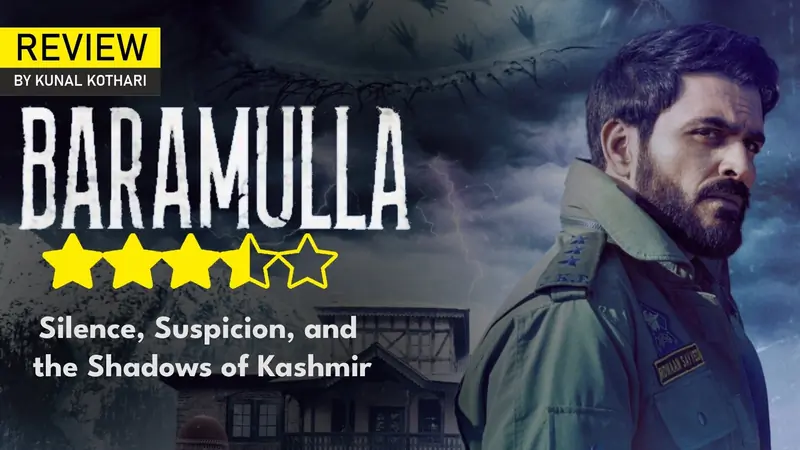
Now streaming on Netflix
Cast: Manav Kaul, Bhasha Sumbli, Arista Mehta, Rohaan Shah, Ashwini Koul & more
Directed by: Aditya Suhas Jambhale
Rating - ***1/2 (3.5/5)
One flower blooms in the frozen land of Baramulla. That’s where the story begins, in a setting so calm it almost deceives you. For a brief moment, it feels like an O. Henry story come to life. But soon enough, that calm starts to crack. Beneath the still air lies something that refuses to rest.
At first, it looks like a simple story of a missing child. But Baramulla unfolds with a quiet ruthlessness, turning every familiar note into a dissonant one. What begins as a mystery ends as something far deeper. The film never lets you breathe easy, and that might be its greatest strength.
The Vanishing That Starts It All
The story opens in a small Kashmiri town, where a magician performs his usual tricks for a curious crowd. The trick is simple. A child steps inside a box, vanishes, and reappears from another side. The audience claps, amused by what they think they’ve seen before. Only this time, the boy never returns.
That disappearance of young Shoaib Ansari becomes the spark that lights the film’s cold fire. The case falls into the hands of DSP Ridwan Sayyad, played by Manav Kaul, whose presence anchors the entire film. Ridwan’s family, portrayed by Bhasha Sumbli, Arista Mehta, and Rohaan Singh, is soon drawn into a widening circle of fear and confusion. The missing boy becomes more than a case file. He becomes a mirror to everything Ridwan has tried to suppress.
Every step in Ridwan’s investigation feels heavier than the last. There is something intangible in the air of Baramulla, something that clings to the skin. Each clue raises a new question, and none offer comfort.
A Different Take On A Familiar Wound

Cinema has returned to Kashmir’s stories many times, usually with political or historical lenses. Baramulla does not attempt another retelling of tragedy. Instead, it shrinks the frame to focus on one family, one household haunted by its own ghosts.
The familiar words of exile and division still echo faintly in the background, but the film refuses to turn them into slogans. Director Aditya Jambhale and writer Monal Thaakar use the past as an invisible weight pressing down on their characters. What we get is not history recreated, but history remembered in nightmares.
The team behind the film- Aditya Suhas Jambhale, producer Aditya Dhar, and co-producer Lokesh Dhar reportedly shot the project under near-impossible conditions. It was filmed in freezing temperatures with limited resources, completed in little more than three weeks. You would never guess that from the finished film. Every frame feels deliberate, composed with patience and precision.
The Kashmir That Exists Beyond Postcards
Kashmir in Baramulla is not the picture-perfect land we are used to seeing on screen. The valley here is stripped of its romance. There are no idyllic meadows or gleaming lakes. Instead, we see the narrow lanes, the quiet rooftops, and the uneasy silences that come with long winters.
The weather itself becomes part of the story. The snow is not decoration but presence. It weighs down everything, including the people. Even when the film moves toward elements of the supernatural, its realism keeps it believable. The setting feels lived in, not designed. The cold seeps through the screen until you can almost feel it in your bones.
What stands out is how seamlessly the supernatural merges with this real landscape. The horror does not arrive through sudden shocks or effects but through gradual recognition. What you see feels real precisely because it is rooted in such ordinary surroundings.
Performances That Hold The Film Together
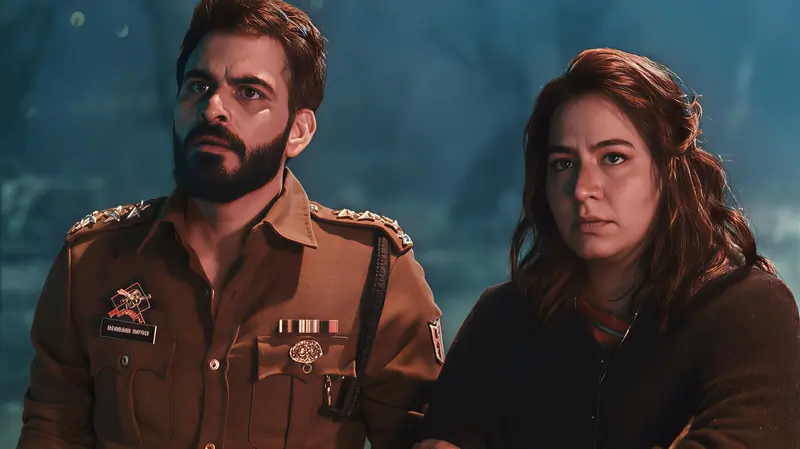
Manav Kaul delivers one of his most intricate performances as Ridwan Sayyad. He carries exhaustion like a second skin, playing a man who wants to maintain order but can no longer trust what he sees. His silence says more than most lines could.
Bhasha Sumbli, as his wife, adds quiet intensity to the narrative. She moves between logic and fear, between wanting to protect her family and sensing that protection might no longer be possible. Her emotional restraint makes the later moments land with force.
Young Arista Mehta brings innocence into a world drained of it. She gives Noor a fragile presence that represents the only trace of warmth left in this story.
Ashwini Kaul, as Khalid Dar, is remarkable in his portrayal of a man caught between ideology and emptiness. He captures the unsettling stillness of someone who has lost faith yet cannot find another purpose.
Every performance feels measured and deliberate. Together they form a collective rhythm that keeps the tension alive even in moments of stillness.
A Tale Of Two Halves
The first half of Baramulla takes its time. It builds atmosphere more than plot, and that patience might test some viewers. A few sequences could have been trimmed without losing meaning. But this slow burn pays off in the second half, when the story begins to connect threads across time.
Two timelines- one rooted in the past, the other in the present, begin to overlap. The shift is handled with impressive restraint. Nothing feels forced or overly explained. The second half unfolds like a slow unmasking, leading to a revelation that changes the meaning of everything that came before.
The payoff works not because it surprises you, but because it feels inevitable once it arrives. The final moments are haunting without shouting for attention.
The Choice Of Mood Over Noise
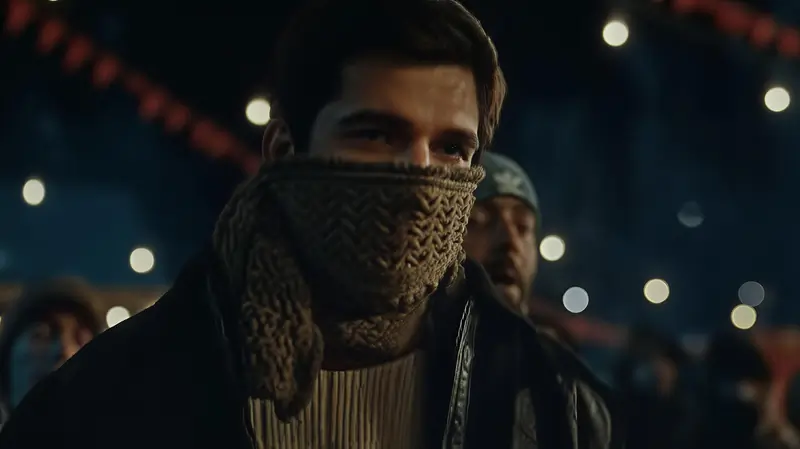
Director Aditya Jambhale deserves credit for understanding what not to do. He resists the urge for spectacle. There are no overblown chase sequences or loud musical cues. Instead, the film leans on texture and rhythm- the crunch of snow, the echo of footsteps, the silence between two breaths.
What stays with you is not just the mystery itself but the feeling of being trapped in a place that remembers too much. The horror comes from recognition, not from monsters. Every quiet pause hides an ache that refuses to fade.
Even in its bleakest stretches, the film avoids melodrama. Its sadness is earned. The restraint makes the emotional moments more piercing when they arrive.
An Ending That Lingers
The final sequence of Baramulla delivers a rare cinematic moment that fuses two realities into one. Without giving away details, it plays like an emotional and visual echo chamber. The past and present collapse into each other in a way that feels both terrifying and deeply human.
What looked supernatural at first begins to resemble collective guilt. The ghosts are not external. They are memories, transformed by pain. The ending does not console you. It leaves you staring at what remains after the storm has passed- people trying to rebuild something intangible.
This is not the kind of film that fades from memory when the credits roll. It stays in your head, quietly echoing, long after you have left the theatre.
Final Word
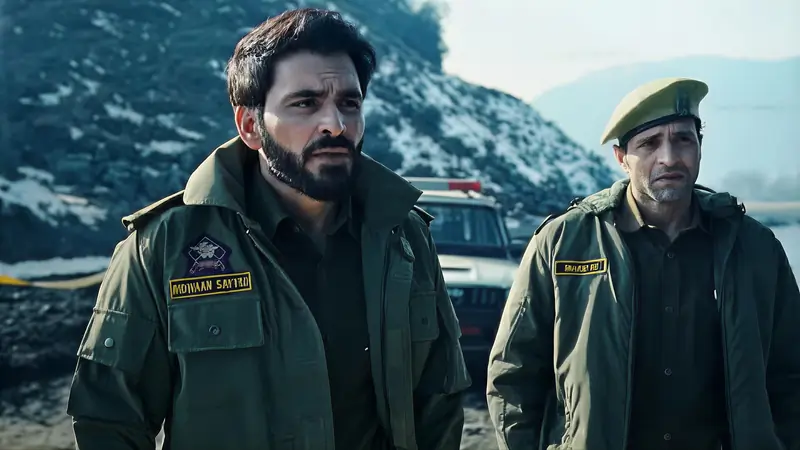
Baramulla is not built for comfort. It demands patience and emotional attention. It begins like a mystery but becomes something more reflective, almost philosophical. It questions what it means to live with loss and what happens when a community’s grief turns into a haunting of its own.
Some stories entertain while they unfold. Baramulla lingers long after it ends. It leaves you unsettled, not because of what it shows, but because of what it makes you feel when you walk away.
Baramulla is now streaming on Netflix. Are you planning to watch it this weekend? Let us know in the comments down below.
Poll
Are you planning to watch Baramulla on Netflix this weekend?
Set in the haunting stillness of Kashmir, Baramulla follows a grief-stricken priest (Manav Kaul) as he confronts faith, memory, and the violence that time refuses to bury. With an eerie calm and emotional precision, the series slowly unravels its mysteries, pulling you into a world where belief and guilt become inseparable. Here’s our full review.
Join Our WhatsApp Channel
Stay updated with the latest news, gossip, and hot discussions. Be a part of our WhatsApp family now!
Join NowYour reaction
 Nice
Nice Great
Great Loved
Loved LOL
LOL OMG
OMG Cry
Cry Fail
Fail


















Post a comment