


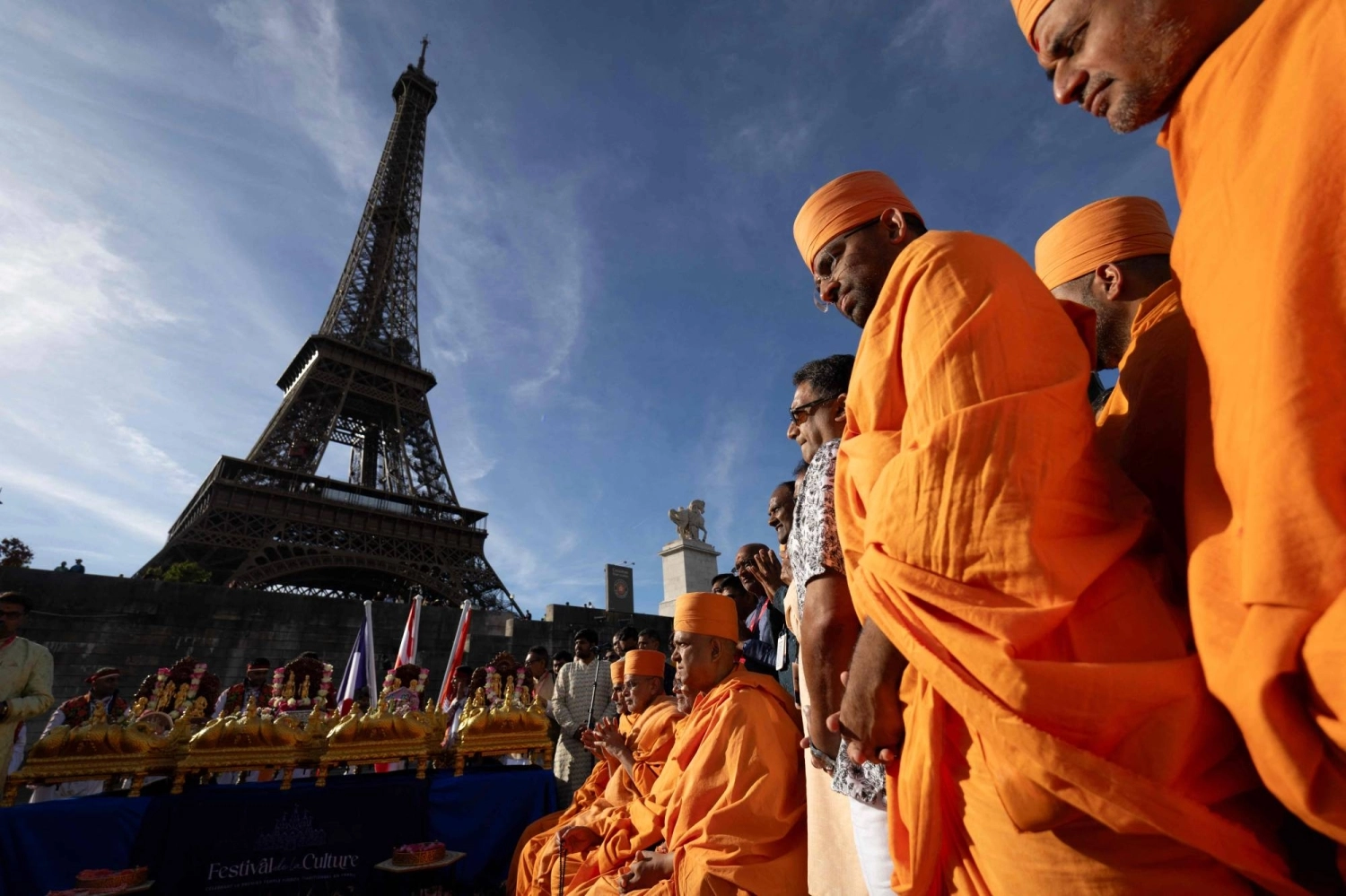
Female Staff Removed from Eiffel Tower to Facilitate a Hindu Religious Group Visit!! French women felt this incident was an insult and started an agitation against this action.
A controversy surrounding the reported removal of female staff to facilitate a visit by a Hindu religious group has raised important questions about equality, religious accommodation, workplace rights and institutional responsibility.
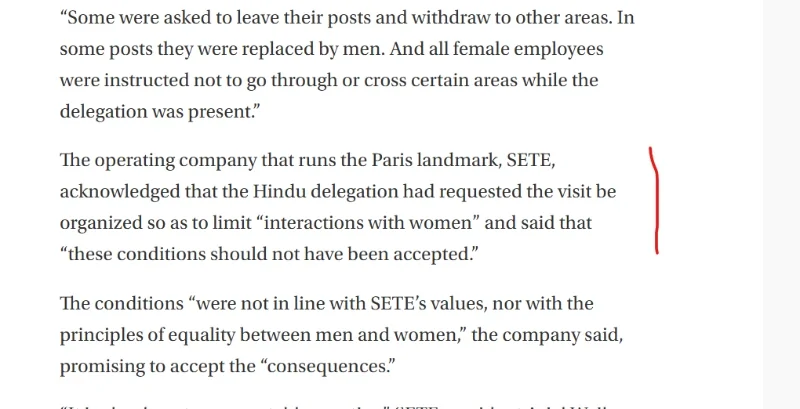
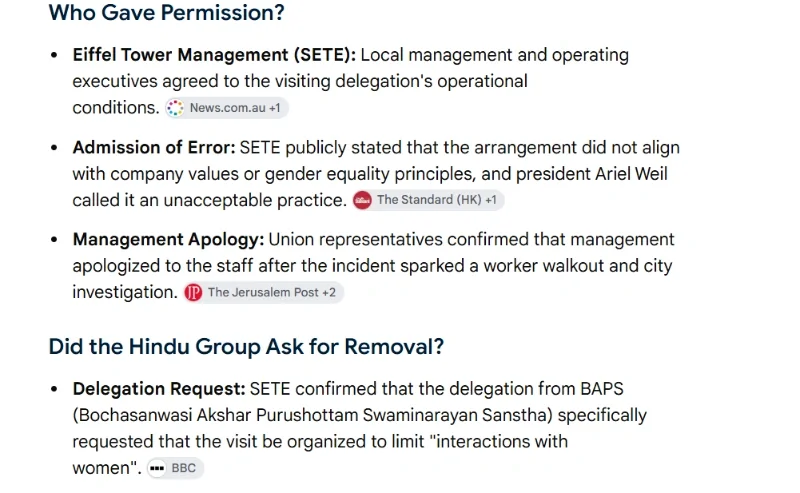
A delegation of around 100 people linked to the Bochasanwasi Akshar Purushottam Swaminarayan Sanstha (BAPS) group from Gujarat visited the landmark in the French capital on Saturday.
Staff union representative Diane Davoine says that as they arrived at the monument, women were told to move out of sight!!
"During the visit of this delegation, women were asked to leave their places of work to place men there," she told Reuters. Davoine also said management had since apologised to workers over the incident.
"That does not go down well with the employees, with women obviously, who are all humiliated by what happened, by the way some were treated," Davoine said.
She added: "Tensions mounted over the weekend, so this morning, the employees decided to meet: first, to open a dialogue with management, and second, to ensure that women are never treated this way at the company again."
While respecting every individual’s right to practise and observe their faith, it is equally important to consider whether accommodating the religious sentiments of one group should involve changing the duties, access or presence of female employees.
Does this constitute a reasonable religious accommodation, or does it raise concerns about gender inequality and discrimination?
Could the same principle be applied fairly to other religious or cultural groups visiting India? And where should institutions draw the line between respecting religious beliefs and protecting equal rights for everyone?
Should religious sentiments be given priority in such situations? Should female staff be asked to step aside to facilitate a religious visit?? Would the same arrangement be acceptable in India if another religious or cultural group demands certain rules?
















 Cricket
 Kyunki Saas Bhi Kabhi Bahu Thi 2
 Iss Pyaar Ko Kya Naam Doon


15